Treatments

Core Aeration

Packed ground starves a lawn slowly — once a year, we pull the plugs and let it breathe again.

Free Estimate (901) 475-1969

Core Aeration — Woodlawn Lawn Care

Our soil packs down like a parking lot

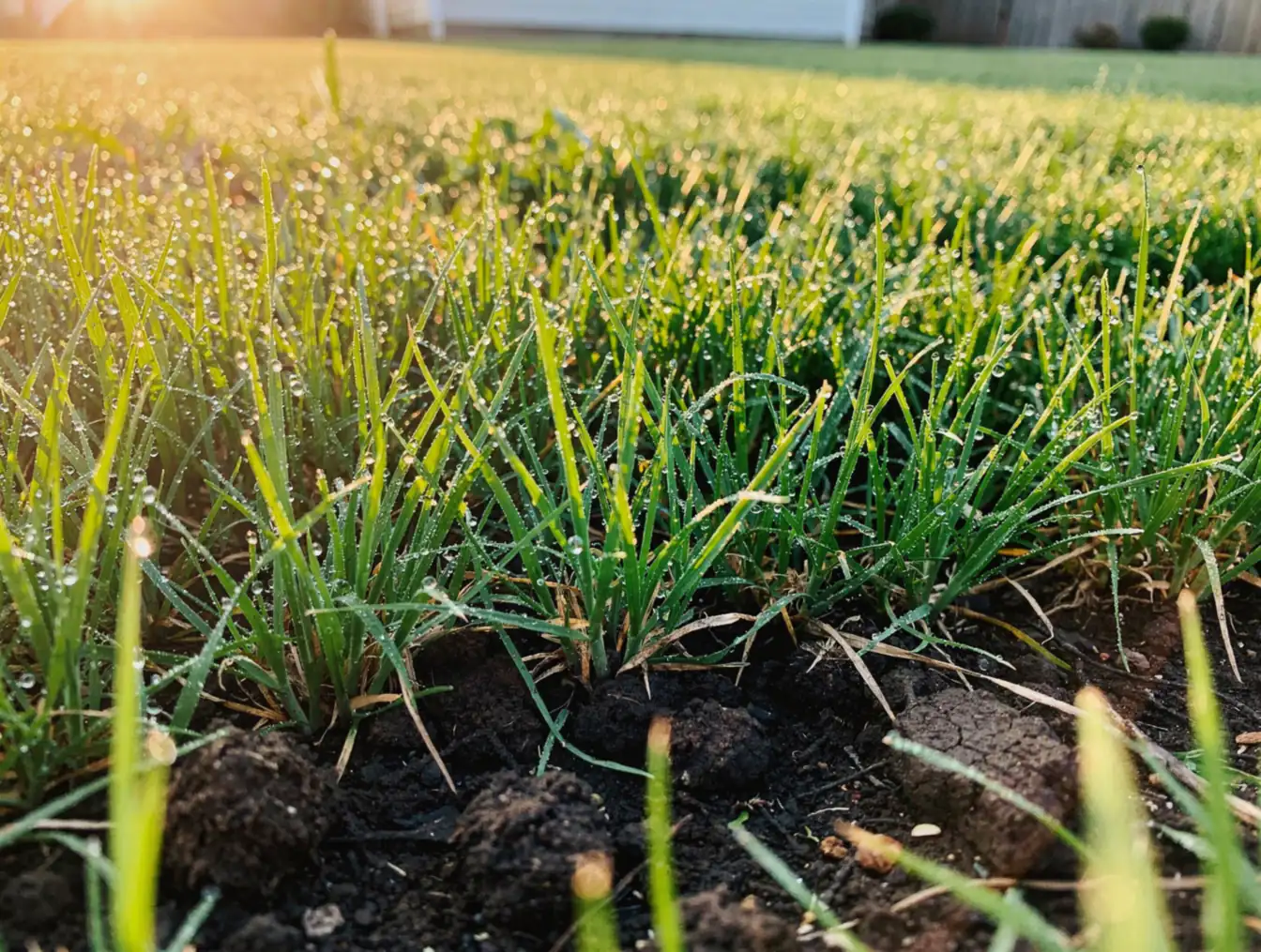
It's the defining fact of lawns around here. West Tennessee sits on loess — a fine, windblown silt loam that feels soft in your hand and packs tight under use. Rain, foot traffic, kids, dogs, and time press those silt particles together until the air spaces disappear. Underneath a lot of yards there's a second problem: a fragipan, a dense layer roughly one to three feet down that roots struggle to cross and water perches on top of. Between the two, water sheets off instead of soaking in, roots stay shallow, and the lawn slowly starves no matter what you put on top. Hard ground doesn't announce itself — it just quietly keeps a lawn stuck.

Aeration pulls plugs — it doesn't just poke holes

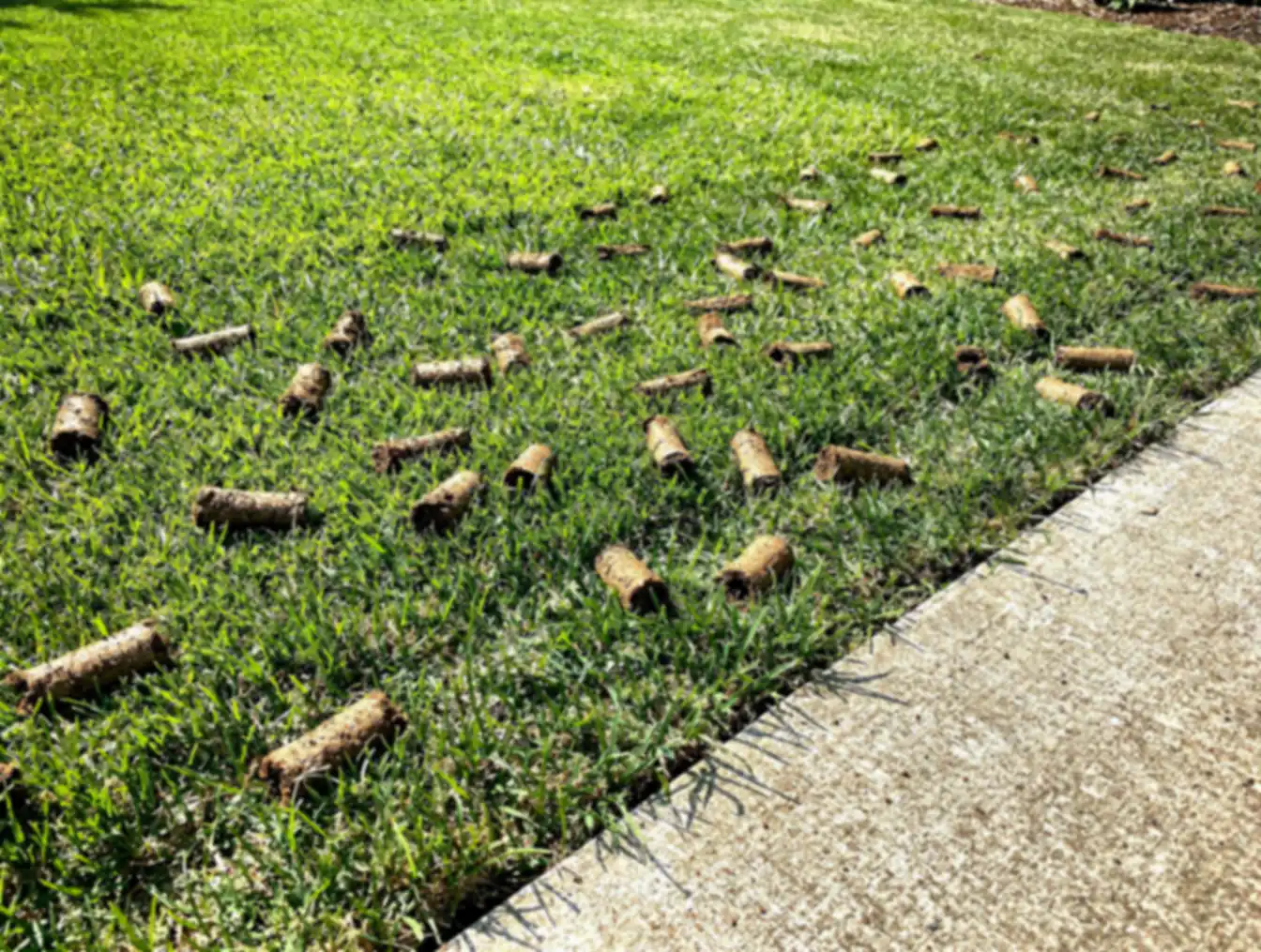
A core aerator pulls actual finger-sized plugs of soil, 2 to 3 inches deep, thousands of them across the lawn. Each one leaves an open channel where air, water, and nutrients can finally reach the root zone. Simply spiking holes into tight soil presses the walls tighter; removing a core is what genuinely relieves the pressure.

The real work happens underground

Roots surge into those loosened channels within weeks, growing deeper than compacted soil ever allowed. Water soaks in instead of running off. Fertilizer reaches roots instead of sitting on the surface. And because bermuda spreads by runners, it builds up thatch — a mat of old stems at the soil line — faster than most grasses. Aeration punches through that layer too, so everything moves down where it belongs.

Fair warning: the lawn looks worse before it looks better

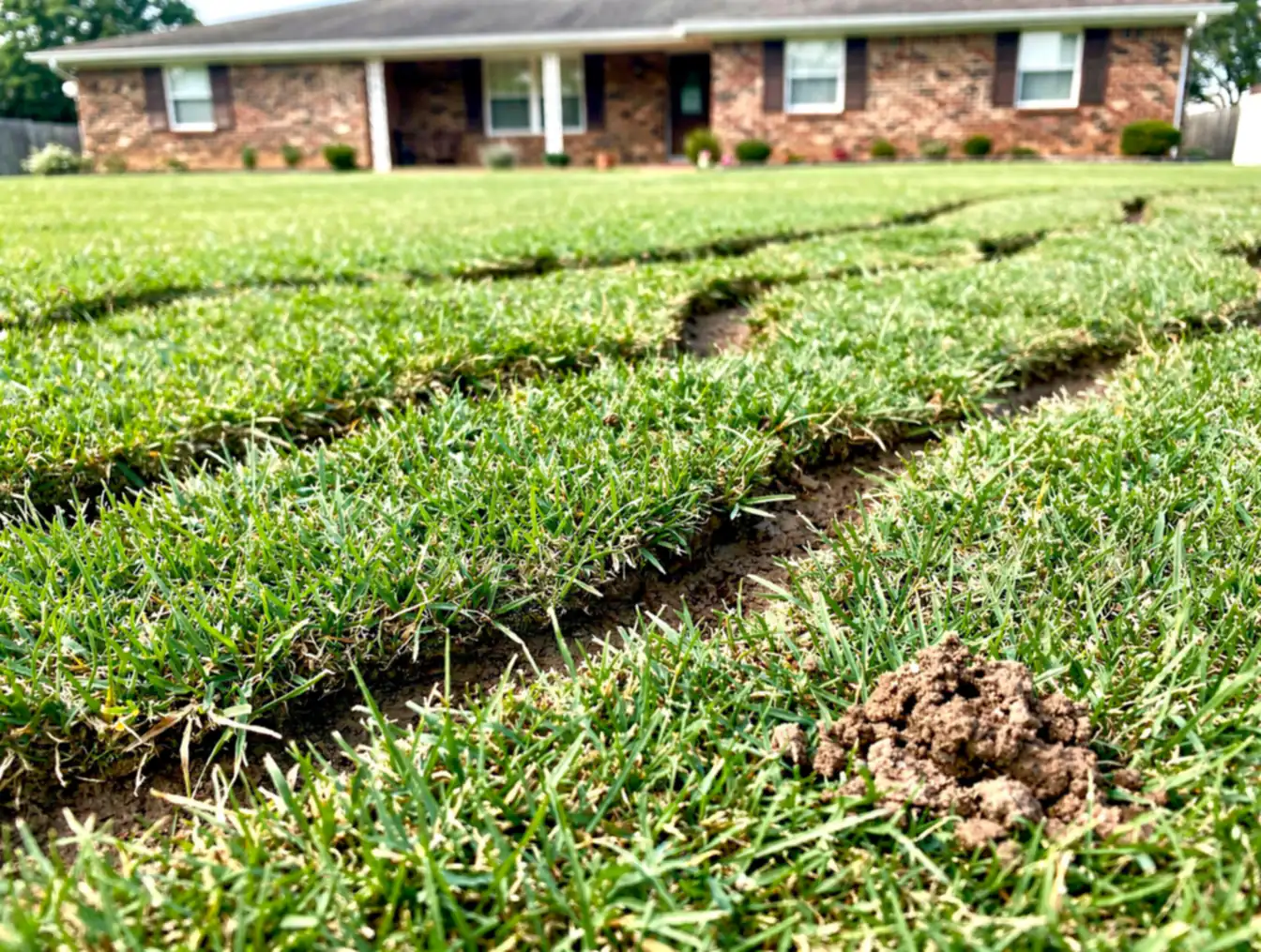
For a week or so after aeration, your yard is covered in little dirt cylinders, and it isn't the lawn's best week. Leave them be — the plugs crumble back into the lawn within a week or two and feed the soil as they break down. Short-term scruffy, long-term thriving is the honest trade.

The window depends on the grass

Bermuda gets aerated from late spring through midsummer, while it's growing hard enough to heal the holes fast and drive roots into the open channels. That's the window for the great majority of lawns around here. Fescue runs on the opposite clock — shaded fescue lawns aerate in early fall, when they're the ones doing the growing, which is also when aeration pairs naturally with fall seeding and the seed drops right into those open channels. The rule underneath both: aerate a lawn while it's growing, not while it's winding down.
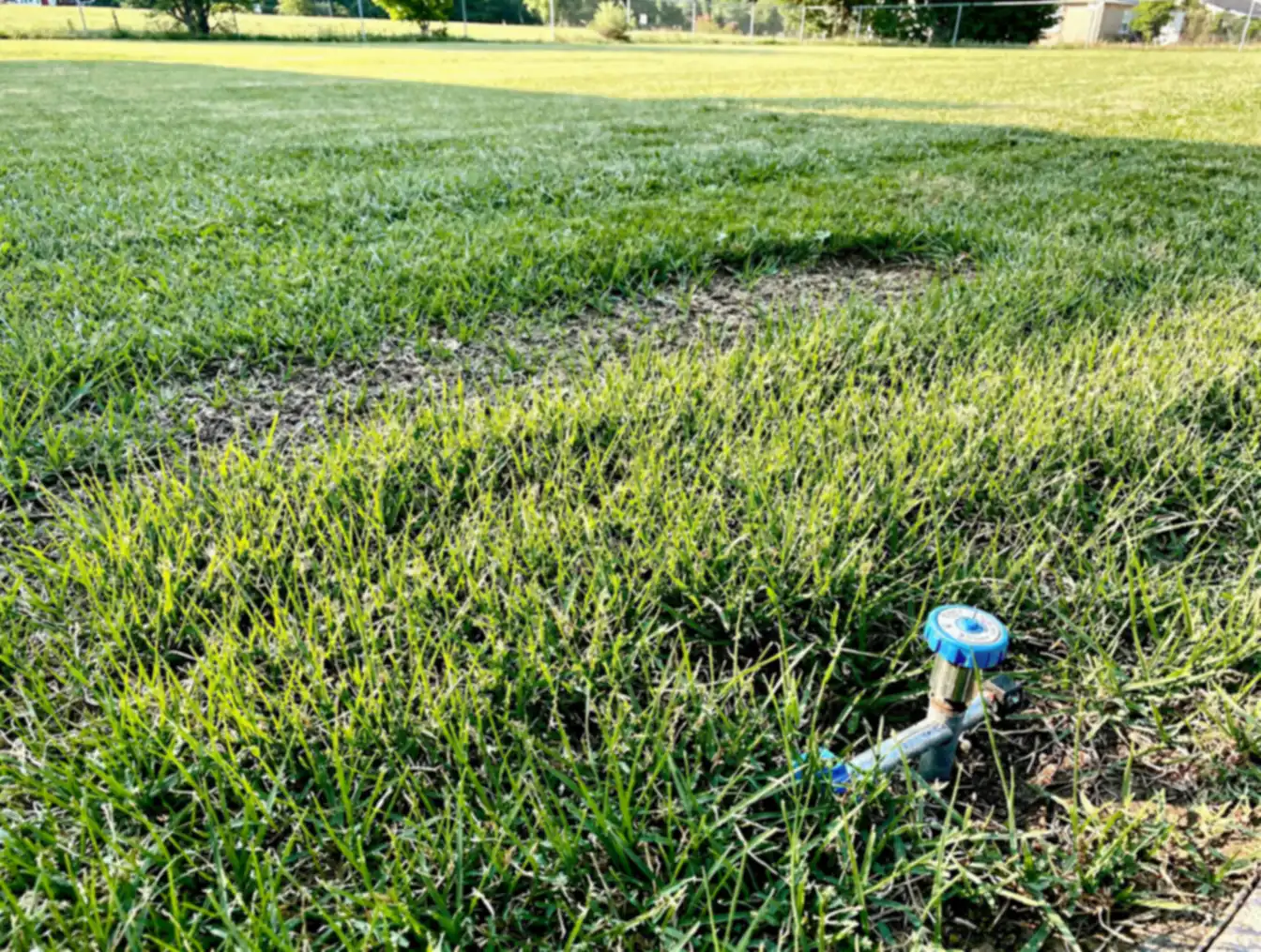
Signs your lawn is asking for this

How a visit actually goes

  1. 1

    Heads-up text

    A text before we arrive, and it helps to mark sprinkler heads or shallow lines so we can steer clear.

  2. 2

    Walk the lawn

    We note the hardest-hit areas — worn paths, slopes that shed water, spots where the turf has thinned.

  3. 3

    Pull the cores

    The aerator makes passes across the lawn, pulling finger-sized plugs 2 to 3 inches deep, with extra attention on the most compacted ground.

  4. 4

    Leave the plugs

    The cores stay on the lawn on purpose — they crumble back in within a week or two and return their nutrients to the soil.

  5. 5

    Set up what's next

    We tell you how to water afterward, and if seeding is in the plan, this is the moment it happens — seed straight into open soil.

Questions we actually get

Should I rake up the plugs?

No — leave them right where they land. They break down within a week or two, and as they crumble they return soil and nutrients to the lawn. Raking them off throws away part of the benefit.

How often does a lawn need aeration?

On soil that packs this tight, once a year is a sound rhythm for most lawns — silt loam re-compacts steadily under normal use. Heavily trafficked or new-construction yards sometimes benefit from more attention until the soil structure recovers.

Does pulling plugs hurt the lawn?

It looks like damage for a few days, but underground it's the opposite. Compacted soil suffocates roots; every core opens breathing room, and roots move into those channels within weeks. The surface mess crumbles away long before the benefits do.

When is the best time to aerate?

It depends on the grass. Bermuda aerates best from late spring through midsummer, while it's growing hard and can fill the holes back in quickly. Shaded fescue goes the other way — early fall, when it's the one actively growing, which is also when it pairs with seeding. Either way the rule is the same: aerate when the grass is growing, not when it's heading for dormancy.

Can you seed at the same time as aeration?

Yes, when the timing lines up — and then it's the ideal pairing. The seed falls into thousands of open channels with real soil contact instead of sitting on thatch. Because bermuda seeds in late spring and early summer and fescue seeds in early fall, we match the aeration to whichever grass is going down. The one caveat is pre-emergent: it blocks grass seed like any other seed, so seeding and weed prevention get scheduled around each other.

Our guarantee

Between-visit call-backs are free

If something breaks through between scheduled applications, call us and we come back out and re-treat it. No trip charge, no argument, no second invoice.

Get a free estimate

What it costs

Straight talk about price

Nobody likes chasing a number. Here is exactly how ours is built — and why we will not print a flat one.

This one is quoted on its own, not off the per-application program price — the job is sized to your yard and what it actually needs. Estimates are always free.

The number comes from your yard

We measure the treatable square footage on the estimate walk. That measurement is the price — not your zip code, not the size of your house, not what your neighbor pays.

No contract, no cancellation fee

The annual program is a schedule, not a lock-in. If you want to stop, tell us and we stop.

Get your number (901) 475-1969

Part of the bigger picture

Core Aeration is scheduled alongside the 8-application annual program, in the window where it does the most good — every treatment lands at the right point in the West TN season. See the month-by-month calendar for what happens when.

Other treatments

Free estimates, always

Want core aeration handled by people who live here?

A walk of the yard, straight answers, and a plan built around what your lawn actually needs.

Built by Chandler Phillips

You're already looking at the pitch.

This site wasn't assembled from a template. It was built from scratch for a lawn care company in Brighton — and everything below is something you can check on the page you're standing on right now.

One phone or email is enough. Goes straight to Chandler Phillips — no list, no autoresponder.