Treatments

Weed Control

If it's green in January or taking over in July, we know it by name — and we know the week it's beatable.

Free Estimate (901) 475-1969

Weed Control — Woodlawn Lawn Care

Weeds come in waves, not all at once

West Tennessee's mild winters are why a dormant lawn turns green in all the wrong places. Henbit, chickweed, and annual bluegrass grow straight through winter while the bermuda sleeps. When the soil warms in spring, crabgrass and clover take their turn. By summer it's spurge, chamberbitter, and nutsedge. No single product handles all of that, which is why real weed control is a year-round plan — the right product for the right weed at the right time.

Pre-emergent works like a wall

It sets an invisible barrier in the top inch of soil. Weed seeds still sprout underneath, but they stop the moment they reach that layer — which is how a treated lawn skips the summer crabgrass and the winter henbit carpet. The wall only holds where the soil stays undisturbed, and it has to be in place before the seeds wake up. That makes timing the whole game.

The soil sets the schedule, not the calendar

Crabgrass seeds don't check the date. They germinate once the soil holds around 55 degrees for a few days straight — some years that's late February, other years the middle of March. We watch soil temperature so the barrier goes down ahead of germination. Apply it late and you're fighting sprouted crabgrass until frost.

Post-emergent handles what's already up

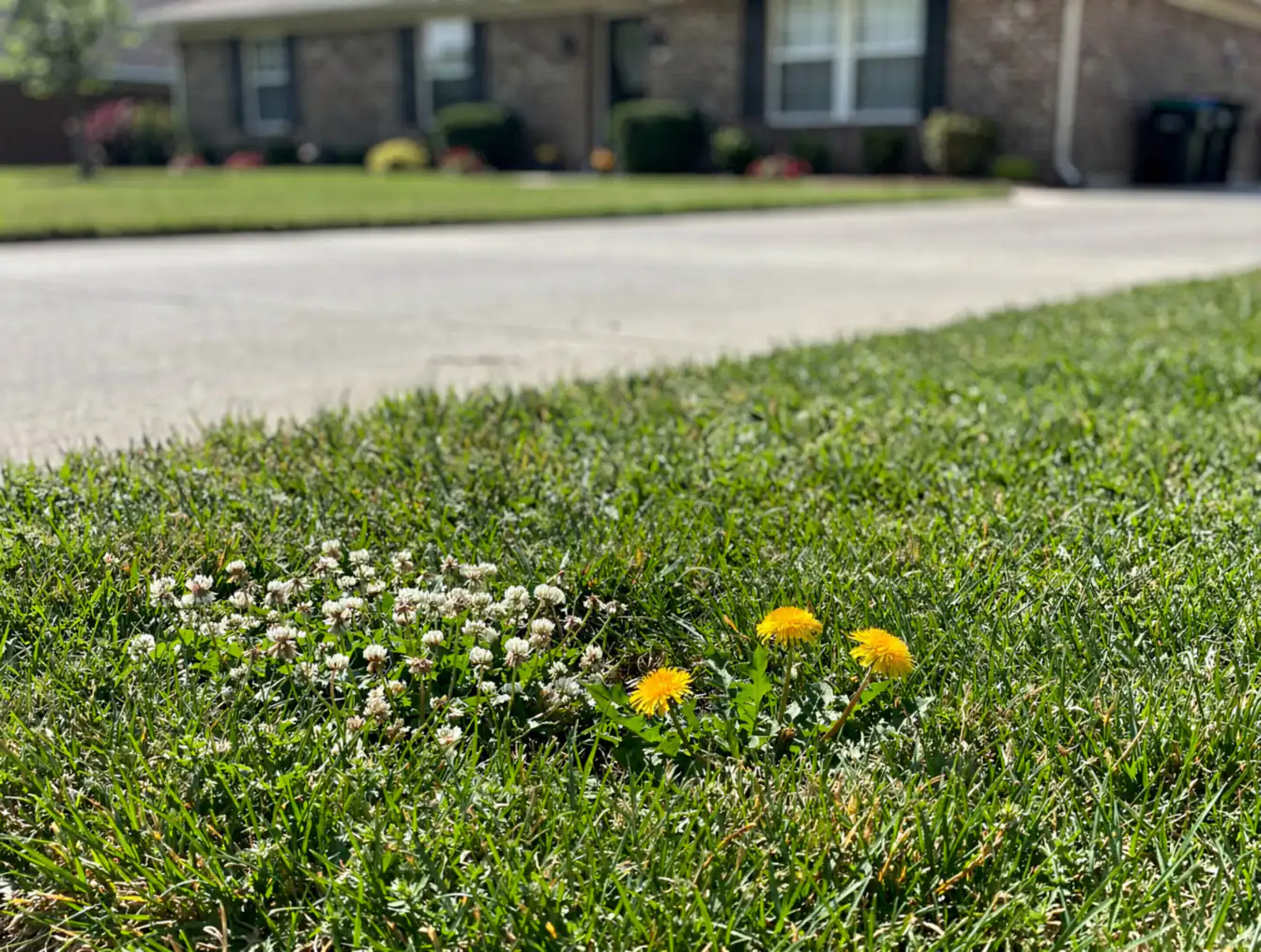
Broadleaf weeds like clover and dandelion take one kind of treatment. Grassy weeds like crabgrass and dallisgrass take another. Nutsedge isn't a grass at all — it's a sedge, and it shrugs off standard products completely, so it gets a specialized one. Correctly naming the weed is half the job; the right product at the right rate is the rest.

A thick lawn is the last line of defense

Weeds move into gaps, and bermuda that's fed and healthy closes those gaps before they can. That's why weed control and fertilization ride together in our 8-application program. Customers notice it at the mower, too — weeds grow faster than grass, so once they're gone the lawn grows in evenly and needs cutting on its own schedule, not the weeds'.
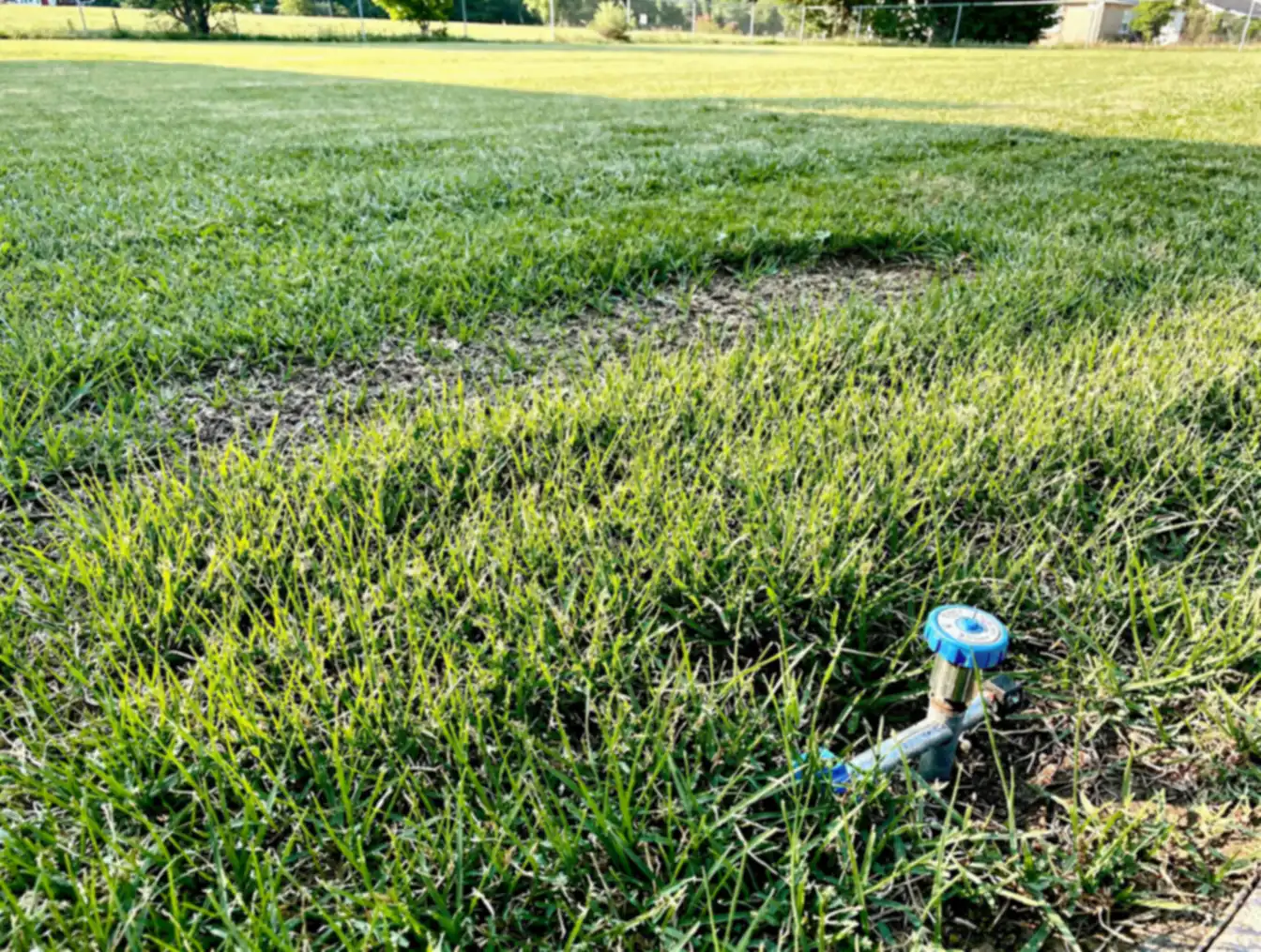
Signs your lawn is asking for this

How a visit actually goes

  1. 1

    Heads-up text

    You get a text before we arrive, so a treatment day never catches you off guard.

  2. 2

    Walk and identify

    We look at what's growing — and what the season says is about to. Broadleaf, grassy, and sedge weeds each get named before anything gets treated.

  3. 3

    Pre-emergent barrier

    When the soil-temperature window is open, we put down the barrier that stops the next wave of seeds before they sprout.

  4. 4

    Targeted post-emergent

    Weeds that are already up get the product matched to their type, at a rate that works without stressing the bermuda around them.

  5. 5

    Notes and next steps

    We leave word on what we treated, what to expect, and anything to hold off on — like watering or disturbing treated areas.

Questions we actually get

Why do I still see a few weeds after a treatment?

Two honest reasons. Post-emergent treatments take days to a few weeks to fully work — weeds yellow and fade rather than vanish overnight. And no barrier stops 100 percent of seeds, so a few break through between visits. We treat breakthroughs at the next application, and the lawn gets cleaner each season as the seed bank in your soil runs down.

When does pre-emergent need to go down?

Before the seeds germinate — which for crabgrass means before the soil settles into the mid-50s for several days. Around here that's late winter, though the exact window shifts year to year. There's a second pre-emergent round in early fall aimed at winter annuals like henbit and chickweed, which sprout as the soil cools.

Will weed treatments hurt my grass?

The products we use are chosen for bermuda lawns and applied at rates meant to take out the weed without stressing the turf. A few stubborn weeds, like nutsedge, need specialized products precisely because the standard ones can't tell them apart from grass — matching product to weed is most of the craft.

Can one treatment fix my weeds for the year?

No, and we'd rather tell you that up front. Each season sends a new wave of weeds with its own germination window, so a single visit only handles the wave that's up right then. That's why weed control here runs as a year-round schedule inside our 8-application program.

I've been spraying store products — why does crabgrass keep coming back?

Because the fight is happening at the wrong time. One crabgrass plant drops thousands of seeds, and once it's up in summer, spraying is an uphill battle. The winning move is a pre-emergent barrier in late winter, before any of those seeds sprout. Store sprays can help with what's visible; timing is what changes next year.

Our guarantee

Between-visit call-backs are free

If something breaks through between scheduled applications, call us and we come back out and re-treat it. No trip charge, no argument, no second invoice.

Get a free estimate

What it costs

Straight talk about price

Nobody likes chasing a number. Here is exactly how ours is built.

$50per application minimum — larger lots price up from there

Priced per application, not per month

You pay for the eight treatments you actually receive. No monthly subscription that bills through the winter, and no bundling you into services you never asked for.

The number comes from your yard

We measure the treatable square footage on the estimate walk. That measurement is the price — not your zip code, not the size of your house, not what your neighbor pays.

No contract, no cancellation fee

The annual program is a schedule, not a lock-in. If you want to stop, tell us and we stop.

The ways to save are simple

Prepay the year and take 5% off. Refer five new customers who sign on and your next year is free, valued up to a half-acre lot. Military, fire, police, and nurses get 5% for good.

Get your number (901) 475-1969

Part of the bigger picture

Weed Control is one of the rounds in the 8-application annual program — every treatment lands at the right point in the West TN season. See the month-by-month calendar for what happens when.

Other treatments

Free estimates, always

Want weed control handled by people who live here?

A walk of the yard, straight answers, and a plan built around what your lawn actually needs.

Built by Chandler Phillips

You're already looking at the pitch.

This site wasn't assembled from a template. It was built from scratch for a lawn care company in Brighton — and everything below is something you can check on the page you're standing on right now.

One phone or email is enough. Goes straight to Chandler Phillips — no list, no autoresponder.