Feeding a dormant lawn feeds the weeds
Brown bermuda is asleep, and a sleeping plant takes up almost nothing. The winter weeds growing green in that brown grass, though, are wide awake — and they'll gladly take every bit of fertilizer meant for your lawn. So the first rule of fertilization here is patience: the first real feeding waits until the bermuda is at least half green and actually pulling in nutrients.
Bermuda eats on a warm-season schedule
It does its serious growing from late spring through summer, and that's when it's hungry. Our feedings follow that curve — a first application as green-up takes hold, steady nutrition through the peak growing months to build thickness and color, then a winterization feeding in early fall that helps the roots bank energy. That stored energy is exactly what fuels the green-up you see the following spring.
Our soil complicates the menu
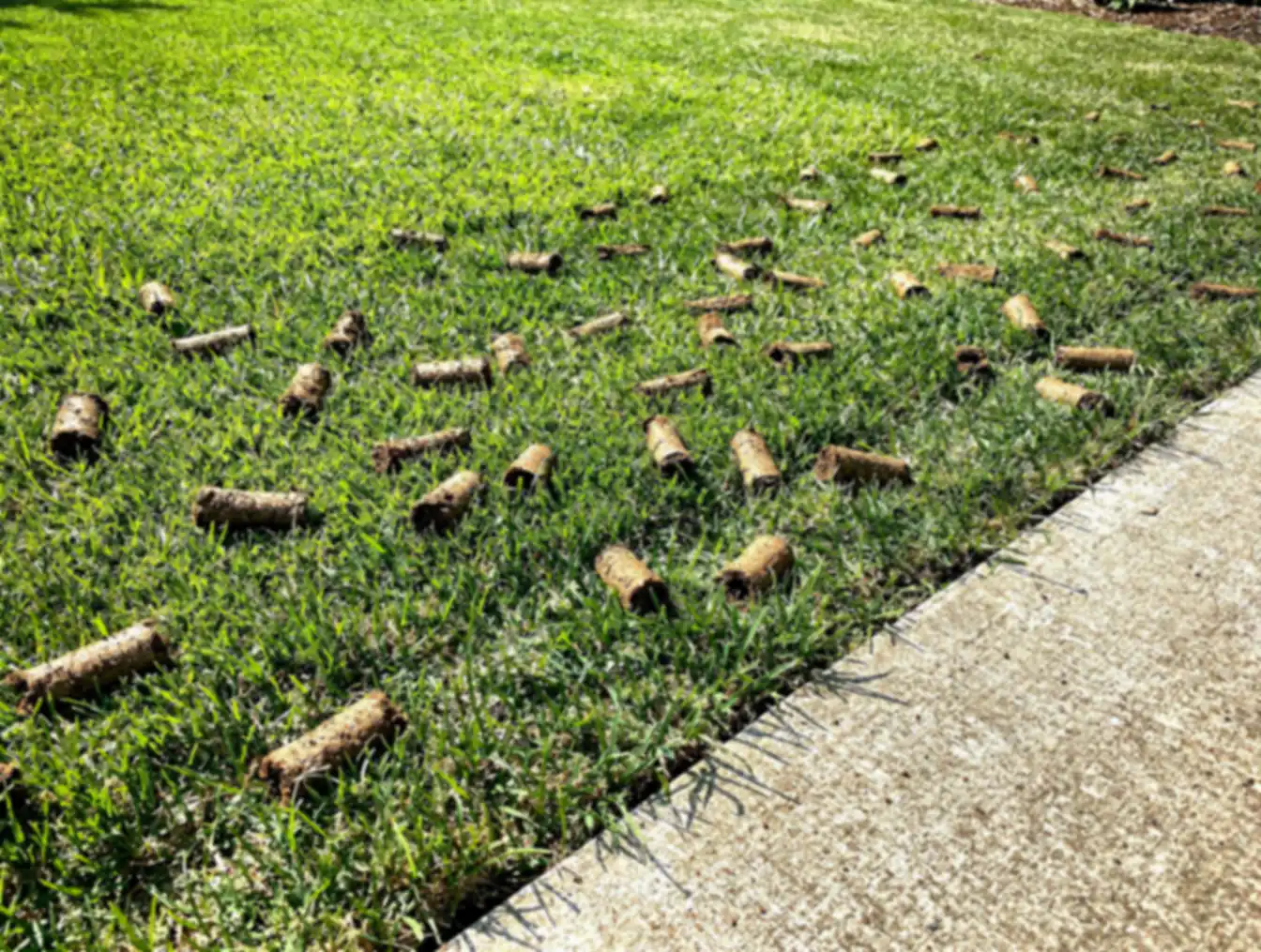
West Tennessee silt loam actually holds nutrients well — the trouble is getting them to the roots. Compaction chokes root growth, a dense layer of subsoil about a foot to three feet down keeps roots from ever going deep, and if soil pH drifts too far, the lawn can't absorb food that's sitting right there. You can fertilize a bad-pH lawn all year and watch nothing change. A soil test tells the real story, winter is a quiet season to run one, and core aeration opens the soil so feeding can do its work.
An underfed lawn sends signals
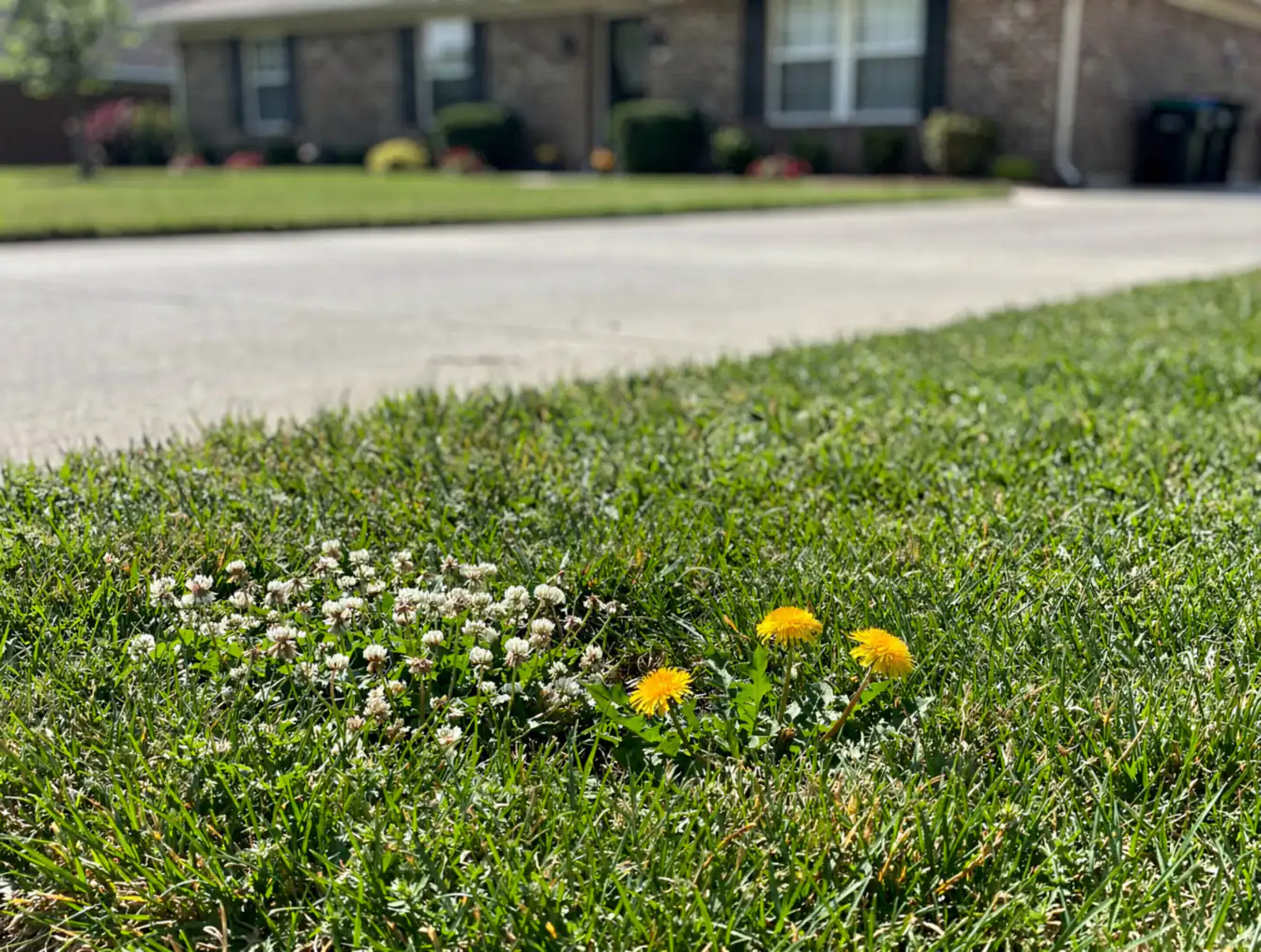
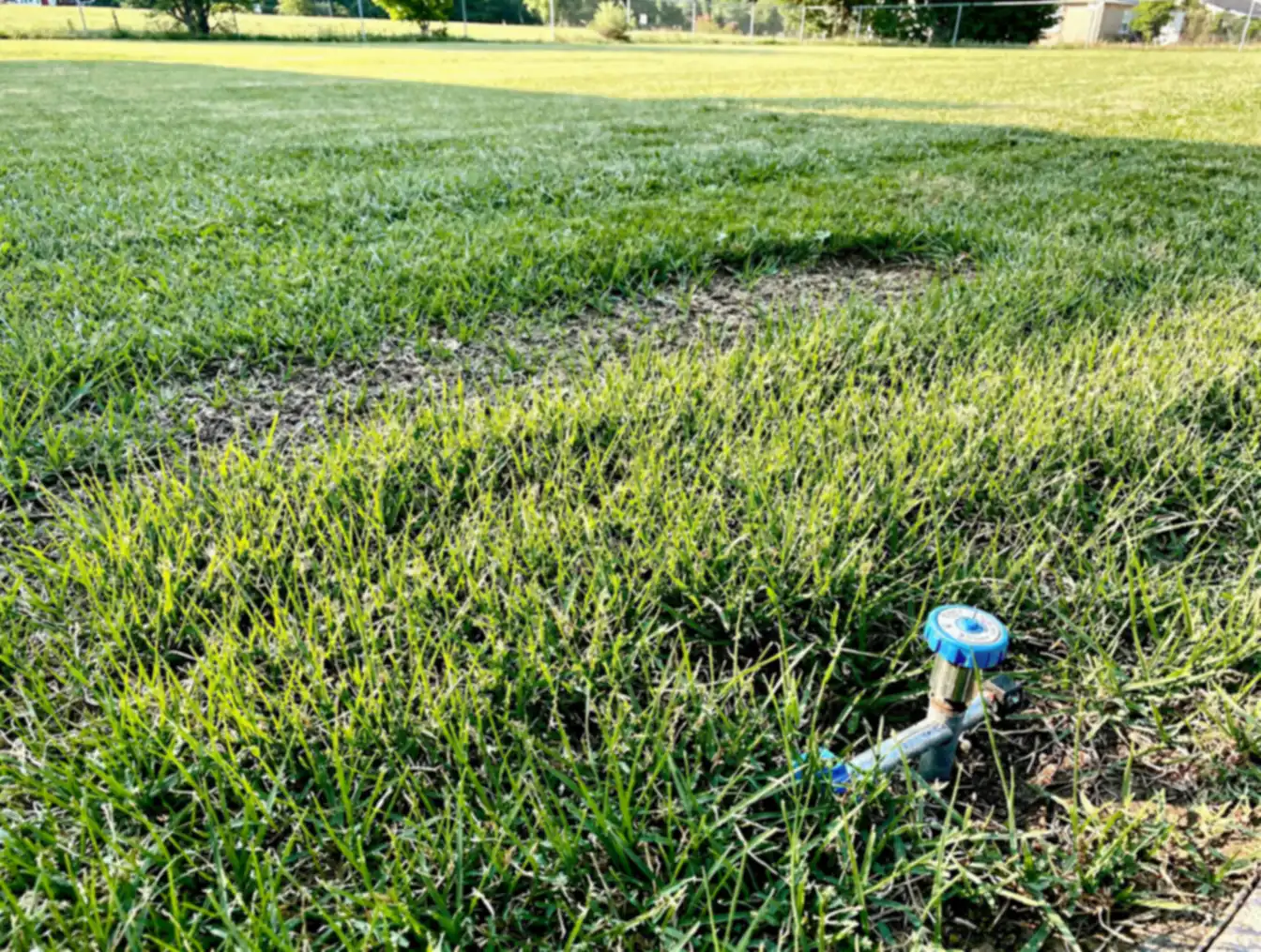
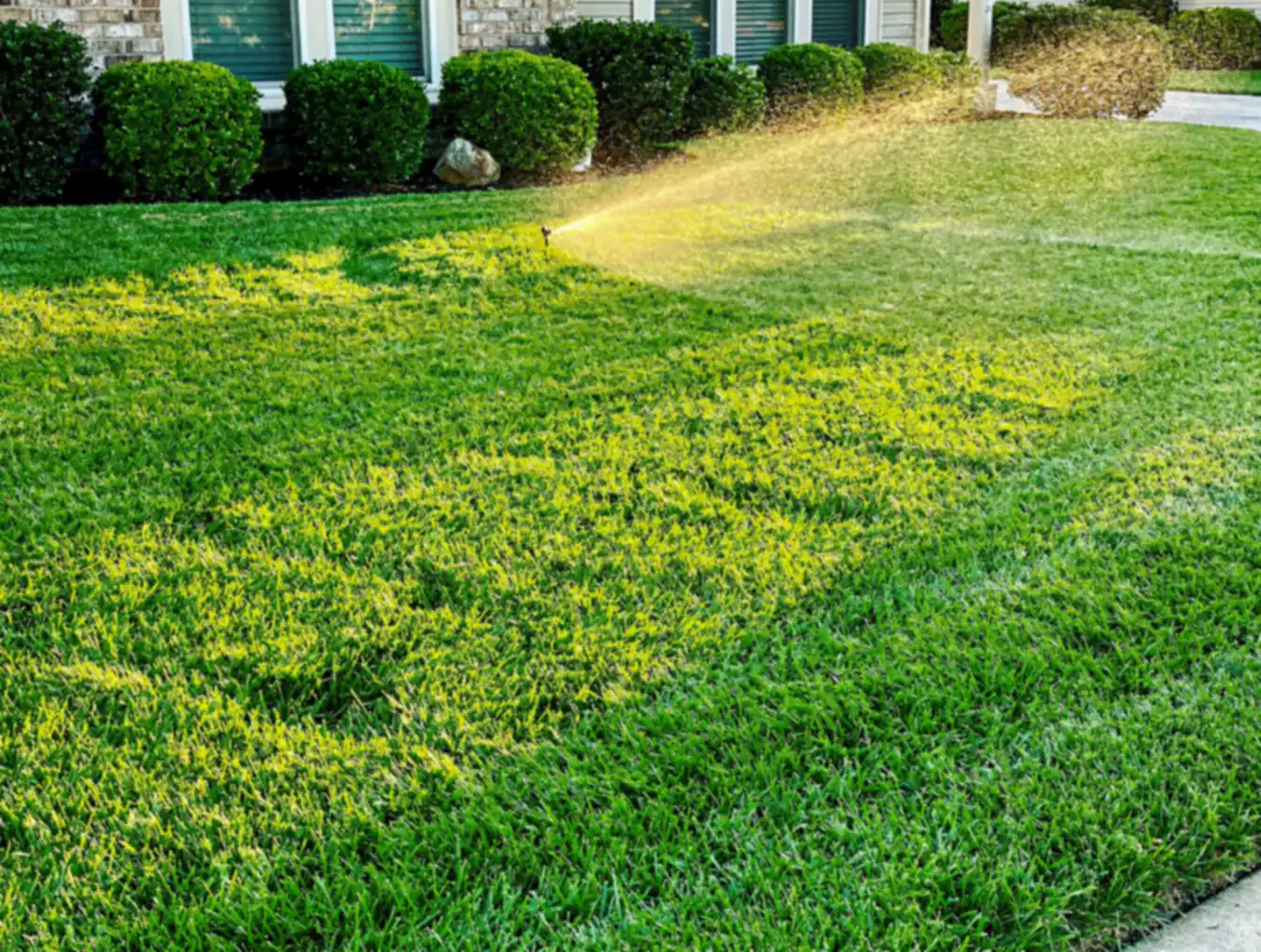
Clover is the classic one — it makes its own nitrogen, so it thrives exactly where grass runs lean. Pale yellow-green color, thin spots that never close, a slow spring green-up while the neighbor's lawn jumps ahead: those are messages, not mysteries. Feeding the bermuda so it can compete is half the answer; weed control while it fills in is the other half.
Rate matters as much as product
More fertilizer is not better fertilizer — too much at once can burn a lawn or push weak, surge growth. We apply calibrated rates with blends matched to the season, because the goal isn't a quick flush of green. It's a lawn that builds density and color all year and goes into winter strong.