Lawn guide · August 6, 2026
Armyworms: When a Lawn Disappears in a Weekend
Fall armyworms can eat a West Tennessee lawn in a weekend. How to scout them, when to act, and which lawns are truly at risk.
The fastest disaster in lawn care
Most lawn problems are slow. Weeds creep, drought sneaks, disease spreads over weeks. You get time to notice and time to act.
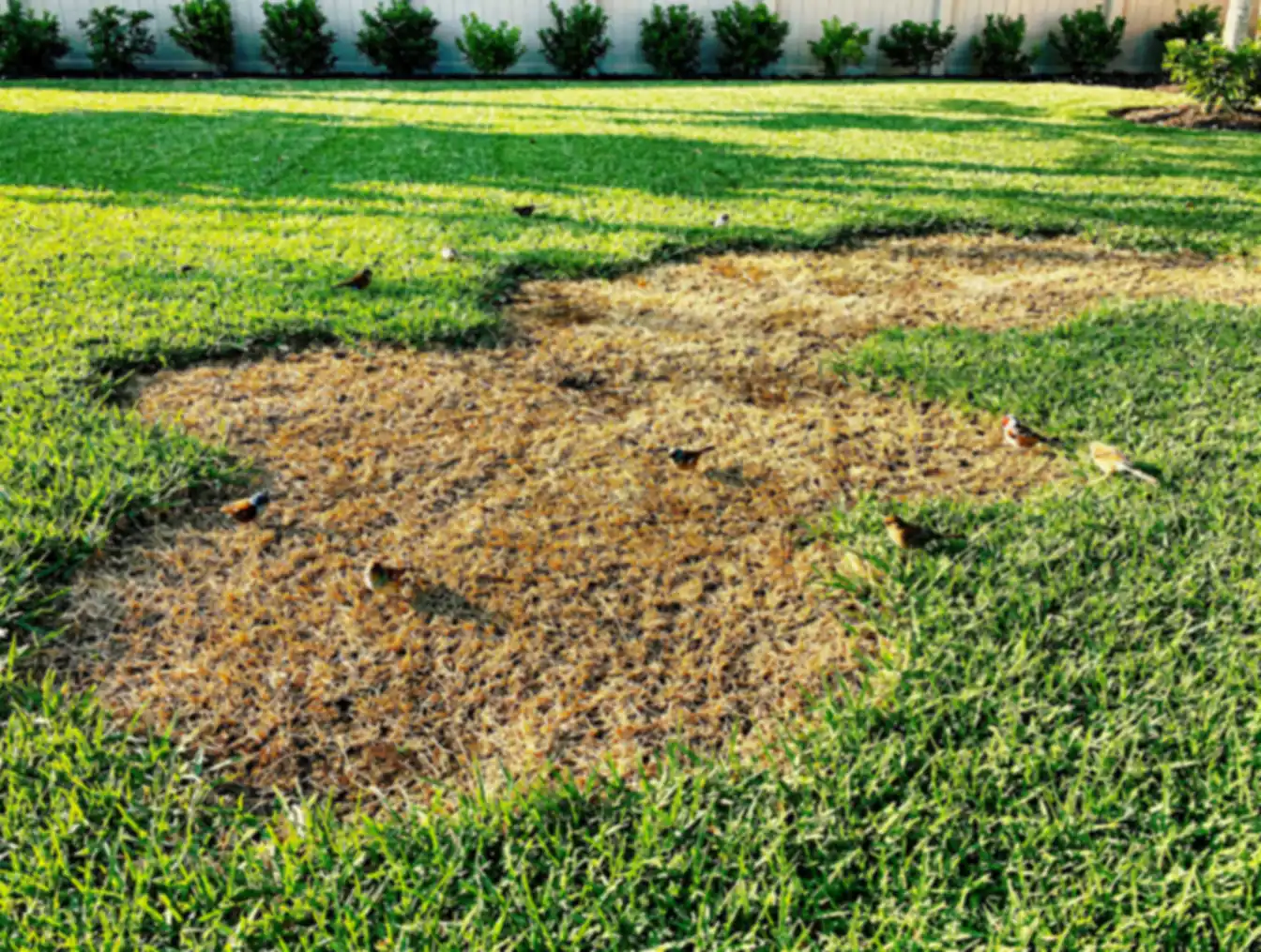
Fall armyworms are the exception, and it isn't close. A lawn can be green when you leave for a couple of days and half brown when you get back. The calls we get in late summer all have the same stunned tone: it was fine, and now it looks scorched, and it's spreading. Nobody believes a caterpillar did it until they crouch down and look. Then they believe it fast, because the ground is moving.
If you own a lawn in West Tennessee, this is worth ten minutes of your attention every August and September. Armyworms are the one lawn problem where the difference between acting today and acting in a week is measured in whole yards.
Moths on the storm winds
The fall armyworm can't survive our winters. Every single year, the population that hits Tennessee starts down along the Gulf Coast, where it lives year-round, and works its way north as adult moths. The moths are drab, gray-brown, and completely forgettable, and they ride weather systems, catching southern winds and storm fronts north in stages through the summer. By late July and August they're arriving here in numbers, which is why our outbreaks land in August and September almost every time. Some years the wave is a ripple. Some years, usually after a run of tropical systems pushing moisture and moths up from the Gulf, it's a flood.
Each female moth lays her eggs in masses of a few hundred, tucked under leaves, on fence rails, on the underside of deck boards, and famously on light-colored surfaces: house siding, vinyl fences, flags, mailbox posts. A fuzzy gray patch the size of a quarter stuck to your fence is not lint. It's an incoming battalion, and a single moth can place several of them.
Why the lawn seems to vanish overnight
Here's the trick behind the disappearing act. A young armyworm caterpillar is tiny and eats almost nothing. For the first week or two of its life, it nibbles the surface of grass blades, leaving faint scratchy windowpane marks nobody notices. The lawn looks fine, and the clock is running.
Then the caterpillars hit their final growth stages, and everything changes. The big caterpillars, the ones an inch to an inch and a half long, striped, with an upside-down Y marked on their head capsule, do the vast majority of all the eating in their whole lives in their last few days of feeding. Multiply that by hundreds of caterpillars per square yard in a bad year, marching together and eating grass to the dirt as they go, and you get the signature armyworm sight: a brown zone with a distinct edge, advancing across a green lawn like a tide. They feed hardest in the early morning and evening, so the lawn is literally being eaten while you're not looking at it.
That's why "it happened in a weekend" is honest reporting. The infestation was weeks old. The damage was two days old.
How to scout before it's obvious
The whole game is catching them while they're small, and the checks take five minutes:
- The soap flush. Mix a couple of tablespoons of dish soap in a gallon of water and pour it over a square yard of lawn at the edge of any suspicious area. Wait a few minutes. Soap irritates the caterpillars and drives them to the surface, where you can count them. A few is normal background. A crowd is an alarm.
- Watch the birds. A flock of birds working one patch of your lawn hard, pecking like the ground is buffet night, is one of the most reliable armyworm alerts there is. The birds found the caterpillars before you did.
- Watch the edges of any brown patch. Drought stress and disease make fuzzy, gradual edges. An armyworm front is sharp, and it moves. Mark the edge with a stick and check it the next morning. If the line advanced, it's alive.
- Check your lights and your fences. Lots of moths around the porch light in late July and August, or egg masses on siding and fence rails, mean the next generation is already ordered.
- Look at the blades themselves. Ragged, chewed-off grass and little green droppings in the canopy are feeding sign, even before things brown out.
Bermuda bends. Baby fescue dies
Now for the part that decides how scared you should be, and the answer depends entirely on what kind of grass you have.
A healthy, established bermuda lawn looks destroyed after armyworms and usually isn't. The caterpillars eat the blades, but bermuda's crowns, stolons, and underground rhizomes are largely left alive, and bermuda regrows from those the way it shrugs off a scalping. Water it, feed it, and in two or three weeks during the growing season it's mostly back, especially with help from a solid fall recovery plan. The real risk to bermuda is timing: a lawn stripped in late September has little season left to recover before dormancy, and a drought-stressed lawn that gets eaten is taking two punches at once.
Fall-seeded fescue is a different story entirely, and it's the cruelest scheduling conflict in our calendar. Fescue goes in the ground here in September and October, and armyworm season runs right through it. A fescue seedling is a single tender blade with shallow roots and no reserves. When armyworms hit new fescue, they don't defoliate it. They erase it, roots to tip, and there is no crown waiting underground to try again. We have seen fresh seeding jobs eaten to bare dirt in days. If you're seeding fescue in the fall, scouting before and after seeding isn't optional. It's part of the seeding.
Speed is the whole treatment plan
Armyworm control isn't complicated. It's urgent, which is different.
Small caterpillars, the half-inch-and-under crowd, are easy to control. They're exposed, they're fragile, and they haven't done their real eating yet. Catch an infestation at that stage and it ends as a story you tell, not damage you repair.
Big caterpillars are the opposite on every count. They're tougher to kill, they've already done most of their damage, and the survivors are days away from burrowing into the soil to pupate, out of reach, where they'll turn into moths and start the next generation. Yes, the next generation: armyworms can cycle through two or three waves here between August and the first hard frost, so one round of damage is sometimes the opening act. A treated lawn stays on watch until frost closes the season.
So the timing rule is blunt. If the soap flush turns up numbers, or the brown line moved overnight, the window for an easy win is measured in days. This is not the lawn problem to sleep on, get three opinions about, and revisit later in the month.
The prevention honesty
Here's the part we'll say plainly because you'll hear fuzzier versions elsewhere: you cannot prevent armyworms. The moths arrive on storm winds from hundreds of miles away, and no treatment on your lawn in June stops a moth from landing on it in August. There's no barrier for weather.
What you can do is be the yard where they get caught early. That means eyes on the lawn from late July through September, a soap jug in the garage, and a low threshold for making the call when something looks off. It's also, frankly, one of the quieter benefits of having your lawn on a year-round program: trained eyes on the turf during the exact weeks this pest does its work, and a company already familiar with your lawn when the clock starts. Armyworms beat lawns that nobody was watching. They lose, almost every time, to lawns where somebody was paying attention in August.