Lawn guide · June 30, 2026
Moles, Grubs, and What's Really Under Your Lawn
Those raised ridges aren't about your grass. How grubs invite moles in, why traps alone never end it, and why we work the animal and the food supply together.
The morning highway map
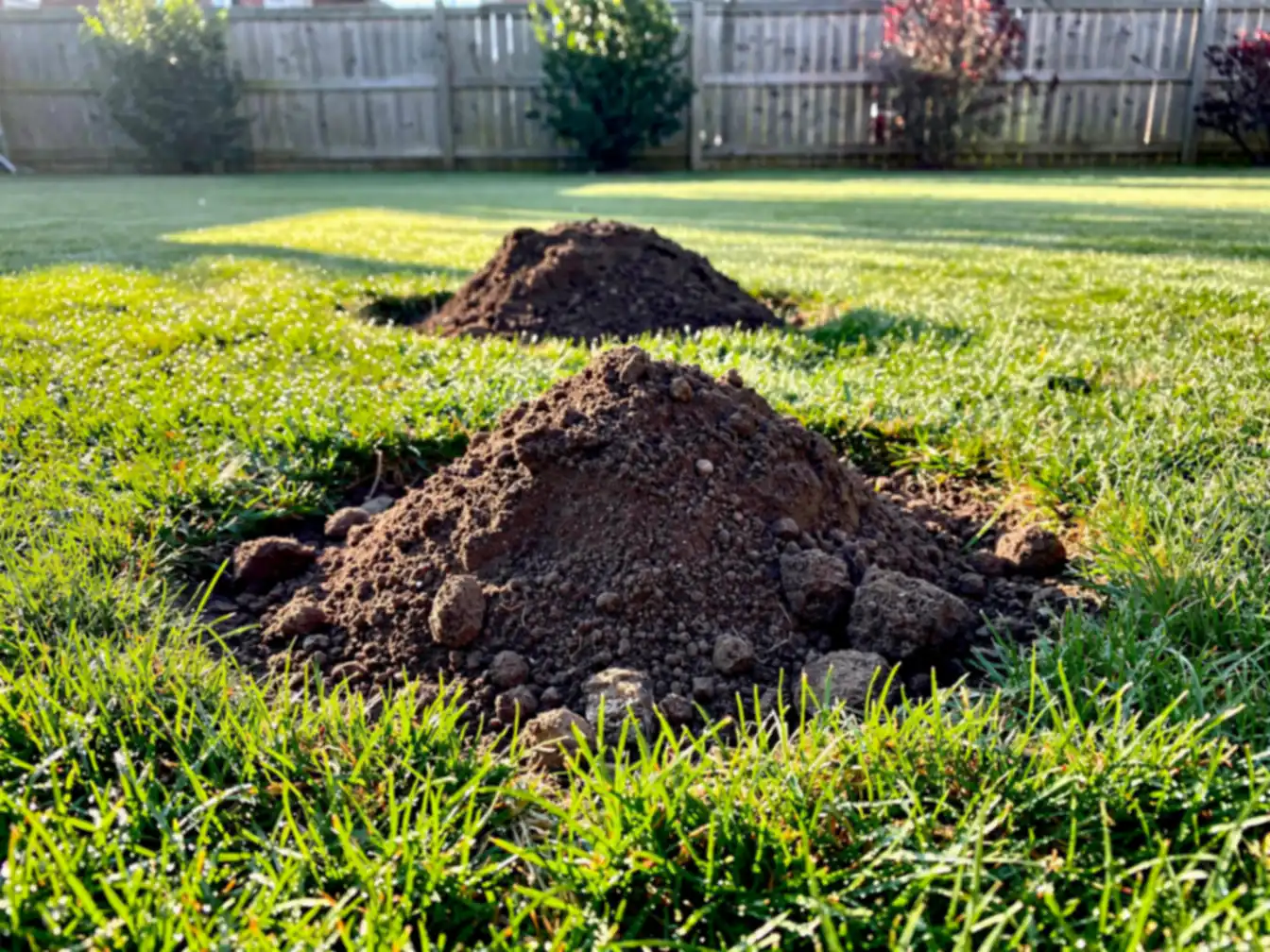
It usually starts the same way. You walk out one morning and there's a raised ridge of soil wandering across the yard, like something drew a line under the grass with a finger. You stomp it flat. Two mornings later there are three more, plus a little volcano of loose dirt near the flower bed. Give it a couple of weeks and the front yard looks like a map of the interstate system.
One yard we take care of got to exactly that point: fresh tunnels every single morning, faster than the owner could walk them down. He was ready to declare war on the mole. The thing is, the mole was never really the problem. The problem was what the mole was eating.
Moles aren't after your grass
Here's the fact that changes the whole fight: moles don't eat plants. Not grass, not roots, not bulbs. A mole is an insect-eater, and a hungry one, putting away close to its own body weight in grubs, earthworms, and soil insects every day. Those raised ridges aren't vandalism. They're hunting routes, dug just under the surface where the food lives.
Which leads to a hard truth about nice lawns. A well-watered, well-fed lawn grows soft, moist soil full of earthworms and grubs. To a mole, that's not a lawn. That's a buffet with the lights on. So a mole in your yard isn't a sign you've let the place go. It's usually a sign the ground under your grass is rich and alive, and something next door figured that out. Your yard isn't dirty. It's delicious.
The grass damage is real, but it's collateral. Tunneling separates roots from soil, and the grass above a tunnel dries out and browns in a stripe. The mole never took a bite of it.
Meet the grub
Since the food is the real story, it helps to know what a grub actually is. Grubs are beetle larvae, mostly May and June beetles and Japanese beetles around here. The adults lay eggs in the lawn in summer, and the eggs hatch into fat, white, C-shaped larvae that live in the top few inches of soil, eating organic matter and grass roots.
Grubs commit two crimes at once. First, in high enough numbers they do their own damage: they chew roots, and by late summer you get spongy turf and brown patches that pull up like loose carpet, because there's nothing anchoring the grass down. Second, and this is the one most people never connect, they ring the dinner bell. A lawn with a healthy grub population is broadcasting an invitation to every mole within range.
Want to see for yourself? Cut a flap of turf about a foot square in an area near the tunneling, peel it back, and look at the top few inches of soil. Finding a grub or two is normal. A whole lawn is a big place, and no lawn is bug-free. Finding a little crowd of them in one square foot means the shelves are full, and it explains every ridge in the yard.
That's why a mole problem and a grub situation are usually the same problem wearing two hats.
Why chasing the mole alone doesn't end it
Folks try everything on the mole itself. Sonic spikes, poison worms, chewing gum, coffee grounds, pinwheels, the garden hose down the tunnel. Traps genuinely work — they are the one method on that list that reliably takes out the mole in your yard, and we set them. What none of it does on its own is end the problem, and here's why.
Remove a mole and you've changed nothing underground. The tunnels are still there, dug and ready. The grubs and worms are still there, fat and plentiful. In Tipton County, where most yards back up to fields, woods, or pasture, the supply of the next mole is effectively unlimited. You haven't closed the restaurant. You've cleared a table and hung out the vacancy sign.
It doesn't help that moles are built for the job. They're fast diggers, they're almost never above ground, and a single mole can be responsible for a shocking amount of tunnel, which is why a yard with one mole often looks like it has a dozen. Most of the time you are not fighting a mole invasion. You are fighting one very motivated employee.
That's the treadmill people end up on: trap one, wait, watch fresh ridges appear, repeat. Trapping is doing its job in that loop — it's just being asked to do the whole job by itself, in a yard that keeps refilling.
Work both ends: the mole and the pantry
So we do both. We trap the mole actually working the yard, and we treat the lawn for grubs to take part of the food source off the table. It's the same logic as any pest in your kitchen: you don't win by swatting faster, you win by putting the food away.
When the grub population crashes, the math changes for the mole. Every foot of tunnel it digs costs energy, and digging through soil that isn't paying out is a losing trade. A mole working harder for less has a reason to move on, usually right back toward the field or fence line it came from.
Be aware of the timing difference, because it is the thing people get wrong. Trapping is the fast half — it deals with the mole that is there now. Treating the grubs is the slow half: grub numbers come down over weeks, not over a weekend, and a lawn that has been good hunting stays attractive for a while after the granules go down. Anyone promising you an empty yard by Saturday is guessing. Here's the honest asterisk, though, and you won't hear it everywhere: grubs are not the whole menu. Studies of mole stomachs put earthworms at better than half the diet, and nothing we put on a lawn touches earthworms. Taking the grubs away removes a big part of the draw, not all of it. Some yards go quiet; some stay interesting to a mole anyway, especially where the ground is soft and rich. That's why our approach to mole control uses traps and grub treatment together rather than betting the whole job on either one — and why we won't promise you a mole-free yard.
The honest timeline
Here's the part where we level with you: this is not an overnight fix, and anybody promising one is selling something.
The grub treatment itself needs time to work down into the soil where the grubs live, and our tight silt loam makes watering-in matter more than it would in sandy ground. Then the mole needs time to figure out that the buffet has closed. It will keep patrolling its existing tunnels for a while, living partly off earthworms, before it concludes the neighborhood has gone downhill and moves on. Expect tunneling to taper over weeks, not vanish in days.
Timing plays a role too. Mole activity gets very visible in spring and again in late summer and early fall, because that's when grubs are big, hungry, and feeding in the top few inches — the moles are simply following the food. Then real cold changes the picture: once soil temperatures fall below about 50 degrees, grubs burrow down four to eight inches to wait out the winter, well below where anything can reach them, and surface activity goes quiet until they climb back up in spring. So a quiet yard in January isn't a cured yard. It's intermission. And prevention has a calendar of its own: a preventive grub application in late spring or early summer, timed as part of an annual treatment program, stops the summer's beetle eggs from ever becoming fall's food supply. Lawns that get that treatment every year make the mole call a lot less often.
Repairing the highway
Once the digging stops, the lawn itself needs a little attention. Walk the tunnels down or press them flat with a roller as soon as you can, because grass roots suspended over an air pocket dry out fast. Water those stripes so the soil settles back into contact with the roots. During the growing season, bermuda is aggressive enough to knit across most tunnel lines on its own within weeks.
The exception is real grub damage, the carpet-roll patches where roots were eaten outright. Those spots may need soil pressed back down and some help filling in, and if they're big, that's a seeding conversation with its own timing rules. Either way, the sequence matters: food source first, mole gone second, repairs last. Fix the lawn before you fix the grubs, and you're just rolling out fresh carpet for the next tenant.