Lawn guide · June 18, 2026
Living With West Tennessee Clay Soil
Everybody here calls it clay. It's really silt loam over a fragipan — why West TN lawns turn to soup in winter, brick in July, and root shallow.
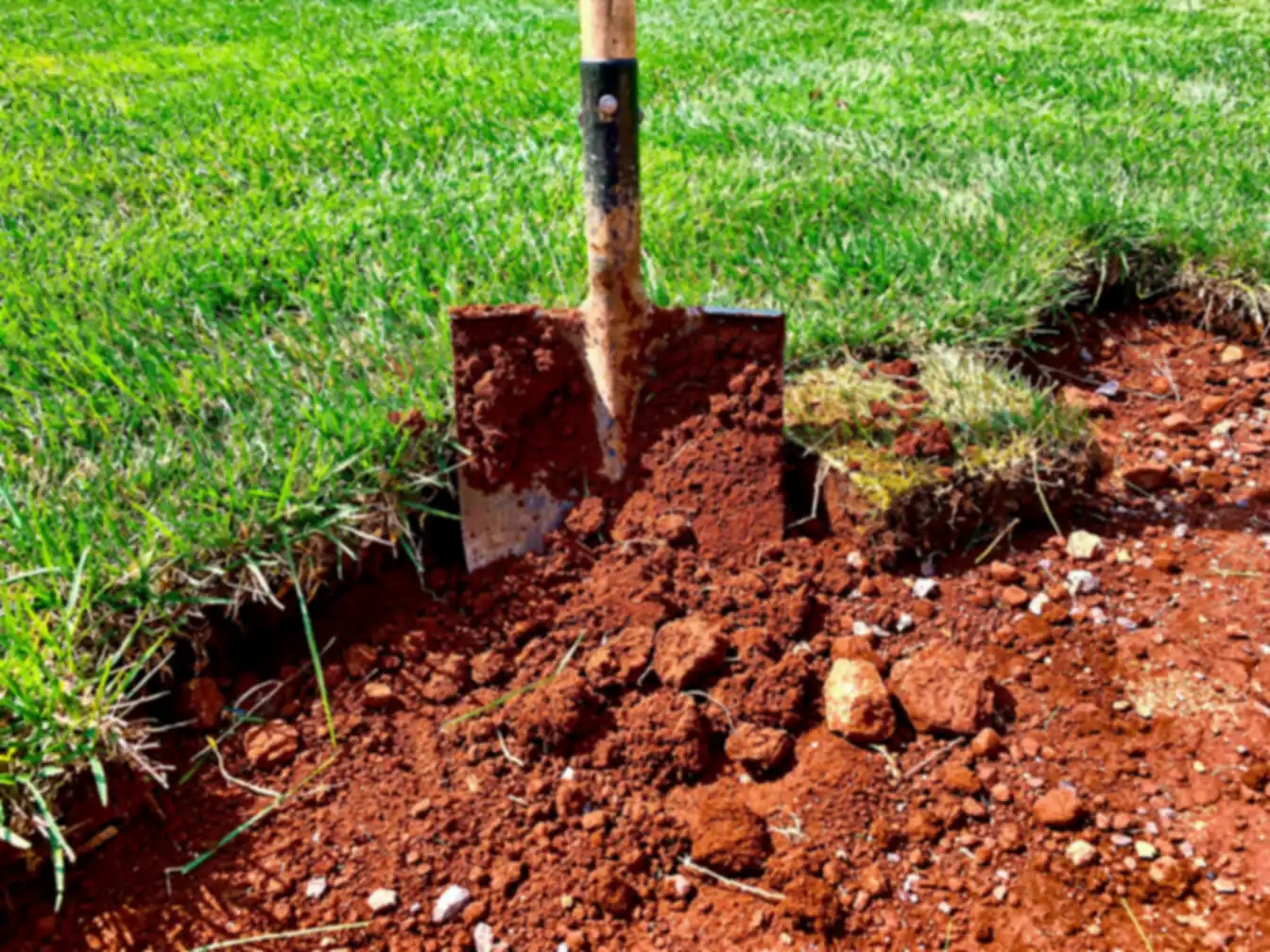
If you've ever tried to dig a fence post in Tipton County in August, you already know what this guide is about. Around here everybody calls it clay. The soil surveys call it something else — Memphis, Loring, and Adler silt loams — and the difference is worth ten minutes of your time, because it changes the explanation for almost everything your lawn does: why one yard stays soggy for days while the one next door bakes into a brick, why roots stop at a certain depth, why compaction comes back every year no matter what you do. You can't trade your soil in for the fluffy loam the gardening shows are always filming on. But once you understand what's actually down there, you can work with it instead of fighting it. Plenty of the best-looking bermuda lawns in West Tennessee are growing on exactly the same ground you are.
What we're actually standing on
Soil gets named for the size of its particles. Sand is coarse, and water races through it. Clay particles are the smallest of all, flat and sticky, and they hold water like a grudge. Silt sits in between — fine and floury, smooth between your fingers when it's dry, slick when it's wet. West Tennessee is silt country. Our topsoil is loess: dust picked up off the river valley thousands of years ago, carried here on the wind, and dropped in a blanket several feet thick. It's genuinely good topsoil, holding water and nutrients far better than sand and growing the row crops this county has lived on for generations. So why does the shovel bounce in August? Because in most yards around here there's a lid under the topsoil. Dig down somewhere between about a foot and three feet and you hit a fragipan — a dense, brittle layer that formed as fine particles packed into the pore space below the root zone. It isn't rock, but roots treat it like a wall, and so does water. That one layer explains the split personality every homeowner here complains about. Rain soaks in, reaches the pan, and stops, so water perches above it and the lawn sits in a saturated sponge for days after a storm, roots in ground too wet to breathe. Then the dry spell comes, the perched water gets used up, and the grass is drinking from only that shallow layer. Same soil, opposite problems, six weeks apart. Your lawn isn't rooting in a deep column of earth. It's rooting in a shallow tray.
Soup in winter, brick in July
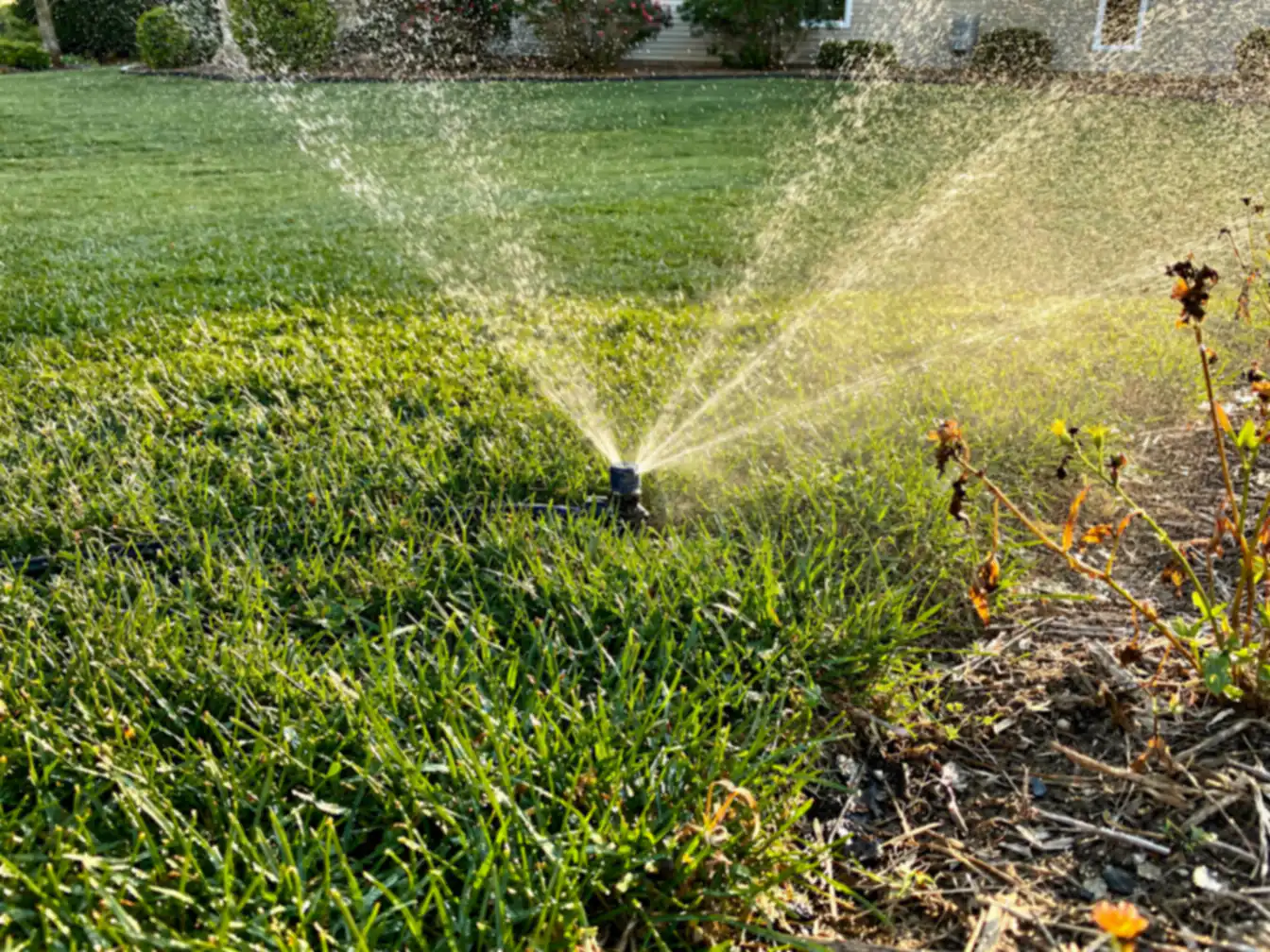
That's why the yard behaves the way it does across the year. In a wet West Tennessee winter and spring, the low spots stay saturated for days after a storm, and roots sitting in waterlogged soil can't breathe — they need air as much as they need water — so a soggy spring quietly suffocates grass in the low corners. Then summer flips it. Bare silt has one famous trick: hit it with a hard rain and those fine particles seal the surface into a smooth crust, and once that crust bakes, the next rain mostly runs off into the street instead of soaking in. The ground that wouldn't dry out in March now refuses water in July. Watering here takes some technique for exactly that reason — we cover it in our guide to summer watering for bermuda lawns.
Compaction: the problem stacked on top of the problem
Silt has one real weakness, and it matters a lot for lawns: it compacts easily, especially when it's wet. The particles are fine and uniform, so pressure packs them into a dense mass with the pore space squeezed out — and everything that happens on a lawn is pressure. Mower wheels, week after week. Kids and dogs running the same routes. Cars parked off the driveway. New construction is the worst case, since builders' equipment packs the ground hard before the sod ever goes down, which is why so many newer yards around Brighton, Atoka, and Munford struggle from year one. Compacted silt squeezes out the space where air and water are supposed to live, so roots stay shallow — and shallow roots on top of a fragipan is a thin margin to live on. Want to know how compacted your yard is? Push a screwdriver into the soil a day or two after a rain. If it slides in a few inches, you're in decent shape. If you need real force, your grass is growing through something close to concrete.
Why aeration matters more here than almost anywhere
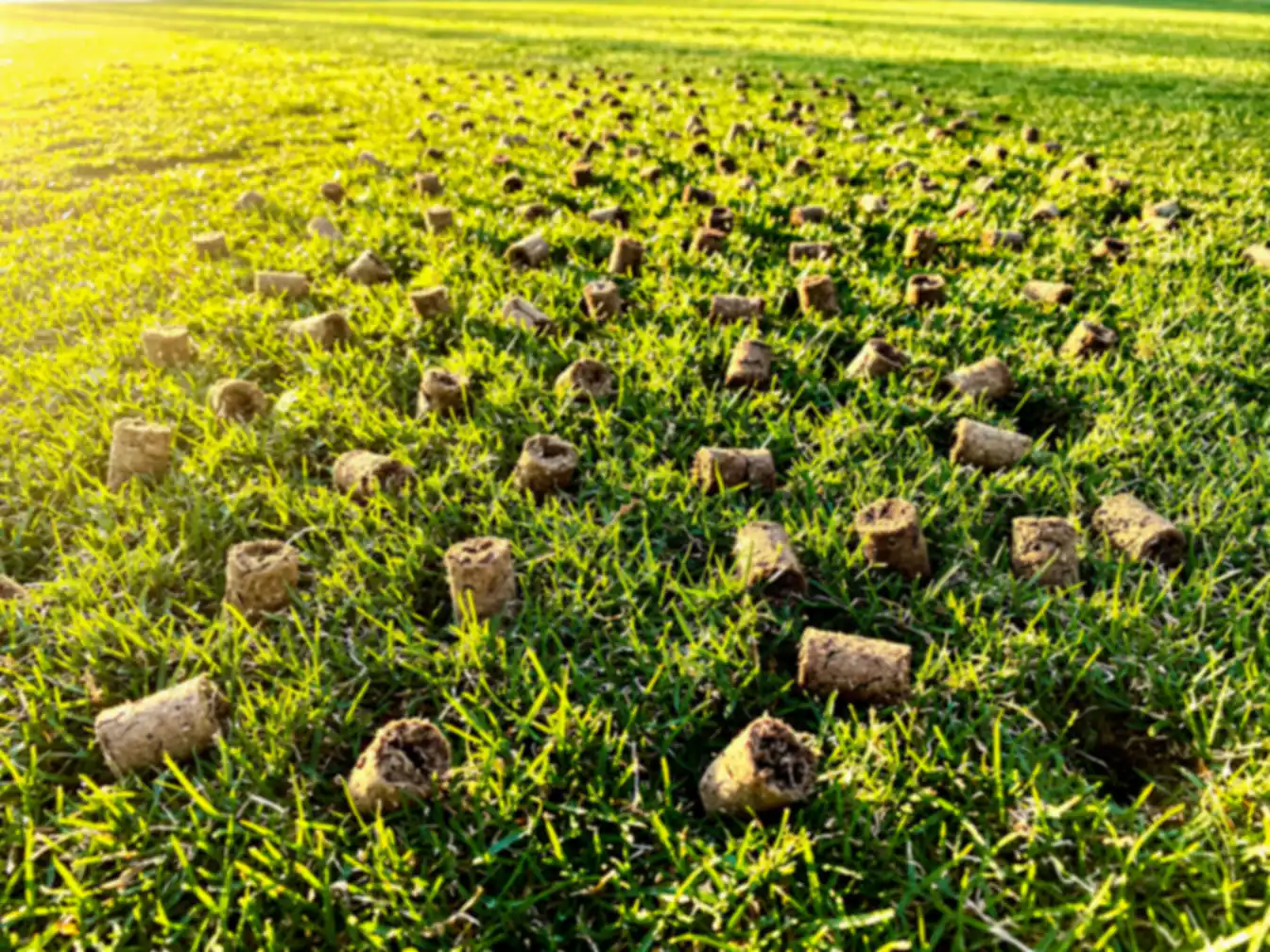
Core aeration is the direct answer to compacted silt. A machine pulls thousands of small plugs out of the lawn, leaving open channels a couple inches deep. Air gets down to the roots, rain soaks in instead of sheeting off the crust, and roots follow the loosened pathways down — and every extra inch of rooting depth above that pan counts for a lot in August. On sandy soil, aeration is a nice extra. On our ground it's closer to essential maintenance, because the compaction comes back a little every year. Timing is where national advice steers people wrong: bermuda is a warm-season grass, so its window is late spring through midsummer, while it's growing hard enough to heal the holes. Fall aeration is the cool-season rule, not the bermuda rule. Most lawns here do well with core aeration once a year in that stretch, and hard-used yards can justify twice. Our full guide to core aeration covers what it fixes and what it doesn't.
The part nobody mentions: this soil has real advantages
Before this reads like a list of grievances, some fairness. Silt loam is genuinely good at two things, and they both matter for a lawn. First, it holds nutrients: fine particles carry a slight electrical charge that grabs fertilizer and keeps it in the root zone, where sandy soil would let the same nutrients wash straight through with the next storm — one reason a well-run fertilization schedule goes further here than it would on sand. Second, it holds moisture in reserve. Below the baked summer crust it stays damp long after sandy ground has gone bone dry, and a bermuda lawn rooted deep enough to reach that reserve can coast through a dry spell. Notice the catch, though: both advantages only pay off below the compaction zone. A shallow-rooted lawn gets all of this soil's problems and none of its gifts.
What homeowners can actually change
You can't dig out your yard and replace the dirt, and nobody is removing a fragipan — but you have more influence than you'd think. Aerate on schedule, and leave the plugs where they fall. Let clippings lie instead of bagging them, because they break down into organic matter, and organic matter is the slow-motion cure for tight soil. Mow bermuda at its own height — 1 to 2 inches for the common types most lawns here are — and often enough that no single cut takes more than a third of the blade. Bermuda spreads sideways and is built to be kept short; let it grow tall and the canopy goes puffy, the mower scalps every uneven spot, and the extra stems pile up as thatch. A dense, low-cut bermuda lawn shades its own soil better than a tall thin one ever will. (Tall fescue in the shade is the exception — that grass wants 3 to 3.5 inches.) Water deeply and less often to pull roots down, thicken thin areas through seeding, and spread the traffic out where you can.
What you can't change, and shouldn't lose sleep over
Some things about this ground are permanent, and pretending otherwise helps nobody. No bagged product changes particle size or dissolves a fragipan, and claims otherwise deserve a raised eyebrow. Tilling sand into fine soil is an old backfire: done halfway, you get concrete, not beach. If water pools against your foundation or a low corner never dries, that's a drainage project, and no amount of aeration fixes elevation. And this soil will always be slower to forgive than sand: slower to dry in spring, harder in late summer, quicker to compact. The goal isn't to beat it. The goal is a thick, deep-rooted bermuda lawn that's adapted to it — and bermuda, tough as it is, happens to be the right grass for the job. That's the whole reason it's the default lawn in West Tennessee. The ground was always going to win the argument about what kind of soil you have. It doesn't get a vote on what kind of lawn you have.