Lawn guide · July 14, 2026
Watering Bermuda Through a West Tennessee Summer
Deep and infrequent beats daily sprinkles. How much to water, why mornings matter, and how to tell drought stress from disease.
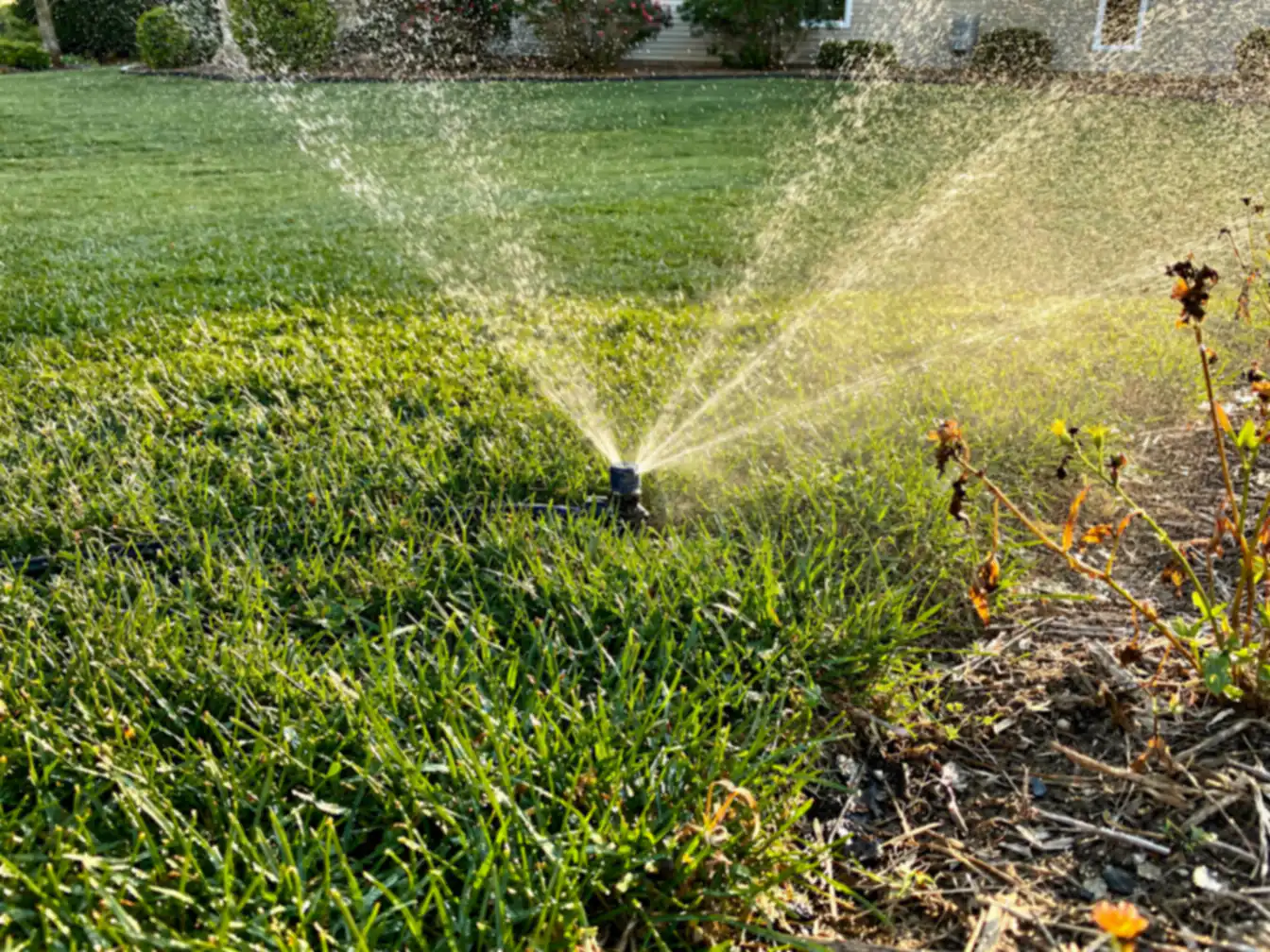
Bermuda is the toughest grass you can grow in West Tennessee, and July still finds ways to test it. Between the heat, the humidity, and soil that seals over and refuses rain one month, then hoards it the next, summer watering here is less about effort and more about technique. The good news: the right technique is actually less work than what most people are doing. Here's how to water a bermuda lawn through a Tipton County summer — and how to tell whether a browning lawn is thirsty or sick, because those two problems look alike and get treated very differently.
Deep and infrequent beats a daily sprinkle. Every time
The most common watering mistake isn't watering too little — it's watering too often, too shallow. A light sprinkle every evening wets the top inch of soil and nothing below it, so the roots stay in that top inch, because roots grow where the water is. Shallow roots are fine right up until the first week the rain quits and the sprinkler misses a day, and then the lawn folds fast. Deep, infrequent watering does the opposite: one or two good soakings a week push moisture down several inches, and the roots chase it. Deep-rooted bermuda rides out an August dry spell without flinching; shallow-rooted bermuda browns out while its owner stands there holding a hose, doing everything right except the thing that matters. The target is about one inch of water per week, rain included, delivered in one or two sessions rather than seven. In peak heat on our soil, an inch and a half spread over two sessions is a reasonable ceiling. More than that is usually helping the fungus, not the grass.
How much is an inch, really? Run the tuna can test
"An inch of water" sounds like something you'd need equipment to measure. You need a tuna can — an empty one is about an inch deep. Set a few around the yard (rain gauges and straight-sided cups work too), run your sprinkler like normal, and time how long it takes them to fill. That's your number. Most people are shocked in one direction or the other: some sprinklers put out an inch in 25 minutes, others need well over an hour. Until you've run this test, you're guessing. One wrinkle our soil adds: silt loam takes water in slowly once its surface has crusted, and a baked summer crust sheds most of what lands on it. Run a sprinkler 45 straight minutes on hard ground and the last 15 may run down the curb. The fix is called cycle and soak — water half the time, stop for a half hour to let it soak in, then run the second half. Same total water, far more of it in your soil. We get into why our soil behaves this way in our West Tennessee soil guide — and if water is pooling and running off within minutes, compacted soil is usually the culprit, which is a job for core aeration rather than more water.
Morning is the only good time
Water early — ideally between sunrise and mid-morning. The reason is our humidity. A West Tennessee summer night is warm, damp, and still: exactly the environment lawn fungus dreams about. Grass watered in the evening stays wet for ten or twelve hours in that greenhouse, and that's how dollar spot gets its start. Grass watered at dawn drinks what it needs and dries off as the sun comes up. Midday watering isn't dangerous, just wasteful — you lose a chunk to evaporation before it ever reaches the roots. Evening is the one to genuinely avoid. If your only option is an after-work soak at 7 p.m., it will keep the lawn alive, but understand you're rolling dice with disease every humid week. A cheap hose timer that runs at 5 a.m. solves the whole problem while you sleep.
Drought stress or disease? Look at the shape
Here's where summer gets tricky: a thirsty lawn and a sick lawn are both brown, and watering a sick lawn makes it sicker. The tells are pattern and location. Drought stress shows up first in the predictable hot spots — south-facing slopes, ground near driveways and sidewalks, anywhere shallow or compacted — and drought-stressed bermuda gives warnings before it browns: blades fold in half lengthwise, the color dulls toward gray-blue, and footprints linger in the grass instead of springing back. Water it deeply and it perks up within a day or two. Disease doesn't care about hot spots. Dollar spot is bermuda's humid-summer regular here: small bleached, straw-colored spots, silver-dollar size up to about the width of your hand, sometimes running together, showing up after warm days and cool nights with heavy dew — often in parts of the lawn that are plenty moist. Extra water won't green those spots up; it feeds them. (Brown patch, the disease name most people have heard, is a tall fescue problem — if you have it, it's in the shady fescue, not the bermuda.) A third impostor worth knowing: grubs, which eat the roots out from under the grass, so the turf browns and lifts like loose carpet no matter how faithfully you water. The rough field test: browning in hot spots that answers to water is drought. Bleached spots, spreading patches, or browning that ignores water is a problem that needs diagnosing, not irrigating — fungus and insects each need their own treatment, and the sooner they're identified the less lawn you lose. That's a big part of what treatment visits on a year-round program are for: catching the difference early, in every season.
When it rains, count it — and then stay out of the way
A West Tennessee summer isn't a desert. We get real thunderstorms, and a storm that drops an inch just did your watering for you. Skip the next session — the goal is about an inch a week from all sources, not an inch from the hose no matter what the sky contributed. This is where set-and-forget irrigation systems quietly cause trouble, running their schedule the morning after a two-inch storm. A rain sensor, or just turning the system off after a good soak, keeps the soil from tipping into waterlogged — and waterlogged bermuda in July heat is dollar spot waiting to happen. A rain gauge somewhere in the yard takes the guesswork out. The habit to build: know what fell, subtract it, water the remainder.
The exceptions: new seed and fresh sod play by different rules
Everything above assumes an established lawn, and the exceptions matter before somebody deep-waters a batch of brand-new seed into oblivion. Newly seeded areas need the opposite of deep and infrequent: seed has to stay consistently moist to germinate, which means light, frequent watering — often a short session daily, sometimes twice daily in hot weather — until the new grass is up and establishing. Same idea for fresh sod, which has no roots into your soil at all for the first few weeks and depends entirely on what you give it from above. Once new grass is up, growing, and has been mowed a few times, you wean it gradually onto the adult schedule — stretching the days between waterings so the young roots learn to chase moisture down like everything else in the yard. The same logic applies after seeding work in fall: babying the seed is temporary, and the graduation to deep-and-infrequent is part of the plan, not a betrayal of it. If you're juggling both — established bermuda in one part of the yard, new seed in another — water them separately if you can. The lawn and the nursery have different diets.
Mow at bermuda's height, and let the whole system work together
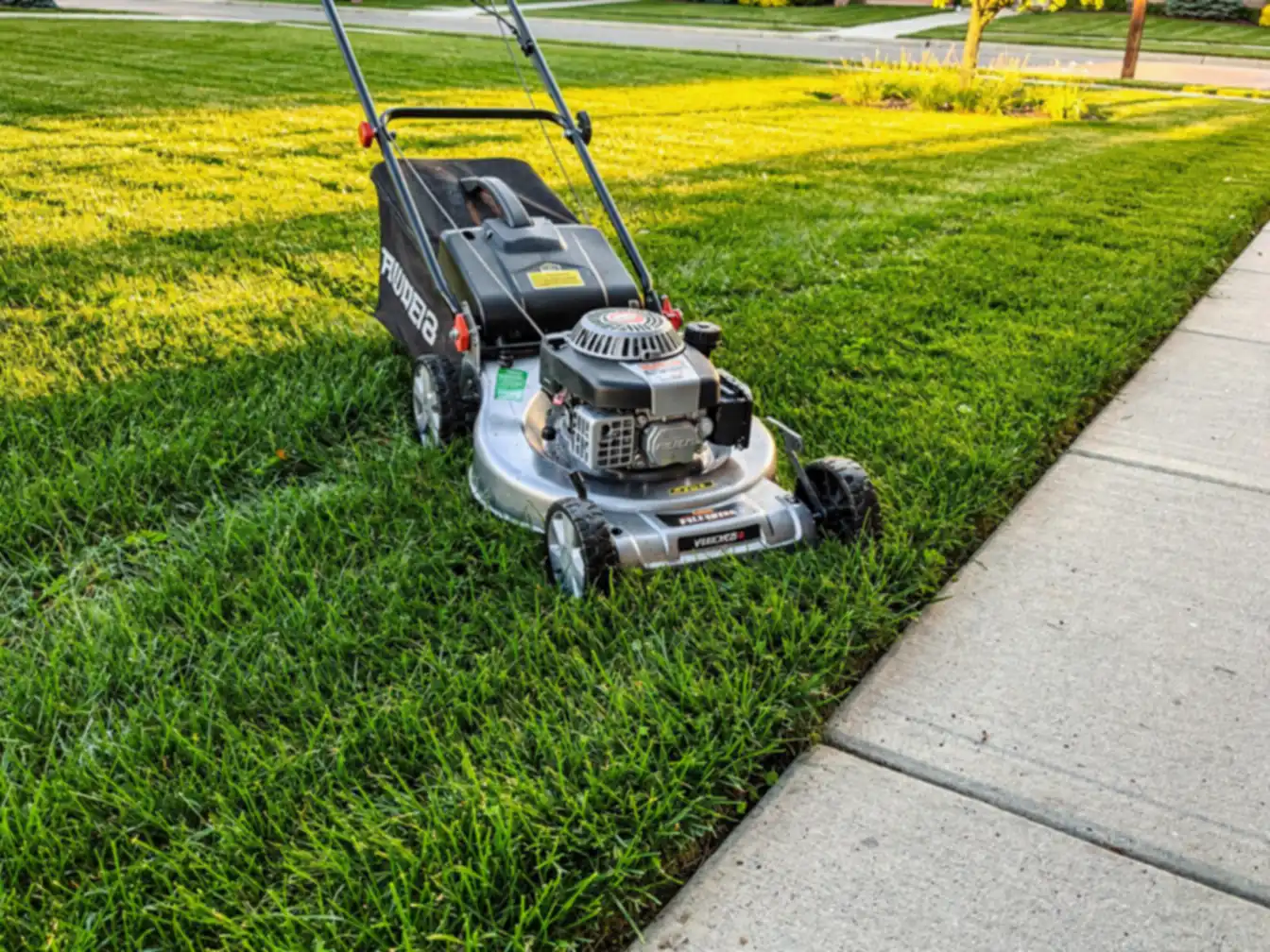
Watering doesn't operate alone, and mowing is where a lot of careful watering gets undone. Bermuda is a low, spreading grass meant to be cut short — 1 to 2 inches for the common and seeded types most lawns here are, lower for fine-bladed hybrid sod. Letting it climb to three inches to shade the soil is advice written for fescue, and on bermuda it backfires: the canopy goes puffy, the mower scalps every uneven spot, and the leftover stems build thatch that sheds water like a raincoat right when you're trying to get water in. What shades bermuda's soil is density, not height, and density comes from cutting often. Never take off more than a third of the blade in one mowing, and scalping bermuda in a heat wave is a self-inflicted wound. Sharp blades matter more in summer too: ragged cuts lose extra moisture and invite disease through the torn edges. Keep the lawn fed on schedule, since a hungry lawn and a thirsty lawn fail in similar ways. Put it together and the summer recipe is short: an inch a week counting rain, delivered deep in one or two morning sessions, cut low and often, watched for bleached spots. Bermuda has been handling Southern summers a lot longer than any of us. Given roots deep enough to work with, it mostly takes care of itself.