Lawn guide · June 24, 2026
How to Mow a Treated Lawn Right
Mowing advice from a company that doesn't mow: height, sharp blades, the 24-hour wait after treatment, and why treated lawns need less cutting.
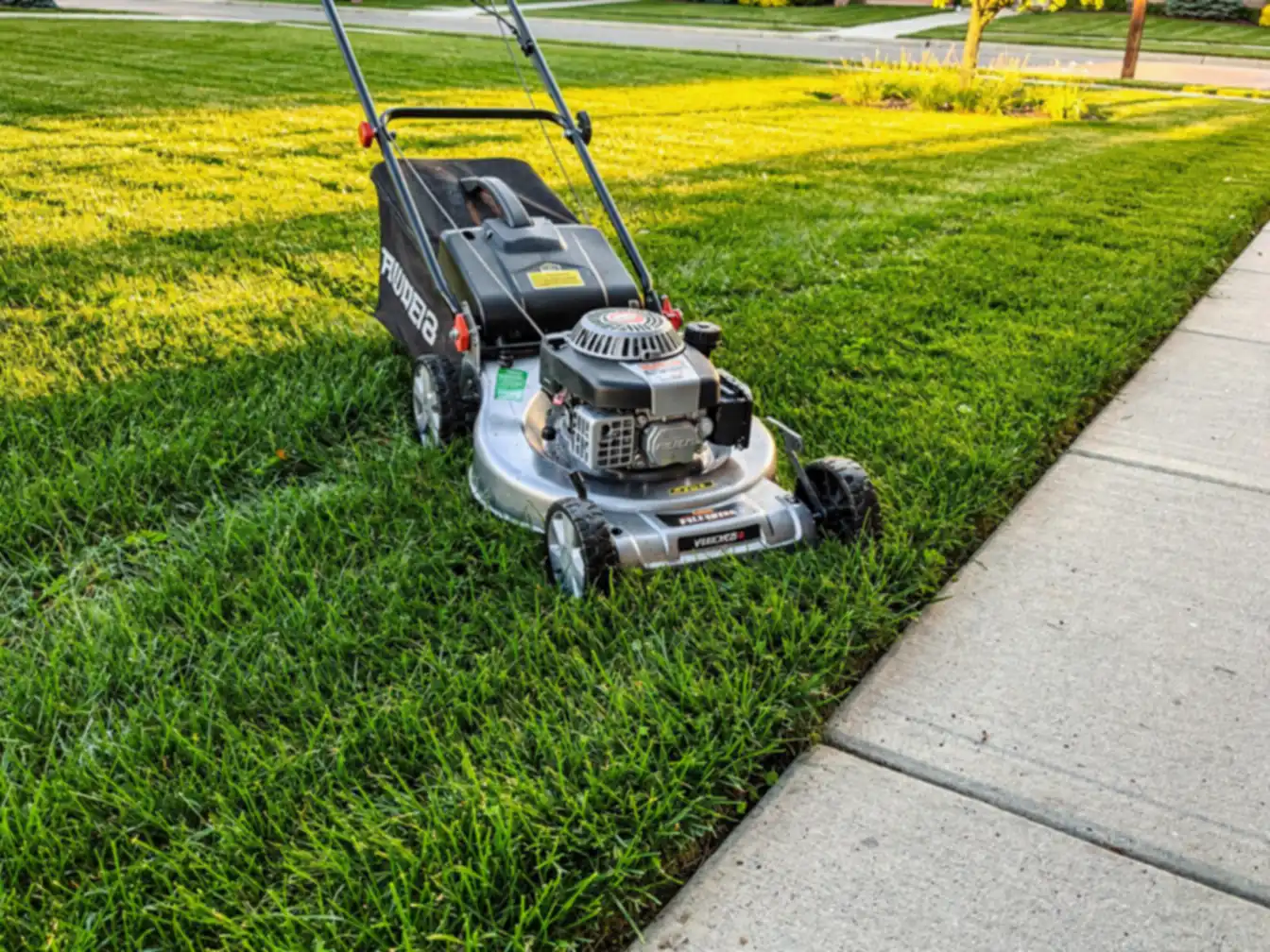
Let's get the odd part out of the way first: Woodlawn doesn't mow lawns. Never have, never will. We're a treatment company — weed control, fertilization, aeration, seeding, mole control — and the mowing in Tipton County is handled by homeowners and the folks they hire. But treatments and mowing shape the same grass, and how a lawn gets cut decides a surprising amount of how well the treatments on it work. A great treatment program on a badly mowed lawn is a good engine in a car with square wheels. So this is the mowing advice we give our own customers, written down in one place. We have nothing to sell you here — we just want the lawns we treat to be cut in a way that helps them.
Set the deck for the grass you actually have
Most mowing advice online was written for cool-season lawns up north, and it's the reason so many bermuda lawns here get cut at the wrong height. Bermuda is a low, spreading grass. It runs sideways on runners above and below ground, keeps its growing points near the soil, and is built to be kept short. Common and seeded bermuda, which is what most Tipton County lawns are, does best between 1 and 2 inches; fine-bladed hybrid sod wants it shorter still. Let bermuda climb to three inches and it doesn't get healthier, it gets puffy: the canopy rides up on soft stems, the mower drops into every dip and shaves it to the dirt, and the extra stem material builds thatch — a spongy layer that sheds water and makes the next scalping worse. The exception is shade. If a thin area under trees is tall fescue, that grass genuinely does want 3 to 3.5 inches, so a yard with both grasses is a yard with two deck settings. Raise the bermuda about half an inch in mid-September for the last cuts of the year. And what keeps sunlight off crabgrass seed here is density, not height — a dense, low-cut lawn closes its own canopy and backs up the pre-emergent barrier with a physical one, while a thin, stemmy lawn is a sunlit nursery whether it got scalped or got let go tall. One practical note: deck settings lie. The numbers on the adjustment lever are a rough suggestion, so check the truth once — park the mower on the driveway, measure from the concrete to the blade tip, and set it from there. Then pair the height with the one-third rule — never remove more than a third of the blade in a single cut, which at bermuda's height means cutting often, sometimes twice a week during the June flush — and you've handled most of what good mowing is. If the lawn got away from you on vacation, bring it down in two or three cuts spaced a few days apart instead of one brutal one; a lawn that loses half its leaf at once goes pale and sulks for a week.
Sharpen the blade. It's the cheapest upgrade in lawn care
A sharp blade slices grass; a dull one tears it. You can see the difference two days after a cut: torn tips fray, then turn whitish-tan, and a whole lawn of them takes on a dull, smoky cast that people mistake for drought stress. Worse than the color is what the tears do. Ragged wounds lose extra water in summer heat, and they're an open door for disease — dollar spot, which already loves our humid nights and heavy dew, is glad to walk through it. The check takes ten seconds: look at the cut tips, and clean straight edges mean you're fine. Sharpening a mower blade two or three times a season — or asking whoever cuts your lawn when theirs was last sharpened — costs nearly nothing and improves every single cut for the rest of the year. A lot of folks keep a second blade on the shelf and swap them, so one is always fresh. There's no cheaper upgrade in this whole business.
Wait 24 hours after a treatment
When a lawn gets treated, the products need time to do their work. Weed treatments in particular are taken in through the leaves — mow too soon and you're cutting off the treated surface and hauling it away in a bag before it ever travels down to the root of the weed, which is the part that actually has to die. Give every application a full 24 hours before the next cut. The same logic runs in reverse: mowing the day before a treatment leaves the weeds with less leaf up to catch the application, so it lands on less of the target. If your lawn is on a treatment schedule, the easy rhythm is to mow a few days before each visit or a day-plus after it, and keep the mower parked in the window right around it. Text notifications before visits make this simple to plan around. It's a small habit, and it makes every application count for more.
Why treated lawns need fewer cuts
This one surprises people, but the math is simple once you look at what's actually growing. In an untreated lawn, a lot of what you're mowing isn't grass. Weeds grow faster than turf — nutsedge can tower over the lawn within days of a cut, crabgrass sprawls and throws seed stalks all summer, and every one of them is racing to reproduce — so an untreated lawn always looks like it needs mowing, because part of it always does. Weed control removes the sprinters from the race. And balanced fertilization changes the grass itself: instead of the boom-and-bust surge you get from guessed-at feeding — two weeks of furious growth, then a stall — the lawn grows steadily and puts more of its energy into thickening sideways instead of just stretching taller. The result is real and our customers see it: less time behind the mower and more Saturdays back — fewer cuts, each one on the grass's schedule instead of the weeds'.
Leave the clippings, mostly
Clippings are mostly water and nutrients, and when you're mowing on the one-third rule they're short enough to filter down and disappear within days, returning what they carry to the soil. They do not cause thatch — thatch is built from stems and runners at the soil line, not from cut leaf tips, so mulching clippings back is free fertilizer with no downside on a regularly cut lawn. The exceptions: bag when the grass got away from you and the clippings would sit in smothering clumps, bag right before overseeding so seed can reach soil, and bag for a while if the lawn has an active fungus problem you'd rather not spread with every pass. One more exception people ask about: seed heads. When bermuda throws up those little three-fingered seed stalks in midsummer, mulching them back is harmless — a lawn dense enough to keep is spreading by runners, not seed, and the stalks are just the grass showing off.
Wet grass, wheel ruts, and when not to mow
Our silt loam adds one more rule: don't mow soggy ground. Wet silt compacts under mower wheels like dough under a rolling pin, and compaction is the slow-motion problem behind half the thin lawns in West Tennessee. Wet grass also cuts ragged, clumps in the deck, and spreads disease from blade to blade. Give the lawn a day after a real rain. Skip the heat of a drought afternoon too — a stressed lawn handles the cut far better in the evening, and honestly, grass that's semi-dormant from drought barely needs cutting anyway.
The small stuff that adds up
Vary your mowing direction from one cut to the next — grass leans the way it's repeatedly pushed, and wheels running the same ruts pack the soil underneath. Ease up in fall as growth slows, and once the lawn goes fully tan for winter, the mower's season is over except for the occasional tidy-up of winter weeds. If you want the full picture of what the grass is doing between cuts — and why it needs less mowing in September than June — a bermuda lawn's year lays out the whole cycle. Mowing is the one job in lawn care we'll never take off your hands. Done at the right height, with a sharp blade, on the right days, it's also the job that makes everything we do work better.