Lawn guide · July 10, 2026
DIY vs. a Lawn Care Company: An Honest Look
What DIY lawn care does well, where timing and equipment tip the scales, and the questions worth asking any company before you sign on.
Let's be upfront about something: comparisons like this are usually written by lawn care companies, and the company usually wins by the second paragraph. We'll try to do better, because the honest answer is more interesting than the sales version. Plenty of people in Tipton County handle their own lawns and do a fine job of it. Some lawns genuinely call for professional help. Most of the difference comes down to three things — timing, diagnosis, and consistency — and none of them needs a pitch to explain. Here's the fair version of both sides.
What DIY genuinely does well
Store-bought lawn products work. The fertilizer, broadleaf weed controls, and pre-emergents on the shelf are real tools, and a homeowner who reads labels, measures the yard honestly, and follows through can absolutely run a respectable program. DIYers also hold one advantage no company can match: you're there every day. You see the first brown circle, the first raised mole tunnel, the first patch of something that doesn't look right — days or weeks before any scheduled visit would catch it, and early catches are half the battle in lawn care. You know things about your yard that never make it onto a service ticket: that the back corner stays wet for two days after rain, that the strip by the driveway bakes, that the dog has opinions about one particular gate path. And there's real satisfaction in a lawn you built yourself, which counts for something no invoice can. None of that is flattery; it's just true.
Where timing starts to decide it
Lawn care is mostly a timing game, and the windows are less forgiving than the product bags let on. Pre-emergent has to be down before the soil holds at crabgrass-germination warmth, which around here happens in early to mid March — sooner in a warm year, later in a cool one, and it never announces itself. Fertilizer needs to wait until the bermuda is at least half green, or the weeds collect it first. Fall pre-emergent has to be down in early September, ahead of winter weed germination, while the lawn still looks great and nothing seems wrong — the window that's easiest of all to miss, because there's no visible problem prompting you. Grub prevention works before the hatch, not after. Miss any of these by a couple of weeks and the product still pours out of the bag just fine — it simply doesn't do much, and the makeup date is next year. Every one of these windows is public knowledge, laid out in the lawn calendar, and they're the same for everyone. The real question is whether the right two days of the right week reliably find you home, free, and watching a soil thermometer. Work trips, ball seasons, and life in general don't check the forecast first.
Where diagnosis decides it
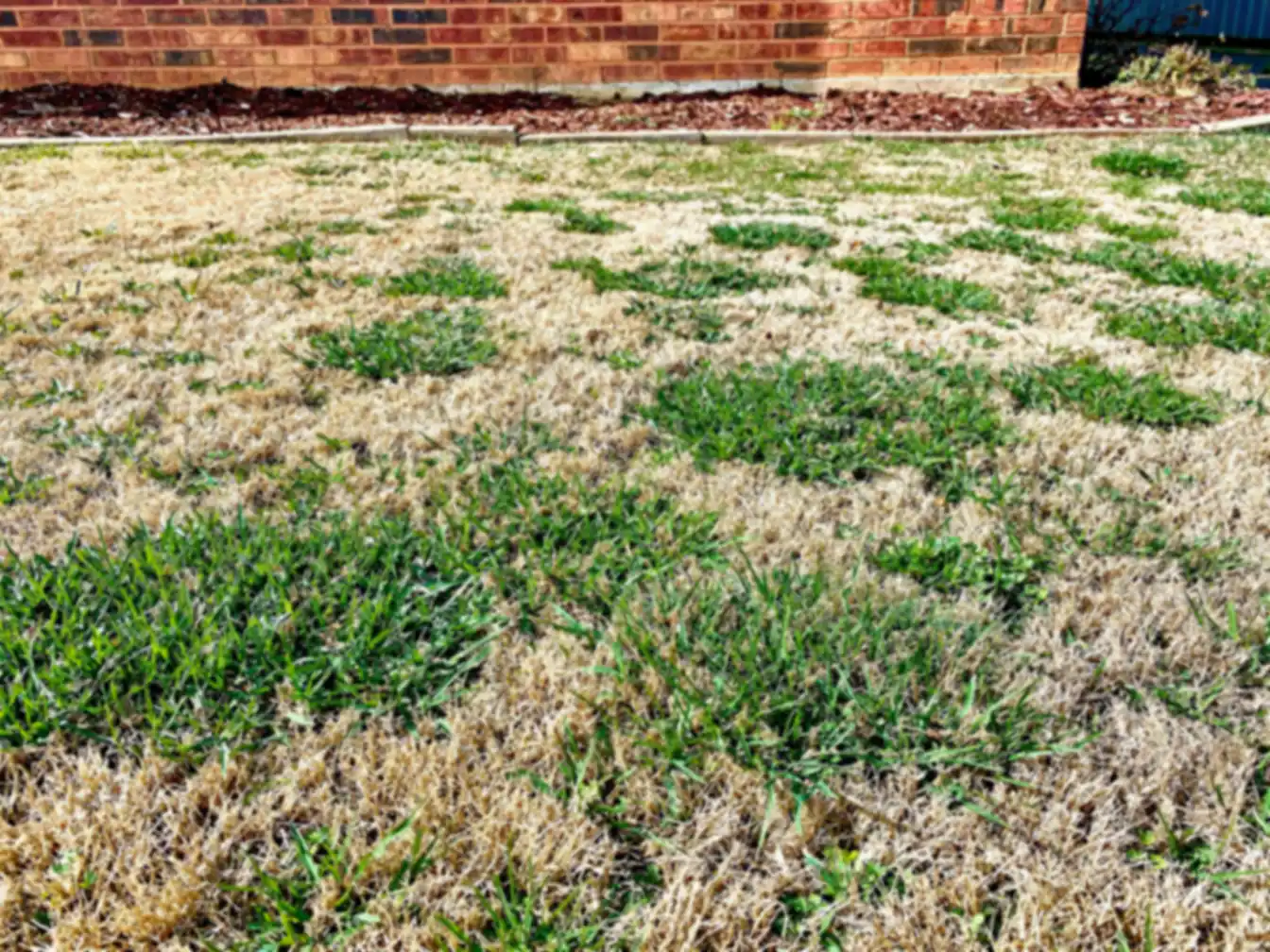
The most expensive mistake in DIY lawn care isn't buying the wrong brand — it's treating the wrong problem, correctly. Nutsedge looks like tall grass, but it's a sedge, and standard weed killers don't touch it; people spray it all summer and wonder why it keeps waving at them. Dallisgrass is a perennial that returns from the same root crown every year, so the pre-emergent that handles crabgrass does nothing to it. Dollar spot, drought stress, shallow roots over compacted ground, and grub damage all read as "brown spot" from the porch, and each one calls for a different response — water fixes exactly one of them and makes another worse. Annual bluegrass looks pleasantly like your lawn filling in, right up until June when it dies and leaves bare patches. The weed ID library exists to help with exactly this, and a careful homeowner can get good at it. But a trained eye that has walked a few thousand West Tennessee lawns names the problem in one visit and gets it right the first time — and in lawn care, a wrong first guess usually costs a season.
Where equipment and products decide it
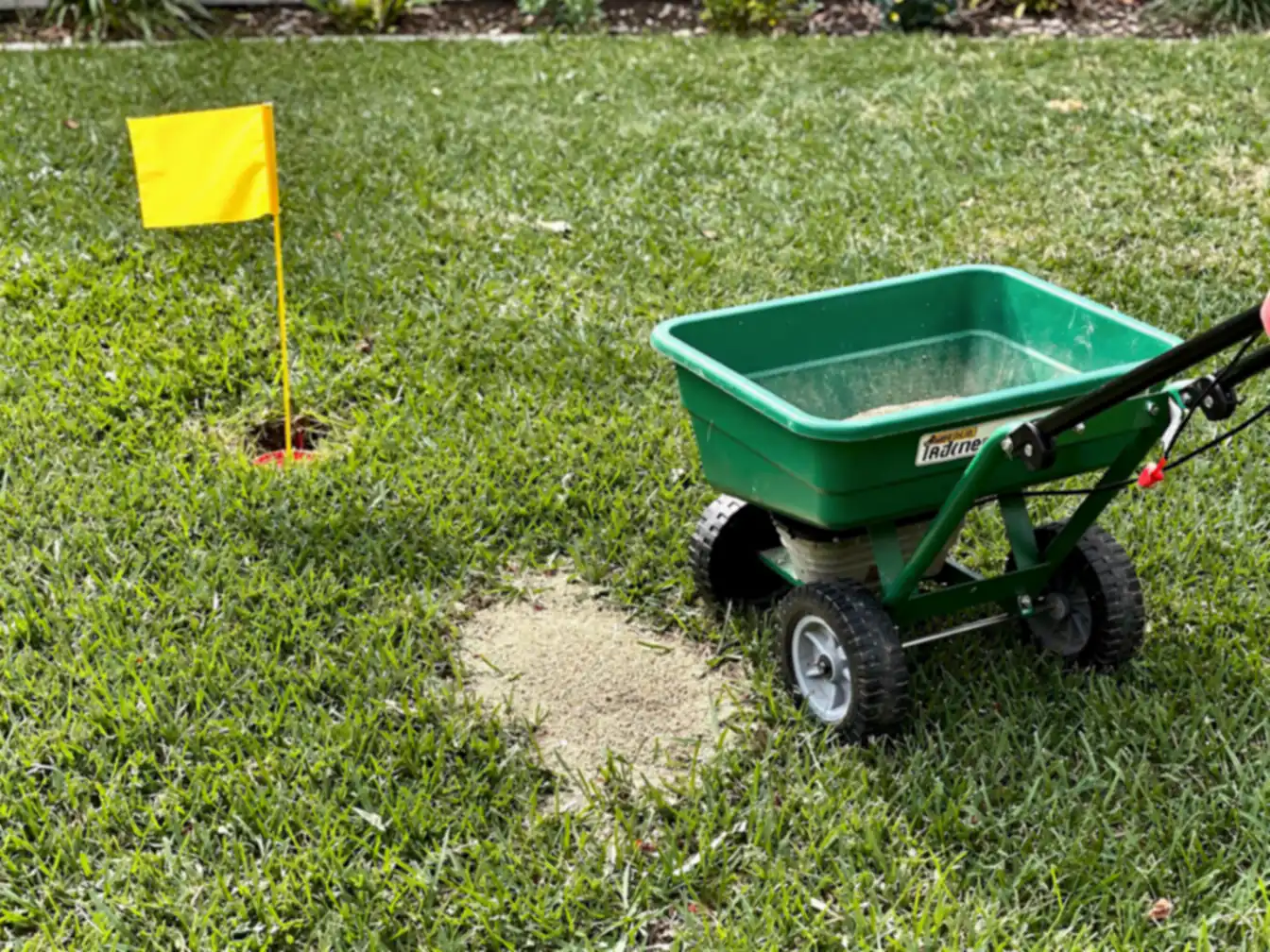
Some gaps are simply material. Application rate matters as much as product choice — too light does nothing, too heavy can burn a lawn or worse — and professional equipment is calibrated to lay down an even, measured rate across the whole yard, which is genuinely hard to match with a hose-end sprayer and a good walking pace. Coverage matters too: streaky hand-spreading shows up as green stripes a month later, a look everybody recognizes and nobody orders. Some problems — nutsedge, lawn fungus among them — call for products the retail shelf mostly doesn't stock. And core aeration on our packed silt loam takes a heavy machine that pulls real plugs; the strap-on spike shoes are better exercise than lawn care. None of this makes DIY impossible. It means some jobs are equipment jobs, the same way some plumbing is, and renting or hiring for those specific jobs is a fair middle path.
The consistency question
Here's the part that quietly decides it for most people, and it has nothing to do with skill. One good DIY year is very achievable. What a company actually sells is years of not missing: eight or so applications annually, each inside its window, each on a decent-weather day, every year — including the year work went sideways, the summer somebody was in the hospital, and the spring it rained for three straight weeks and compressed every window to nothing. Lawns compound. A lawn that hits every window for three years running looks meaningfully different from one that hit most windows most years, and the gap widens with time. That's the case for a treatment program, plainly stated — not secret products or magic, just the unglamorous fact of showing up on schedule, every time, for years. It's also, frankly, the standard any company you hire should be held to, which brings us to the questions.
Questions to ask any company — including us
If you decide to hire, talk to more than one outfit and ask real questions:
- Are your applicators licensed in Tennessee?
- What exactly goes down in each application, and why then — do you time by soil temperature and conditions, or does every lawn on the route get the same thing the same week regardless?
- What happens if weeds break through between visits, and does a return trip cost extra?
- How do you handle seeding season, since pre-emergent and grass seed cancel each other and somebody has to manage that conflict?
- What won't you promise? That last one matters most: an honest company will name its limits out loud — bermuda in deep shade, stubborn perennials like dallisgrass that take repeated visits, moles that come back when a neighbor's grubs are thriving.
And get the terms in plain language: what you're agreeing to, for how long, and how you'd cancel if it isn't working. A good company answers all of this comfortably and specifically. Vague answers are their own kind of answer.
A fair bottom line
Both paths grow good lawns. If you enjoy the work, can hit the windows, and like learning what your yard is telling you, DIY is a real option and nothing on this page should talk you out of it — the calendar is free and the windows aren't secrets. If your interest is in having a good lawn rather than running one, that's what a program is for, and there's no shame in either answer. The only genuinely bad plan is the accidental middle: a bag of something, spread sometime, at whatever rate poured out, judged by whether it rained that week. And the split answer is common around here for a reason: most folks who hire out treatments still do their own mowing and watering, which means even a hired lawn keeps you involved in the half you can see from the porch. Decide based on your time and your actual interest — then, whichever way you go, do it on schedule. The grass keeps score either way.