Lawn guide · July 28, 2026
Grassy vs. Broadleaf Weeds: Why It Decides the Cure
Net veins or parallel blades? A ten-second ID that determines which control chemistry works, and why the wrong guess wastes a whole season.
Why one jug can't kill everything
Sooner or later every homeowner meets the great disappointment of the weed aisle: the spray that wiped out the dandelions did absolutely nothing to the crabgrass. Or the one that promised to handle "grassy weeds" and left the clover laughing. It feels like the products are broken. They're not. They're specialized, and the specialization follows one big dividing line.
Weeds are not one enemy, no matter how the label reads. They split into families, and the two big ones, broadleaf weeds and grassy weeds, are different enough from each other that the chemistry built to kill one often can't touch the other at all. Which means the first question in weed control is never "what kills weeds?" It's "what is this weed?" Get that answer right and the treatment follows almost automatically. Get it wrong and you can spend a whole season spraying the equivalent of cough syrup on a broken arm.
How to tell the two families apart
The good news: you don't need a degree to sort most weeds into the right family in about ten seconds.
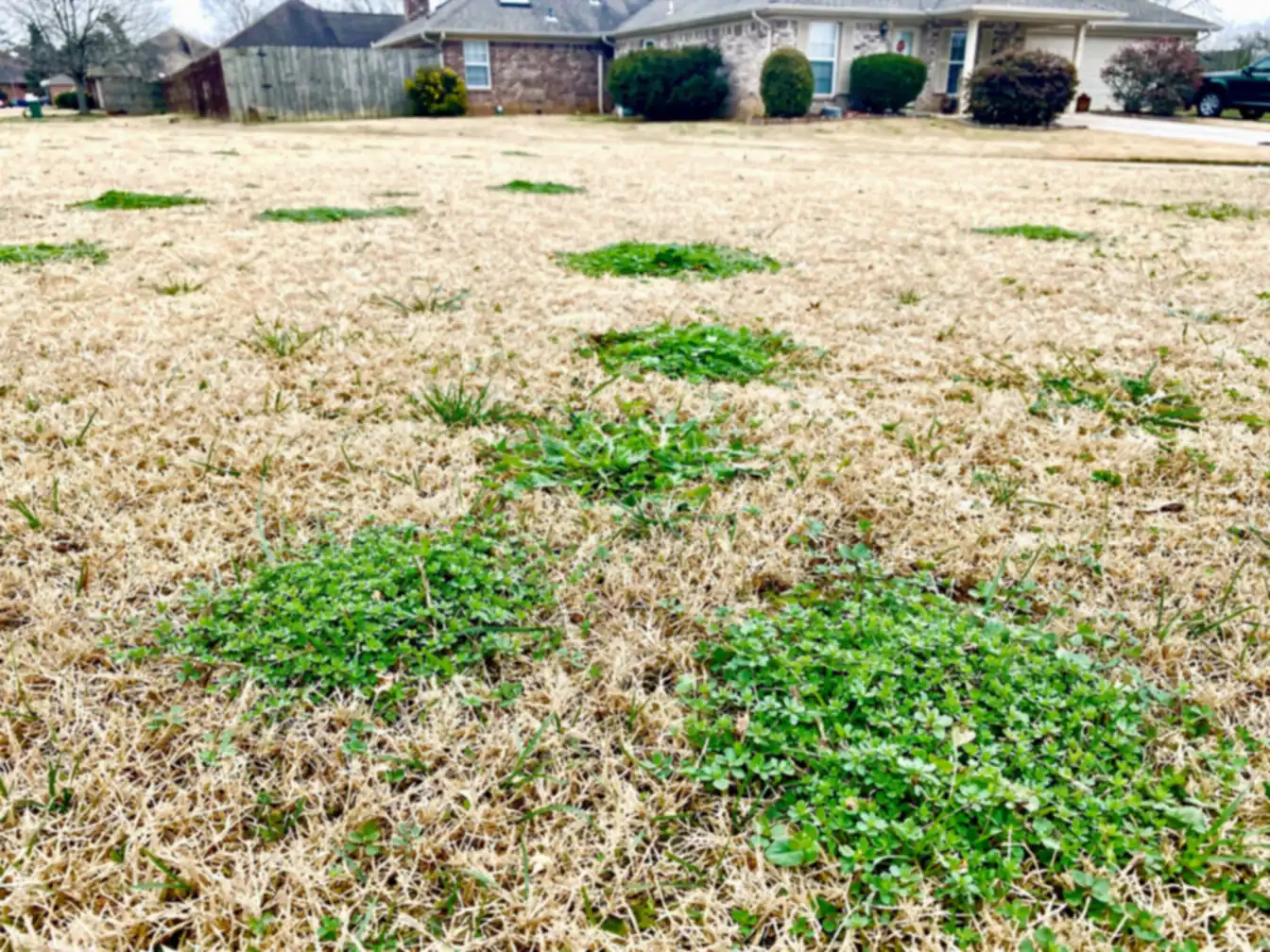
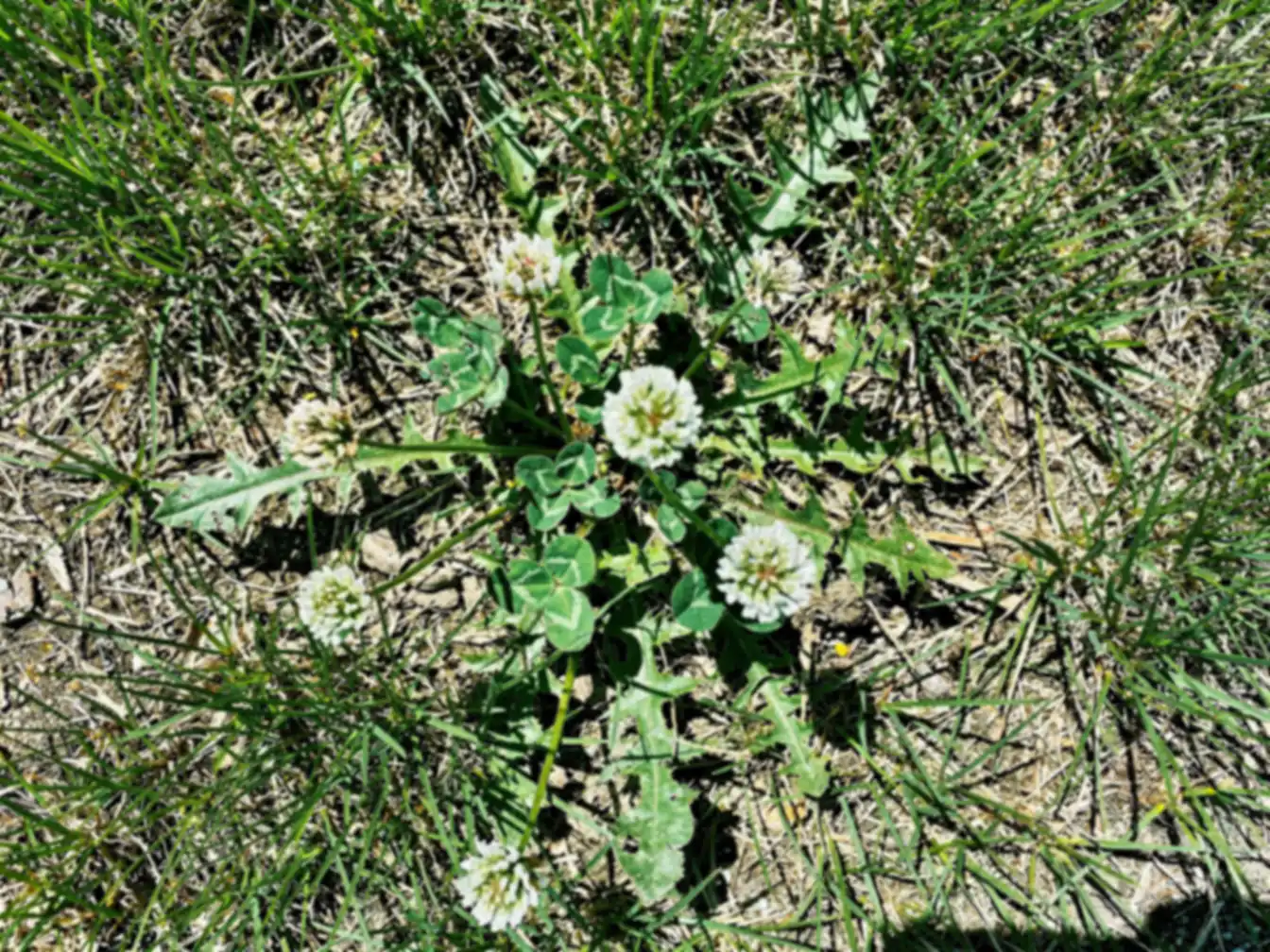
Broadleaf weeds look like little plants, not grass. Leaves are wide, often rounded or lobed, with veins that branch out in a net pattern. They usually have obvious flowers: dandelion's yellow head, clover's white balls, henbit's purple trumpets, chickweed's tiny white stars. Stems branch, and the plant grows outward from stem tips. Spurge, violets, and plantain are in this family too.
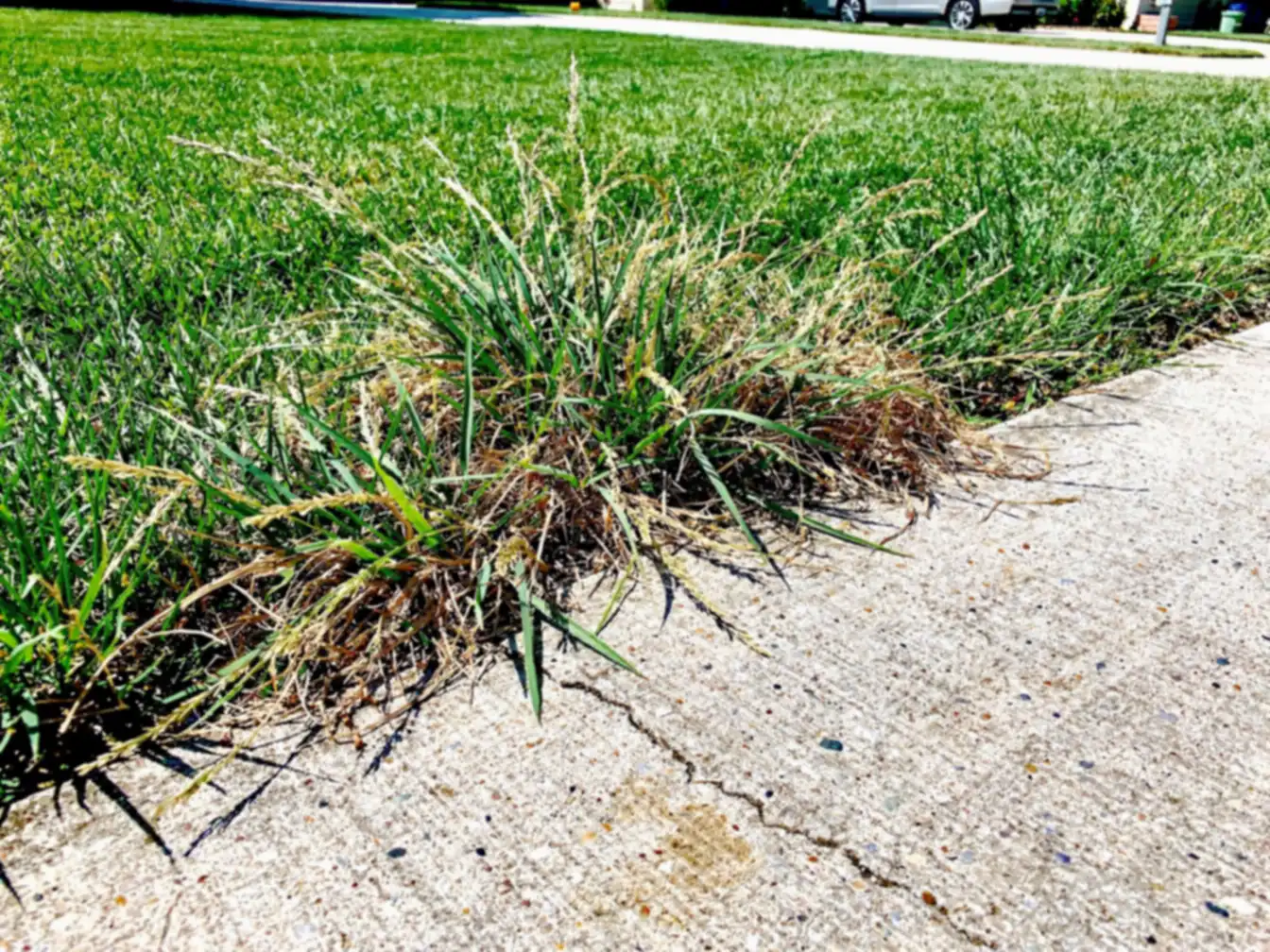
Grassy weeds look like grass, because botanically they are. Blades instead of leaves, veins running parallel down the blade, stems that are round or flattened, and no showy flowers, just seed heads on stalks. Crabgrass, dallisgrass, goosegrass, and annual bluegrass are the big names here. And they share a trick with your lawn: they grow from the base, down at the crown, which is why mowing trims them without hurting them, exactly like it doesn't hurt your bermuda.
That's the whole test. Net veins, real flowers, branching stems: broadleaf. Parallel veins, blades, grows from the base: grassy. Ten seconds. When a weed defeats the ten-second test, our weed ID pages can settle it.
The second question: annual or perennial
Family tells you which chemistry can work. There's a second question that tells you when and how hard the fight will be: does this weed live one season, or does it come back from the same roots every year?
Annuals, like crabgrass, chickweed, and henbit, die on schedule, either at frost or at summer heat, and rely entirely on seed to return. That makes them vulnerable twice: pre-emergent can stop the seeds, and any plant killed before it seeds is a real subtraction from next year. Perennials, like dallisgrass, wild violets, and white clover, keep their root systems through the off-season. Pre-emergent means little to them, killing the top growth means less than you'd hope, and finishing them takes treatments that reach the roots, sometimes over more than one visit. Same two questions, every weed: what family, and what life cycle. Those two answers write the whole prescription.
Broadleaf weeds: the fight we usually win quickly
Here's why the distinction matters so much. Broadleaf plants and grasses are built differently on the inside, in how they grow, how their tissue is arranged, and how they move and process what lands on their leaves. Selective broadleaf herbicides exploit those differences. To a chemistry class like that, a dandelion and a bermuda blade might as well be different animals: the dandelion takes the treatment in and gets shut down all the way to the taproot, while the grass around it processes the same dose and shrugs.
That built-in selectivity is why broadleaf control can be applied across an entire lawn instead of dabbed on one plant at a time, and it's why broadleaf weeds, for all their numbers, are usually the easier half of the war. Timing still matters. Treatments work best on weeds that are actively growing, and every plant killed before it flowers is a generation of seeds that never happens. But the tools are strong, and the lawn tolerates them well when they're used correctly.
Grassy weeds: the knife fight
Now flip it. A grassy weed in a bermuda lawn is grass growing in grass. The internal differences that made broadleaf control easy mostly aren't there to exploit. The chemistry margin between "kills the crabgrass" and "kills the crabgrass and scars the lawn" gets thin, the selective options get few, and the ones that exist tend to work slowly, need repeat visits, and demand careful rates.
That's exactly why the main weapon against grassy weeds isn't a spray at all. It's prevention. The worst grassy offenders here, crabgrass, goosegrass, and annual bluegrass, are annuals that must restart from seed every year, and pre-emergent stops them at the seed stage before there's ever a plant to fight. It's the rare case where the hard enemy has an easy handle, and it's the backbone of our whole crabgrass battle plan.
The truly hard cases are the perennial grassy weeds, dallisgrass chief among them. It comes back from the same root crown year after year, so pre-emergent can't stop it and mowing doesn't faze it. Beating it takes persistent, targeted spot work, and honestly, sometimes more than one season. Any company that tells you dallisgrass is a one-visit job has not met much dallisgrass.
The third family nobody warns you about
Just to keep everyone humble, there's a third group: sedges. Nutsedge is the local celebrity, that glossy, yellow-green imposter that stands taller than the lawn within days of mowing. It looks like a grass but isn't one. Roll the stem between your fingers and you'll feel it's triangular, which is the giveaway.
Because sedges are their own plant family, they ignore both broadleaf chemistry and most grassy-weed approaches. Regular weed killers simply don't touch nutsedge, a fact many homeowners discover only after three trips to the store. It grows from little underground tubers, which also explains why pulling it backfires: the tuber stays behind, and disturbing the plant can trigger more sprouts, so you weed the patch and the patch says thank you. It takes a treatment class built specifically for sedges to actually shut it down. You'll usually find it first in the damp parts of the yard, near downspouts and low spots, since sedges love wet feet. Family determines chemistry. Nutsedge is just the loudest proof.
Why the ID decides the whole season
Put it all together and you can see why misidentification is the most expensive mistake in do-it-yourself weed control. Broadleaf spray on crabgrass: nothing happens, a summer is lost, and the crabgrass seeds anyway. A grassy-weed mindset applied to wild violets fails for a different reason, because their waxy leaves and underground stems demand specific broadleaf tools and follow-up. Pre-emergent aimed at wild onion is wasted entirely, since wild onion grows from underground bulbs, not seeds, and a barrier means nothing to a bulb.
Same lawn, same homeowner, same effort. Completely different results, all hinging on the first ten seconds of looking at the plant.
This is honestly most of what a professional brings to weed control: not a magic jug, but the diagnosis. Which family, which species, annual or perennial, and therefore which chemistry class, at which rate, in which month. A season-long treatment program is really just that logic repeated all year, matched to the wave of weeds each season sends. The products matter, but the products are the easy part. Knowing which fight you're in, that's the part that decides it. So next time something ugly shows up in the yard, don't ask what kills it first. Kneel down, look at the veins and the stem, and ask what it is. The weed will tell you how to beat it.