Lawn guide · June 17, 2026
A Crabgrass Battle Plan for West Tennessee Lawns
Why crabgrass wins in thin turf, the soil-temp trigger, the pre-emergent window, and honest options when it's already sprawled across your lawn.
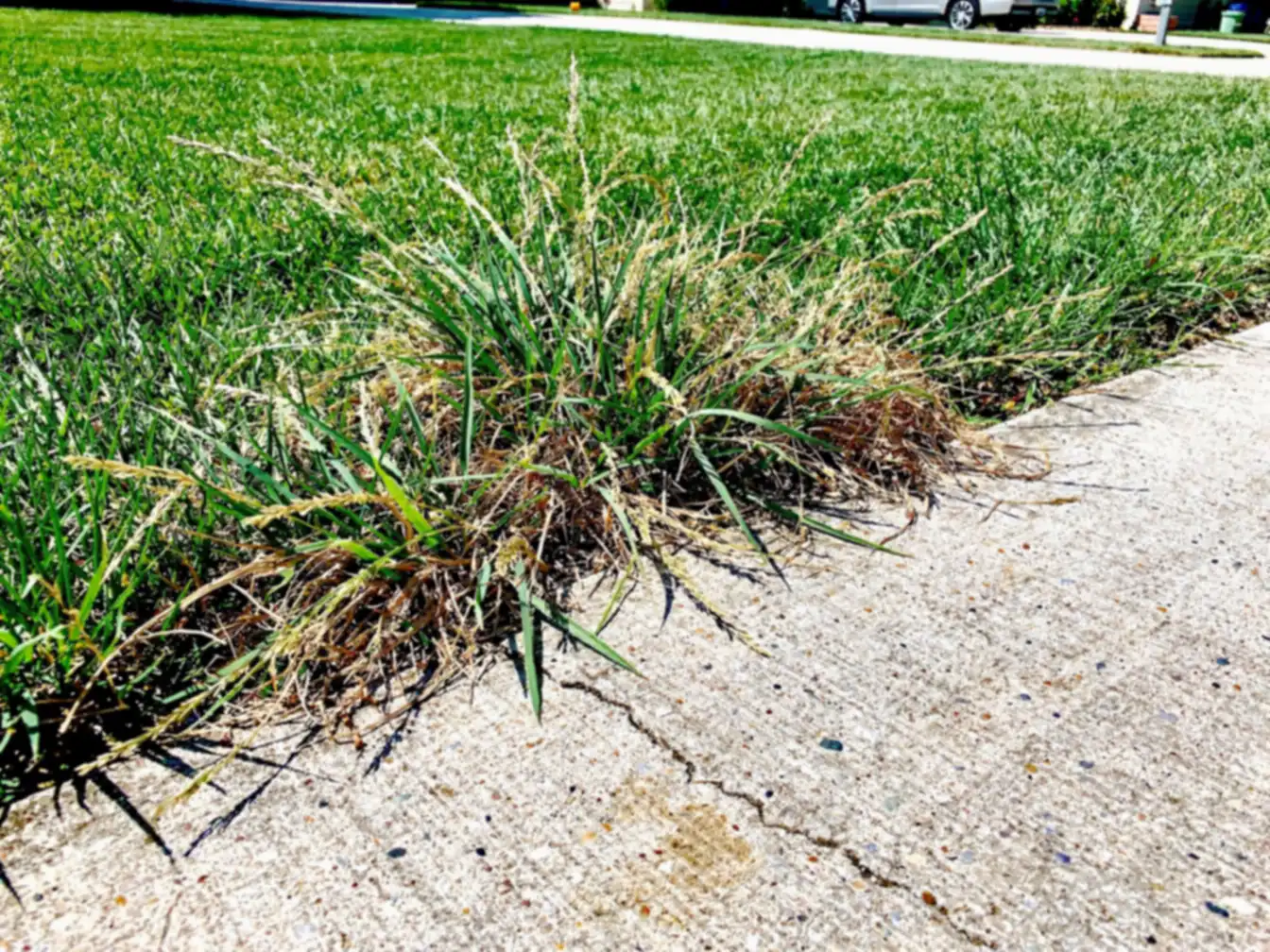
The easiest weed to prevent, and the hardest one to remove
Every summer, crabgrass earns its reputation all over again. It sprawls out from a center point like a flat green starfish, loves heat that makes other plants sulk, and grows faster than anything you actually planted. By August it can swallow driveway edges and thin spots whole.
Here's the honest part most bags and bottles won't tell you: once crabgrass is big and established in July, removing it without hurting your lawn is genuinely difficult. The battle that decides your summer is fought months earlier, in late winter, before a single seed sprouts. That's the whole strategy in one sentence. Everything below is the detail.
Know your enemy's life cycle
Crabgrass is a summer annual. Each plant lives one season: it sprouts in spring, sprawls all summer, drops a staggering amount of seed, and dies at the first hard frost. It does not survive the winter. It doesn't have to, because a single healthy plant can leave tens of thousands of seeds behind, and those seeds sit in your soil waiting, some of them staying viable for years.
And it doesn't just spread by seed while it's alive. As those sprawling stems creep outward, they root down wherever a joint touches soil, so one plant slowly becomes a mat that's anchored in a dozen places. That's why a big clump pulls up in pieces, and why it can flatten itself under a mower and keep seeding at half an inch tall. Mowing manages crabgrass's appearance. It has never once managed crabgrass.
That life cycle is the weakness, though. A plant that must restart from seed every single year can be stopped at the seed stage every single year. Miss that stage, and you're fighting a sprinter all summer. Catch it, and the fight mostly never starts.
Why crabgrass wins in thin turf
Crabgrass seeds need two things to get going: warm soil and sunlight reaching that soil. That second requirement explains almost everything about where you find it.
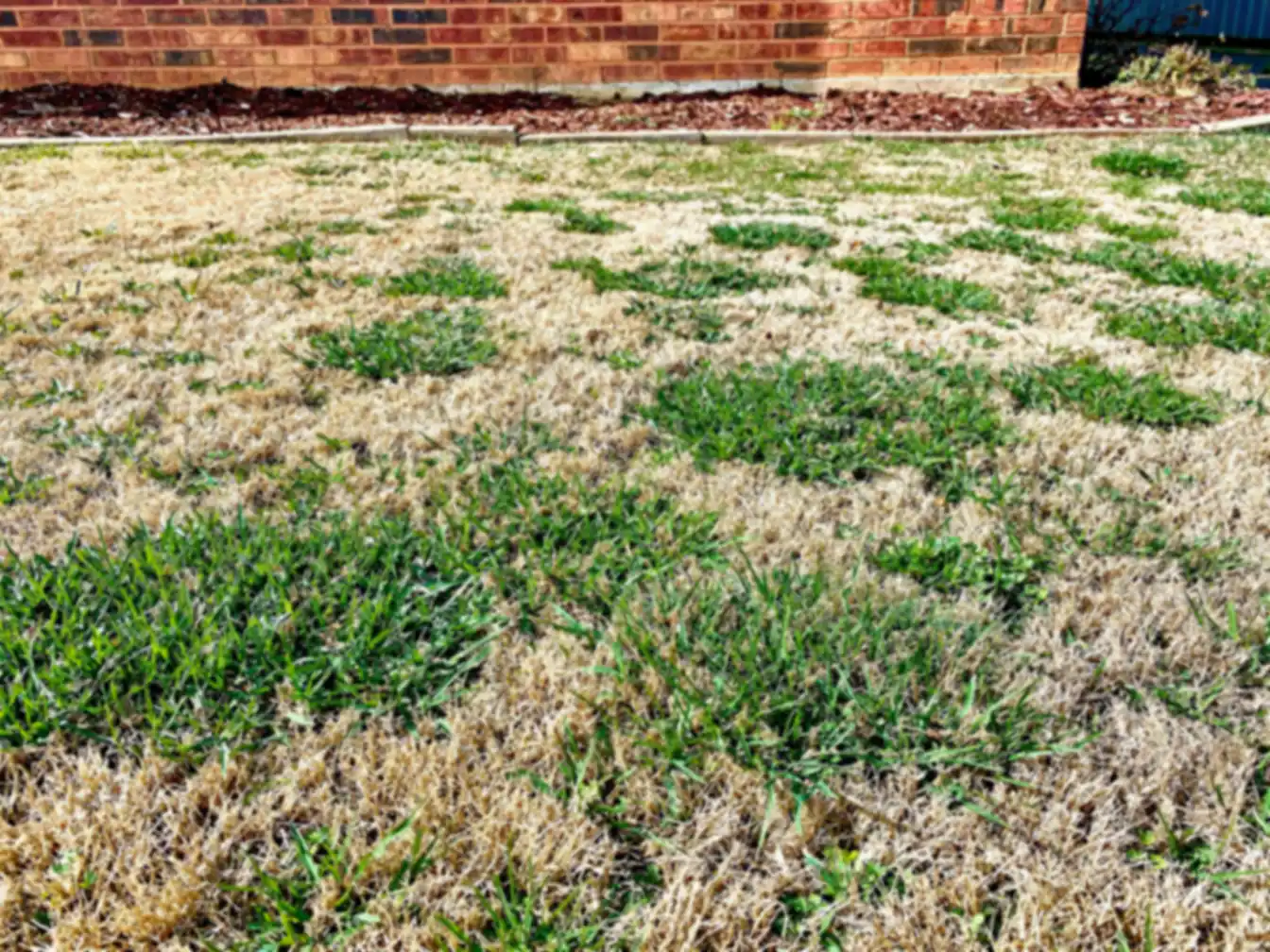
A thick bermuda lawn shades its own soil. Down at ground level it's dark, crowded, and hard for a seedling to get established. But everywhere the canopy opens up, light hits dirt and crabgrass gets its invitation: the strip along the driveway where pavement heat stresses the grass, the thin spot under years of foot traffic, the patch that scalping or grubs or last year's poa annua die-off left bare.
West Tennessee adds its own twist here. Winter weeds like annual bluegrass die off in early summer and leave bare patches behind, right on schedule for crabgrass to move in. Our silt loam compacts under traffic, thins the grass along walkways, and opens more doors. One yard we worked with had fought crabgrass with store-bought sprays for two straight summers, and it kept coming back stronger, because every year the lawn had the same thin spots waiting for it.
Say it plainly: crabgrass doesn't really invade healthy lawns. It fills vacancies. Every bare inch of a West Tennessee lawn in spring is a job opening, and crabgrass is always hiring itself.
The trigger is a temperature, not a date
Crabgrass germinates when the soil, not the air, holds in the mid-50s for a few days straight. In West Tennessee that usually lands in the first days of March in a warm year and drifts toward the end of the month in a cool one. Our springs swing hard, with 75-degree teases in February and freezes in March, so any plan built on a calendar date is a coin flip.
That's why we go by the soil reading itself, and it's why the neighbor's advice to "put it down around the middle of March" works some years and fails quietly in others. The seed doesn't know what month it is. It knows how warm the dirt is. And germination isn't one event, either. The first wave comes when that threshold first holds, but seeds keep sprouting for months afterward as the soil keeps warming, which matters a lot for how prevention has to be built. If you want to see how this timing fits into the whole year, our month-by-month lawn calendar lays it out.
The pre-emergent window
Pre-emergent doesn't kill crabgrass plants, and it doesn't sterilize seeds. It sets up a thin treated zone in the top layer of soil, and when a seed germinates and tries to grow through that zone, the seedling stops right there. Think of it as a barrier, not a weapon.
Two rules follow from that. First, it has to be down and watered in before germination starts, which in our area means late winter. Apply pre-emergent to soil that's already sprouting crabgrass and you've built your wall behind the invasion. Second, the barrier wears out. Heat, rain, and time break it down over the course of weeks and months, while crabgrass keeps germinating well into summer. That's why a serious plan uses a follow-up application to carry protection deeper into the season instead of leaning on one shot in February.
One important caution: pre-emergent stops all seeds, including grass seed. If bare spots have you planning to seed, the barrier and the seeding have to be scheduled around each other, or one cancels the other. We covered that trap in our guide to fixing bare spots.
When it's already in your lawn
Maybe you're reading this in July with a yard full of green starfish. Here's the unvarnished version of your options.
Young crabgrass, still small with just a few shoots, can be spot-treated with selective post-emergent products and removed without much drama. The bigger and older the plant, the harder that gets. Big established clumps in the heat of summer are tough to kill without stressing the bermuda around them, and the treated clumps die slowly and ugly.
Isolated plants can simply be pulled, and it's easiest after a rain when the soil gives them up. Get the whole crown at the center. Don't till or aggressively dig bare areas in summer, because turning soil just lifts fresh crabgrass seed into the light.
And sometimes the right call in August is the patient one: contain the worst of it, keep the lawn fed and healthy, and let the first frost do the executioner's work for free. Crabgrass is an annual. Winter kills every plant in your yard without exception. What frost can't do is touch the seeds they leave behind, which brings us to the real plan.
The two-year win
Beating crabgrass in West Tennessee is a two-season project, and it's not complicated.
Season one, you limit the damage:
- Spot-treat what's manageable and pull what's isolated.
- Keep the bermuda thick with proper feeding so it holds its ground.
- Mow bermuda at its own height, 1 to 2 inches, and mow often enough that no cut takes more than a third of the blade. What keeps sunlight off crabgrass seed in a bermuda lawn is density, not height — and bermuda gets dense by being cut low and often, not by being let go tall. (Tall fescue in the shade is the exception: that grass does want 3 to 3.5 inches.)
- Water deep but seldom, about an inch a week in one or two sessions, instead of a little every day. Deep watering grows the deep bermuda roots that win August; shallow daily sprinkling keeps the top half-inch of soil moist, which is exactly where crabgrass seeds live.
- Then let frost clear the board.
Season two, you never let it start:
- Pre-emergent down in late winter, timed to soil temperature.
- A follow-up application to keep the barrier alive into summer.
- Fertilization that closes up the thin spots crabgrass depends on.
- Spot-treatment for the stray that sneaks through a gap — the seed bank in your soil doesn't empty in one year — and never letting a survivor seed.
Do this two years running and the difference is hard to overstate. Crabgrass goes from the main event to a footnote, and a footnote is a fight you can win in five minutes on a Saturday morning. That's the battle plan. The only part that can't be skipped is starting it before the soil warms up.