
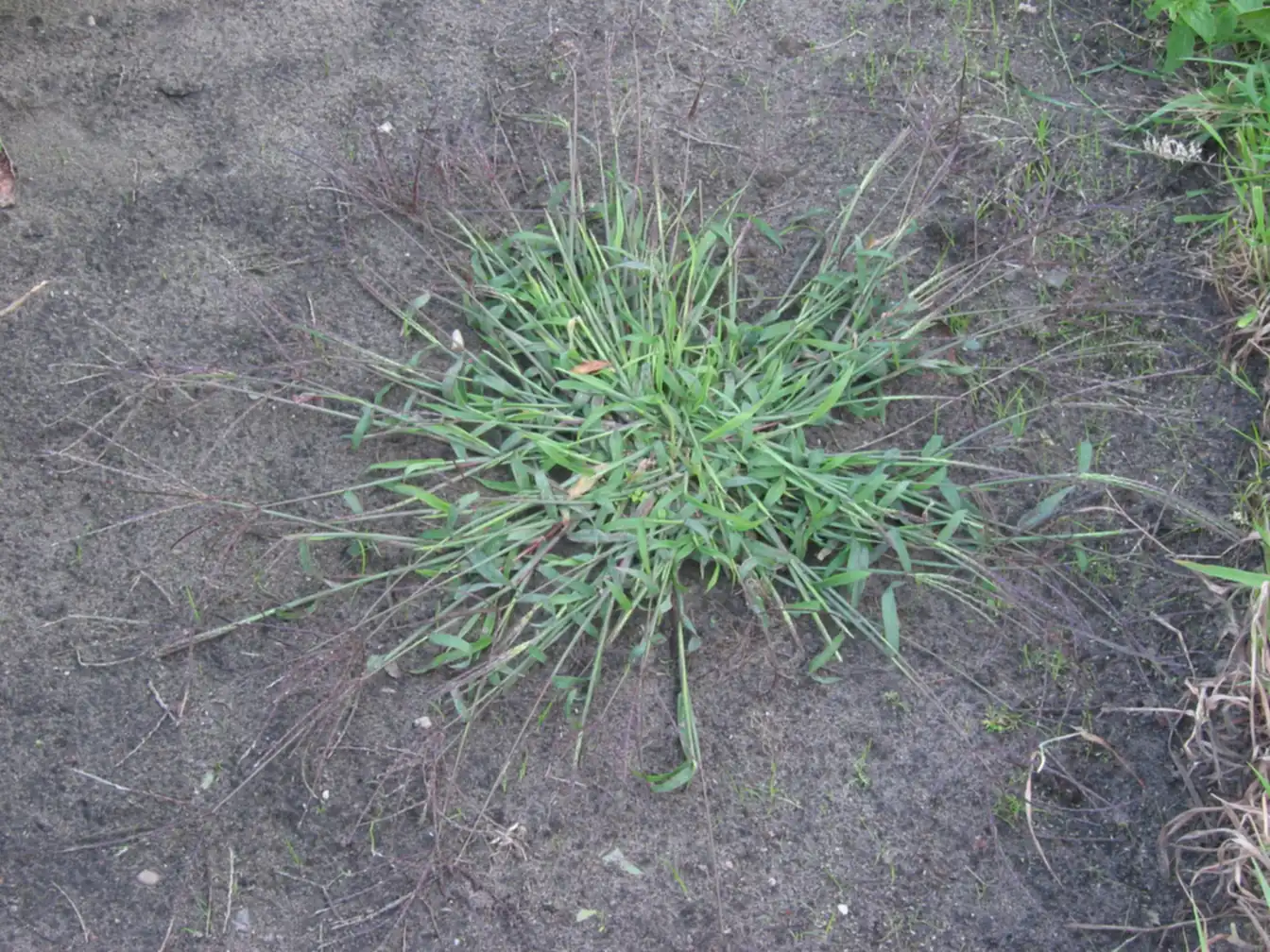
How to spot it
Crabgrass sprawls. Instead of growing upright like turf, it spreads flat from a central crown, stems radiating outward like a green starfish pressed into your lawn. The blades are noticeably wider and coarser than bermuda's fine leaves, and the color runs a lighter, yellower green, so established plants read as pale rough patches in a darker lawn.
It loves an edge: driveway borders, sidewalk cracks, mailbox posts — anywhere pavement bakes the soil and the turf runs thin. By midsummer a mature plant can smother a dinner-plate-sized circle, and in late summer it sends up seed heads like spread fingers from the top of the stems.
Its life cycle
Crabgrass is a summer annual that lives and dies by soil temperature. Seeds germinate once soil holds around 55 degrees for several days running — in West Tennessee, that can happen as early as late February and rolls through spring. The plant grows explosively through the heat, roots at its sprawling stem joints, and spends late summer producing seed — one healthy plant can drop tens of thousands. First frost kills every plant outright; the seed waits out winter for that same warm-up to run it all again.
Why it loves West Tennessee
Our springs warm early and erratically, which means the germination window can open in February one year and mid-March the next — easy to miss if you're working from a date instead of a thermometer. Then our long, hot, humid summers are basically a crabgrass greenhouse. It handles heat, drought, and compacted ground better than a stressed lawn does, so every thin spot and baking driveway edge in Tipton County becomes a foothold.
Keeping it out
This is the easiest weed on this list to prevent and the hardest to remove, so prevention is the whole strategy. A pre-emergent barrier, down in late winter before the soil warms into germination range, stops the seeds from ever establishing — and because the window moves every year, we time it to the ground, not to a date. You can see where that application anchors the season on our lawn care calendar. A thick summer lawn is the backup defense: crabgrass seed needs light and open soil, and dense bermuda offers neither.
Getting it gone
No sugarcoating it: mature July crabgrass is a genuinely tough target. Selective post-emergent options work best on young plants — a few leaves, not a starfish — so early-summer spot treatment is the productive window, and big established clumps may take repeated passes. Sometimes the smart professional call is containing this year's plants and putting the real effort into a properly timed barrier for next spring. That's the approach behind our weed control service: fight the plants you must, prevent the ones you can.
Don’t confuse it with
Dallisgrass takes the most blame meant for crabgrass. The difference matters: dallisgrass grows in upright clumps from the same spot every year (it's a perennial), while crabgrass sprawls flat and dies each winter. Goosegrass looks similar too but shows a silvery-white center in its rosette. Since control differs completely for dallisgrass, this is one ID worth getting right.