
How to spot it
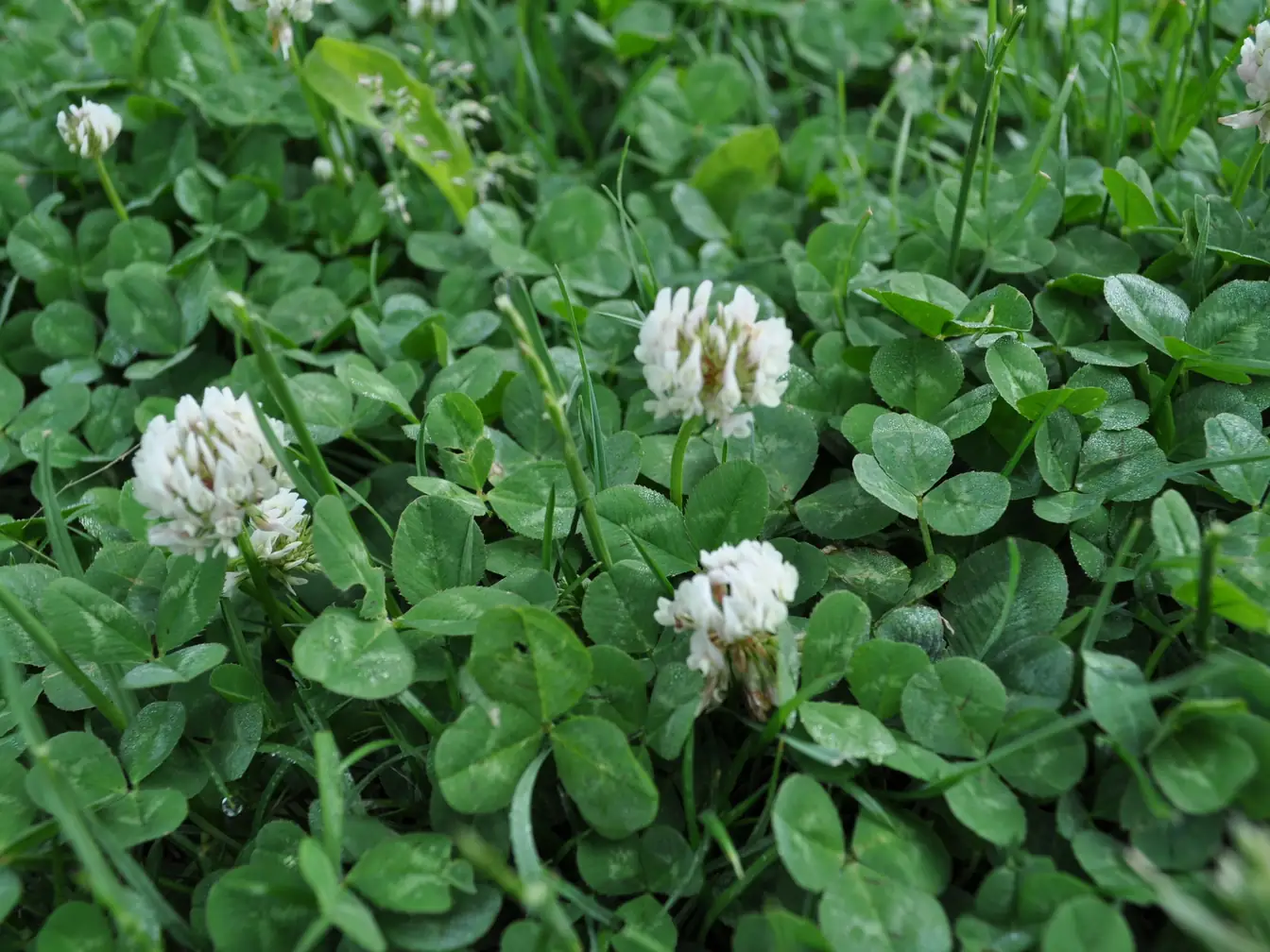
Clover reads as texture before you ever see a leaf: patches in the lawn that look rounder, softer, and a slightly different green than the fine blades around them. Walk over and you'll find the familiar three-part leaves — three round leaflets, each usually wearing a pale crescent "watermark." From spring on, the patches top themselves with small white globe-shaped flowers that the bees find immediately.
In a bermuda lawn, clover tends to claim territory in defined patches rather than scattering evenly, because it spreads by creeping stems that root as they go. Follow a patch to its edge and you can see the runners advancing into the turf. Where the lawn is thick and well-fed, the patches stall; where it's thin and hungry, they roll.
Its life cycle
White clover is a perennial. It overwinters as low creeping stems, greens up early in spring — well before bermuda gets moving — blooms from spring into summer, and sets seed that stays viable in the soil for years. The creeping stems, called stolons, root at every node they touch, so a patch expands even if not one seed sprouts. Summer heat and drought can beat it back, but the plant usually returns from its stems and its seed bank when conditions soften in fall.
Why it loves West Tennessee
Clover's edge is chemical: it partners with soil bacteria to make its own nitrogen, so it thrives exactly where grass goes hungry. A lot of West Tennessee lawns sit on silt loam that's low in organic matter and rarely fertilized, which stacks the deck for clover. Our mild winters let it hold its ground year-round, and its early spring start means it's expanding for weeks while dormant bermuda hasn't even stretched yet.
Keeping it out
Clover in the lawn is a message before it's a problem: the grass is underfed. Regular, properly timed fertilization keeps bermuda thick and aggressive enough that clover can't gain ground — a well-fed bermuda lawn in summer is a genuinely hard place for clover to live. Mowing bermuda short — 1 to 2 inches, which is where it spreads sideways instead of stretching up — and relieving compaction with aeration both help the grass win the ground game.
Getting it gone
Spraying alone doesn't finish this one. A selective broadleaf treatment clears the existing patches — clover's waxy leaflets mean coverage and timing matter, with spring and fall the strongest windows — but if the soil stays nitrogen-poor, clover simply reappears in the same thin spots. That's why we treat it as a two-part job: targeted control to remove what's there, and the fertilization schedule in our annual program to fix the reason it moved in. Do both and the patches close up and stay closed.
Don’t confuse it with
Several three-leaflet weeds get called clover. Oxalis (wood sorrel) has heart-shaped leaflets and yellow flowers — that's not clover. Common lespedeza has wiry, tough stems and shows up in late summer heat, the opposite end of the calendar. Black medic has yellow flower heads and a tiny point at the leaflet tip. White globes plus round leaflets with watermarks means white clover.