
How to spot it
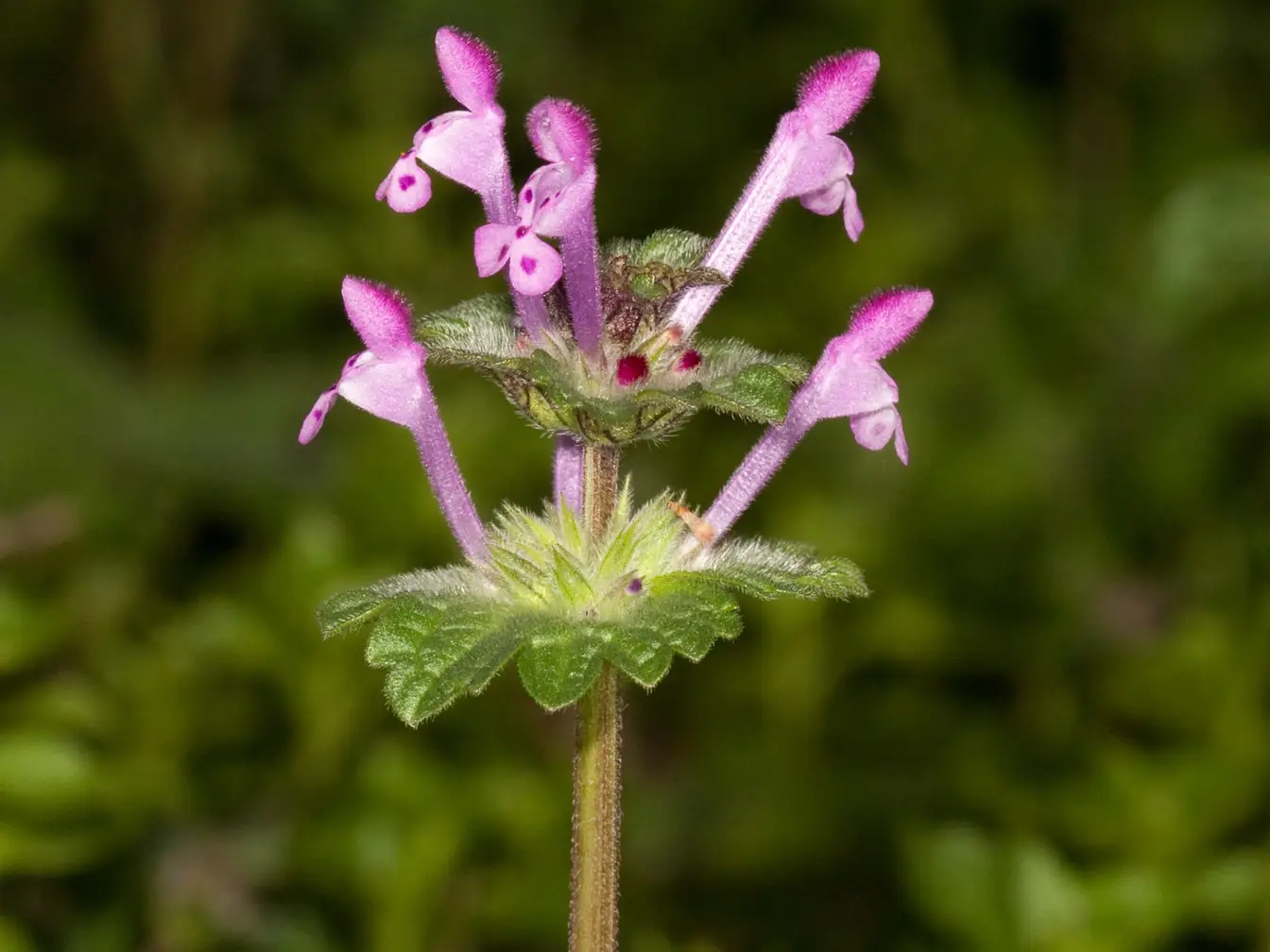
Henbit is the purple one. In late winter, while your bermuda is still tan and asleep, henbit stands up in green patches six inches to a foot tall and puts out small purple flowers shaped like little trumpets. Get down close and roll a stem between your fingers — it's square, not round. That square stem is your best clue, because henbit is in the mint family, and mints all have it.
The leaves are rounded with scalloped edges, and the upper ones wrap right around the stem like a collar, no leaf stalk at all. You'll usually find it thickest in thin or bare areas: along the driveway, in that spot under the tree, anywhere the bermuda didn't cover last summer. One plant looks harmless. A February lawn full of purple bloom is a different story.
Its life cycle
Henbit is a winter annual, so it runs its whole life while your grass is dormant. Seeds sprout in fall as soil cools down into the 60s — usually October into November here. The seedlings sit low through winter, growing on any mild day, which our winters hand out generously. By late January into March it bolts, blooms purple, and sets seed. When real heat arrives in late spring, the plant dies on its own — job done, seeds banked.
Why it loves West Tennessee
West Tennessee winters are mild enough that henbit almost never gets shut down. A hard-freeze week pauses it; the next mild afternoon restarts it. Meanwhile bermuda goes fully dormant and offers zero competition from November through March. Add our silt loam, which stays damp and cool at the surface all winter, and henbit has exactly the seedbed it wants — moisture, open ground, and a sleeping opponent.
Keeping it out
The fight is won in the fall before you ever see purple. A fall pre-emergent, timed as soil temperatures drop in September and October, stops henbit seed from establishing — you can see where that application falls in the year on our lawn care calendar. The other half is density: bermuda that goes into winter thick and healthy leaves fewer bare gaps for seedlings to claim.
Getting it gone
Once henbit is up and green, pre-emergent can't help — it only stops seeds, not growing plants. What works now is a selective post-emergent broadleaf treatment applied in winter, while the weed is small and the dormant bermuda sleeps safely through it. The key is treating before bloom. Kill henbit in December or January and you also cancel the thousands of seeds it was about to drop; wait until it's flowering in March and you're mostly cleaning up after the damage is banked.
Don’t confuse it with
Henbit's twin is purple deadnettle, another square-stemmed winter mint that shows up in the same yards at the same time. The tell is up top: deadnettle's upper leaves are pointed, tinted purple-red, and droop downward on little stalks, while henbit's stay green, rounded, and clasp the stem directly. Good news — the treatment plan is the same either way.