How to spot it
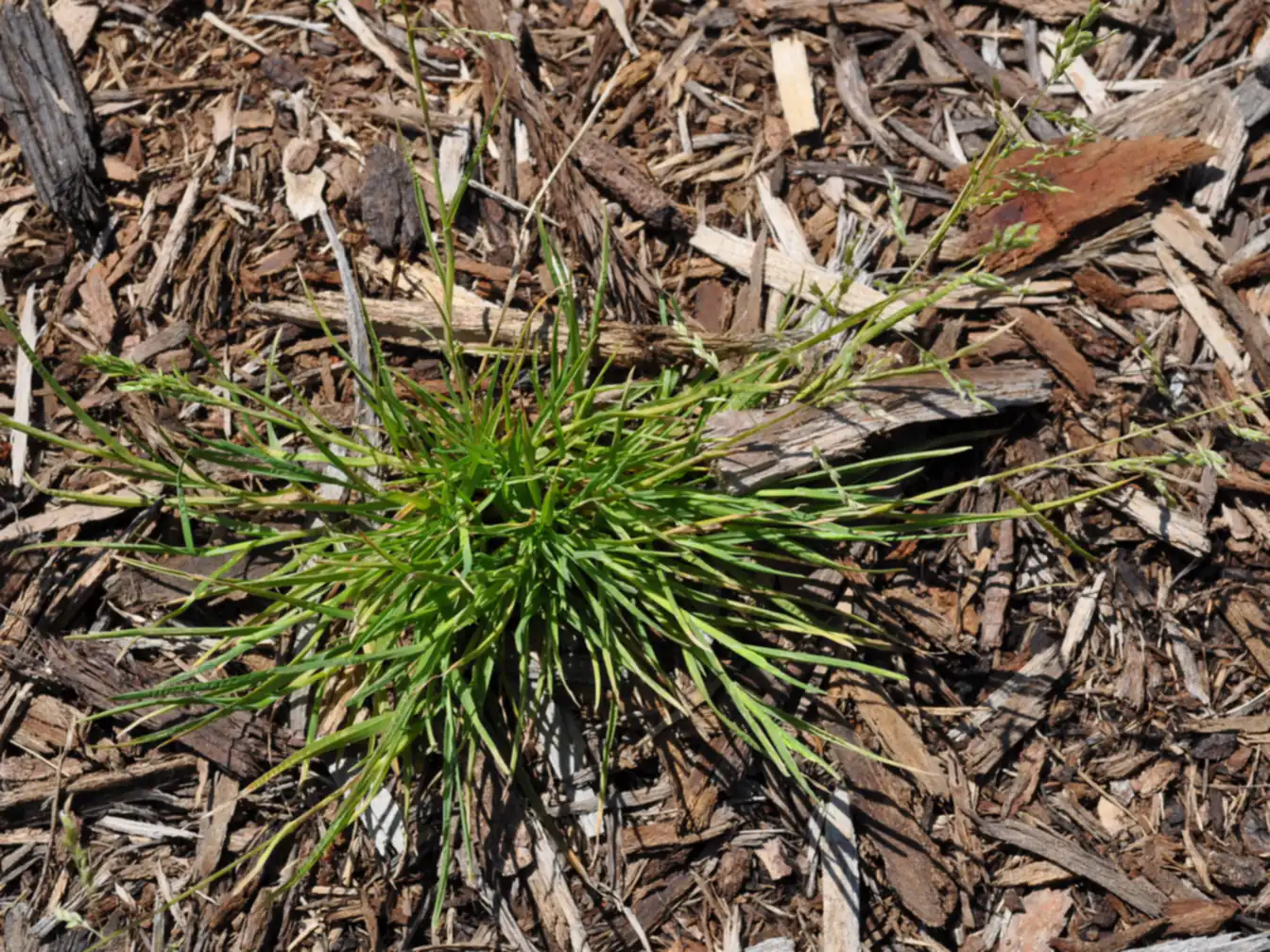
Annual bluegrass — poa annua if you want to be fancy — is the grass in your lawn that isn't your grass. In winter it stands out plainly: clumps of soft, fine-bladed grass in a lighter, almost yellow-green shade, growing happily in a lawn that's otherwise tan and dormant. The clumps start small, about the size of a silver dollar, and knit together into patches.
Two close-up checks confirm it. The blade tips are shaped like the bow of a little boat — pinch a blade flat near the tip and you'll see the keel. And from late winter through April, the clumps push up greenish-white seed heads so short that no mowing height misses them. If your winter lawn has pale green tufts wearing tiny whitish plumes, that's poa.
Its life cycle
Poa annua germinates in fall, once soil temperatures drop below about 70 degrees — typically September into October here — and it keeps germinating in waves through fall and even mild winter stretches. It grows all winter, then peaks in March and April, when every clump throws up whitish seed heads at once and the patches are impossible to miss. After that it does the one courteous thing it ever does: dies when summer heat arrives. The catch is what it leaves behind — a bare patch where each clump stood, plus a soil full of seed for the next fall. One plant can produce hundreds of seeds even when mowed short.
Why it loves West Tennessee
West Tennessee sits in poa's sweet spot. Our falls cool off right on its germination schedule, our winters are mild enough for steady growth, and our silt loam holds the cool surface moisture it loves — especially in compacted or damp areas. Bermuda's long dormancy is the open door: from November into April, poa has the lawn essentially to itself.
Keeping it out
This is a weed you prevent or you tolerate — there's not much middle. A fall pre-emergent, down in early fall before soil temps slide below 70, stops the main germination flush; that timing is one of the anchor applications on our annual calendar. Because poa germinates in waves, consistent fall coverage year after year is what actually shrinks the seed bank. Good drainage and aeration help too, since poa loves compacted, moist ground.
Getting it gone
Poa that's already up in winter can be knocked back with selective post-emergent treatment while bermuda is dormant — the safest window for it. Established clumps are tougher than fall seedlings, so heavy stands may take more than one pass. The honest version: winter treatment is cleanup, fall prevention is the cure, and the yards that stay clean are the ones where the pre-emergent goes down on time every September.
Don’t confuse it with
In winter, almost anything green and grassy in a dormant bermuda lawn gets called poa, but check for the boat-shaped tip and those low whitish seed heads. Tall fescue clumps are darker green, coarser, and much taller. Wild onion is often mistaken for a grass too, but its shoots are round, glossy, and smell like onion when crushed.