
How to spot it
Chickweed is the innocent-looking one. In a dormant winter lawn it shows up as low, sprawling mats of soft, bright spring-green — a color nothing else in the yard has in January. The mats hug the ground, rarely more than a few inches tall, and creep outward in rough circles that merge into carpet if you let them.
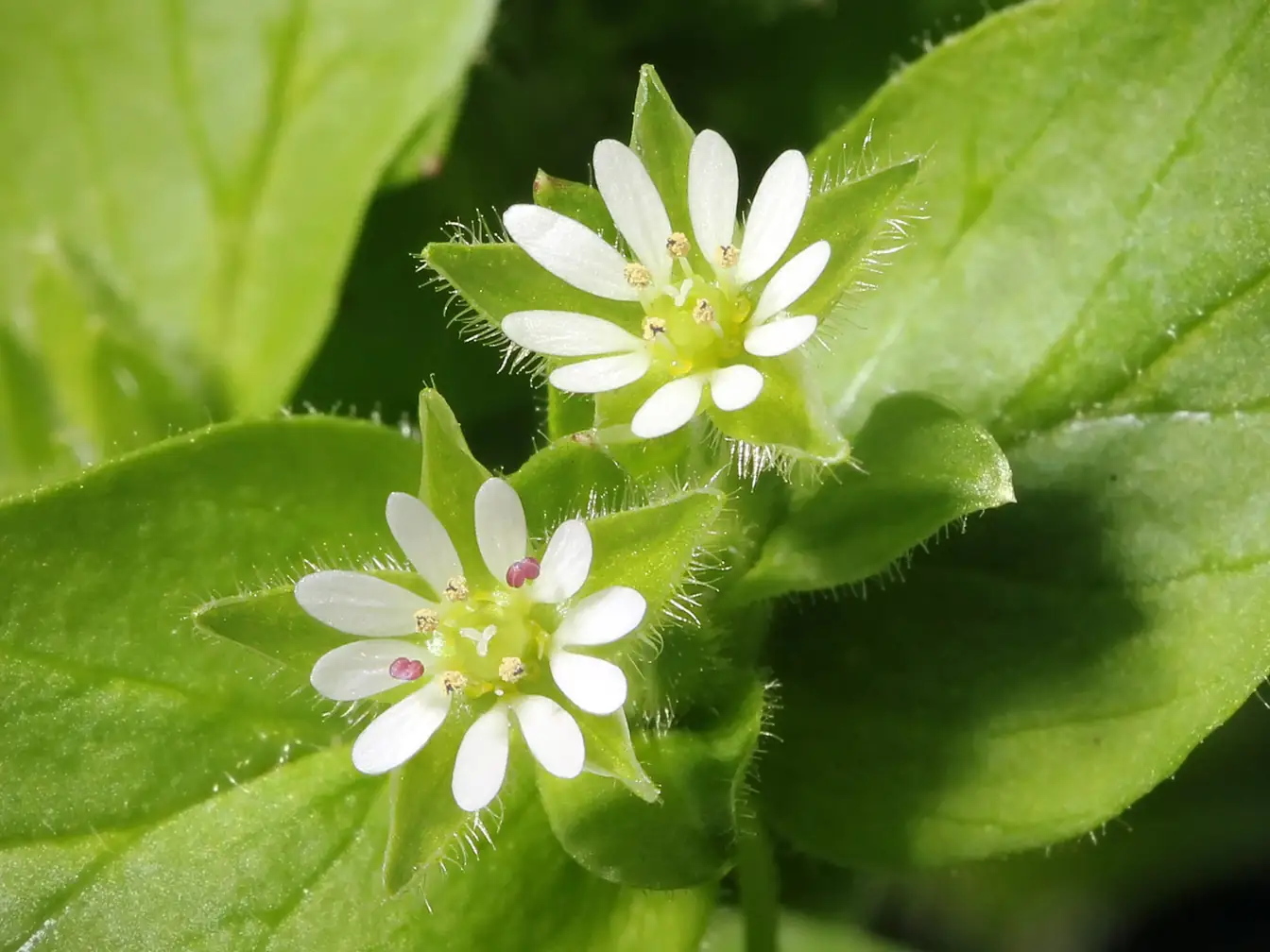
Look close and you'll see pairs of small oval leaves with pointed tips on tender, stringy stems, and tiny white flowers shaped like stars. Each flower has five petals split so deeply they look like ten. One more check most folks never learn: chickweed's stem has a single fine line of hairs running up one side, like a seam. Find the mat, find the star flowers, find the seam — that's chickweed.
Its life cycle
Chickweed is a winter annual on a fast clock. Seed germinates in fall once the soil cools and stays moist, seedlings grow through winter on every mild spell, and by late winter the mats are flowering and setting seed at the same time — it doesn't wait to finish one job before starting the next. A single healthy plant can drop several thousand seeds, and those seeds stay alive in the soil for years, waiting on the right fall. Summer heat kills the plant itself; the seed bank is what carries on.
Why it loves West Tennessee
Our winters are chickweed's growing season, not its off-season. West Tennessee rarely stays cold long enough to hold it down, and the frequent winter rain keeps the top of our silt loam damp — chickweed's favorite footing. With bermuda fully dormant from roughly November to March, there's no living turf shading the soil or competing for space, so those bright green mats spread across open ground like it's getting paid.
Keeping it out
Prevention happens in September and October: a fall pre-emergent application puts a barrier in the soil before chickweed seed wakes up, which is far easier than fighting established mats in January. Thick turf matters too. Chickweed exploits thin spots, so summer feeding, aeration, and seeding that thicken the bermuda all quietly shrink next winter's chickweed crop.
Getting it gone
Once mats are visible, the play is a selective post-emergent broadleaf treatment during winter, applied while plants are young and actively growing on mild days. Dormant bermuda tolerates this window well, which is exactly why our annual program includes winter visits — the treatments run while the grass sleeps. Timing carries this one: spraying a small December mat prevents thousands of seeds; spraying a blooming March mat mostly just tidies up. Large infestations sometimes take a follow-up pass to catch late germinators.
Don’t confuse it with
Mouse-ear chickweed is the fuzzy cousin — same low habit, but its leaves are covered in soft hairs and it's a perennial, so it's more stubborn. Henbit grows in the same winter window but stands taller with square stems and purple flowers. If it's a smooth-leaved, ground-hugging mat with tiny white stars, you've got common chickweed.