Lawn guide · August 6, 2026
Your New Sod's First Year
What new-construction sod goes through in year one — watering week by week, the first mow, when weed control can start, and the failures that show up early.
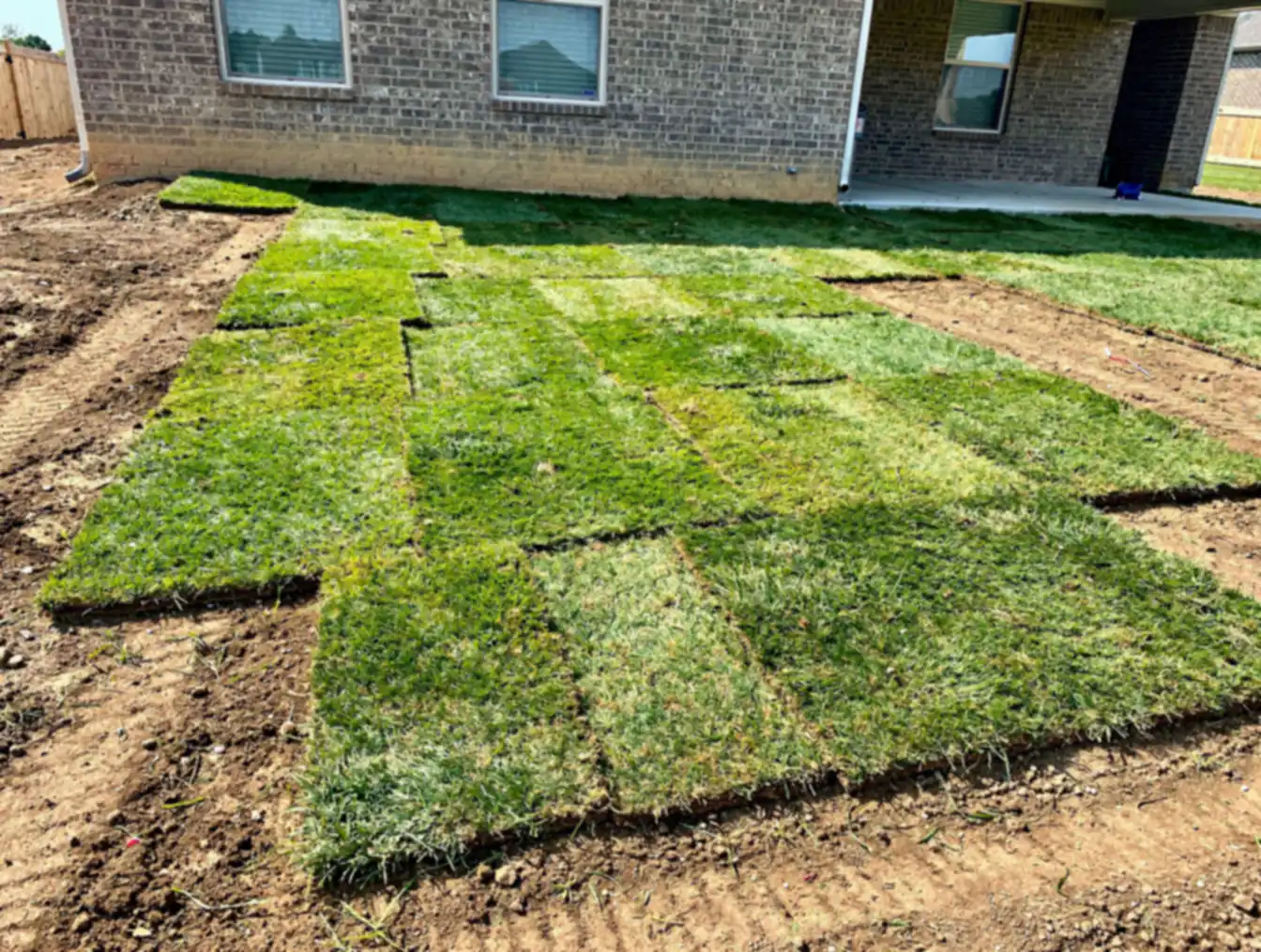
Drive through the new neighborhoods around Atoka and you'll see the same scene on repeat: a finished house, a clean driveway, and a lawn that got rolled out like carpet the week before closing. Sod is a genuine head start — you get an instant lawn instead of a season of mud and hope. But sod is not a finished lawn. It's a transplant, and the first year decides whether it knits into your soil and takes off or spends the next three summers limping. Here's what that year should look like, and where new-construction lawns most often go sideways.
Builder grading leaves you a two-layer lawn
When a lot gets graded, the dark topsoil that took ages to build usually gets scraped off, stockpiled, or hauled away, and the machines finish the job by driving over what's left until it's packed like a parking lot. Then the sod shows up — healthy farm-grown bermuda with about an inch of good soil attached — and gets unrolled right on top. That leaves you with two layers that have never met: an inch of loose, rich soil full of roots, sitting on compacted silt loam that water and roots both struggle to enter. Nearly everything odd a new-construction lawn does traces back to that seam. Water puddles because it can't soak into that packed layer fast enough, then the lawn wilts two days later because the roots only have an inch of soil to drink from. In July, a lawn living in one inch of soil cooks in a hurry. So think of the whole first year as one project: convincing those roots to leave the comfortable farm soil and punch down into the graded ground beneath it. Everything below serves that.
Watering, week by week
New sod has no roots in your ground at all on day one — every drop it drinks has to come from that top inch until it ties in. The schedule below fits warm-season installs; cool cloudy stretches need less, and hot windy spells need more. When in doubt, lift a corner and look.
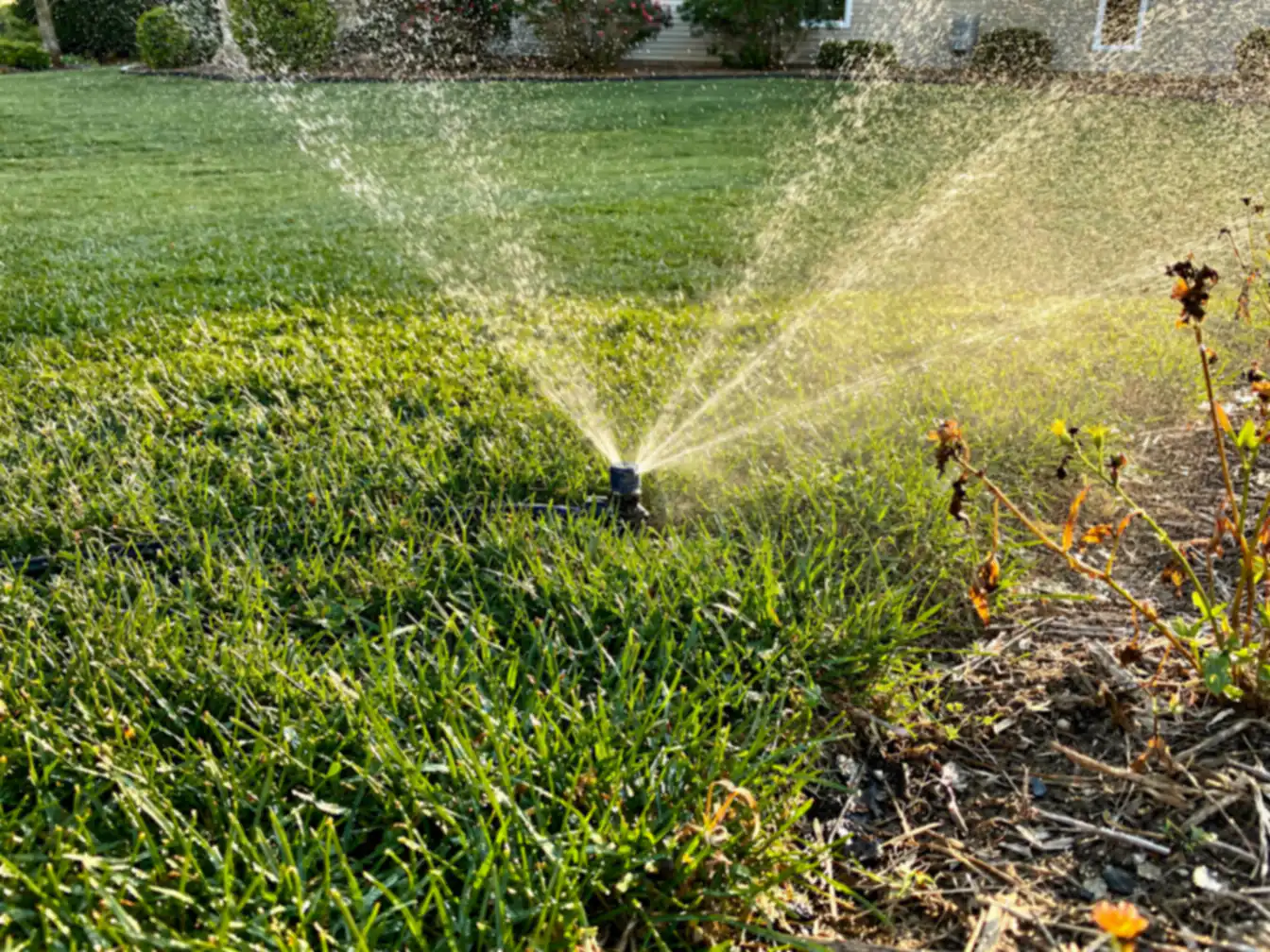
- Weeks 1–2: water every day, enough that the underside of the sod and the soil surface beneath it stay damp. The goal is simple — never let the rolls dry out before they've rooted.
- Weeks 3–4: drop to every other day, but run the water longer so moisture reaches below the sod layer. You're baiting the roots downward. Roots follow water; shallow sips grow shallow roots.
- Weeks 5–8: two deep waterings a week. The surface should dry between them; the soil a few inches down should not.
- After two months: treat it like an established lawn — about an inch a week in summer heat, from you or the sky, delivered deep and infrequent rather than a little every day.
Water in the morning. Evening watering leaves the grass wet through our humid nights, and wet nights are how fungus gets a foothold in a young lawn that can't afford one.
The tug test and the first mow
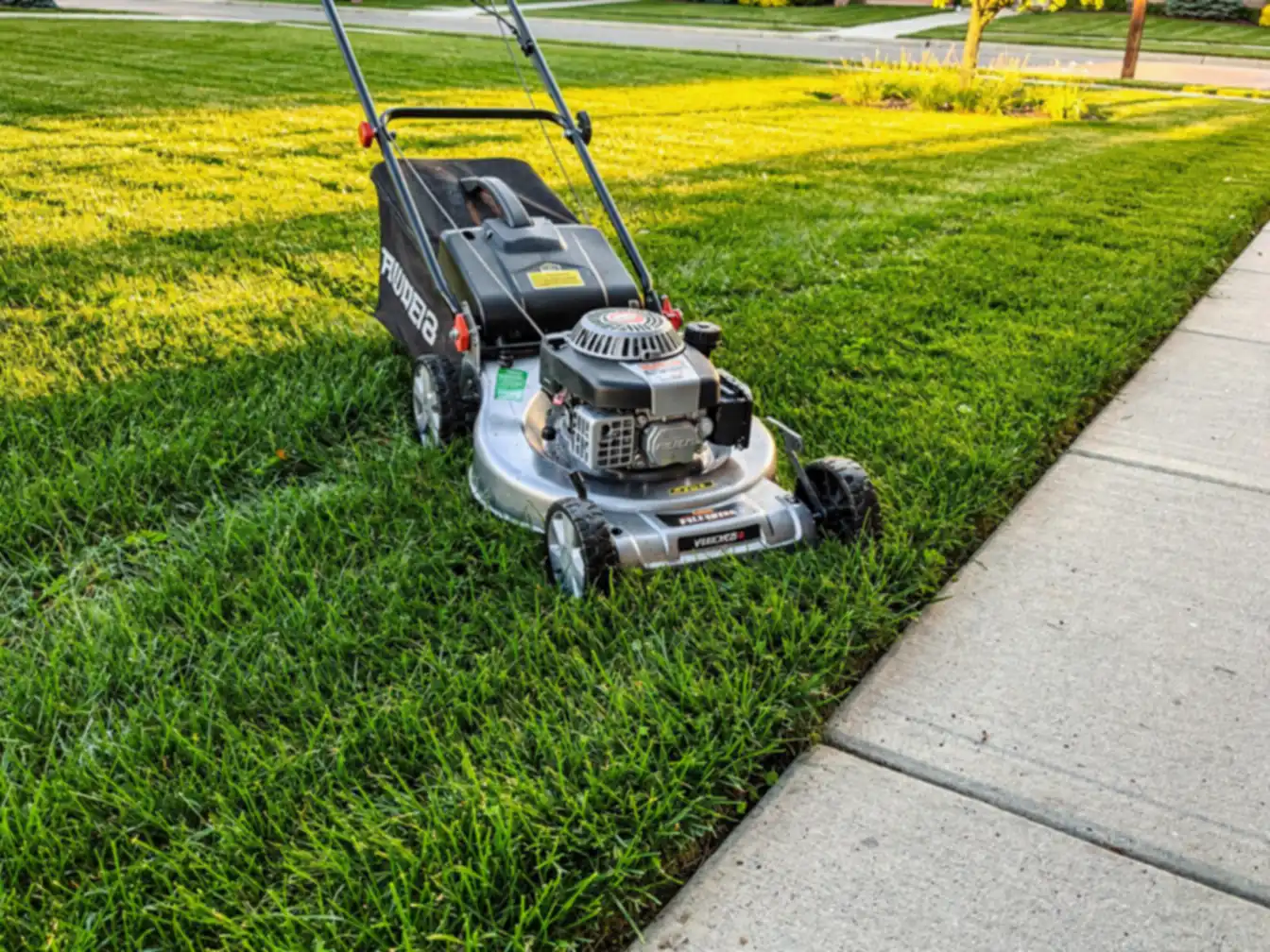
The first mow is your job — Woodlawn treats lawns, we don't mow them — but timing it matters more on sod than it ever will again. Grab a handful of grass and pull straight up. If the sod lifts like a rug, the roots haven't taken; give it more time. When it resists like it's stapled down — usually two to three weeks after install in warm weather — it's safe to mow. Set the deck at bermuda's height — 1 to 2 inches for the common types, lower for fine-bladed hybrid sod — and start at the top of that range so a lumpy new grade doesn't get shaved. Make sure the blade is sharp, and mow when the ground is dry so the wheels don't dent the soft grade or shove a seam out of line. Never remove more than a third of the blade height in one pass. And skip tight pivot turns for the first month or two — a wheel spinning in place can peel the corner of a barely-rooted piece right up off the ground.
When weed control can safely start
Fresh sod arrives nearly weed-free — that's one of its best features — but the seams between rolls and the bare strips along the driveway are open invitations, and the graded soil underneath carries its own bank of weed seed that got stirred to the surface. Here's the catch: weed treatments ask a plant to shrug off stress, and unrooted sod has no reserves to shrug with. Our working rule is that broadleaf treatments wait until the sod has rooted down firmly and you've mowed it two or three times. Pre-emergent is easier on rooted sod but follows the same logic: establishment first. When we take on a new-sod lawn, we check the rooting ourselves — same tug test — rather than counting days from install, because a shady side yard can root three weeks behind a sunny front one. If weeds pop in the seams before the lawn is ready, pull them by hand. It's the one season of a lawn's life where we'll tell you hand-weeding is genuinely the right tool.
Feeding: the first-year rhythm
The sod farm sent your grass out well-fed, but that ride ends fast — the roots that reached the farm's fertility stayed in the field. Year-one feeding runs in two phases. Early on, the goal is roots, not blades: heavy nitrogen is the wrong move because it pushes lush top growth a one-inch root system can't support, like giving a patient in recovery a job application. A soil test is worth more on a new-construction lot than almost anywhere else, because graded subsoil is a wild card — some lots come up short on nutrients the sod farm's fields had in abundance, and a test beats guessing. Once the lawn is rooted and you're mowing regularly, it graduates to a normal bermuda rhythm — steady feeding through the warm months, then a fall application that helps it bank energy for its first winter, which is the winter it's most vulnerable to. That steady cadence is exactly what our 8-application program is built around, and a first-year sod lawn gets more out of that consistency than almost any lawn we treat, because it's still deciding what kind of lawn it's going to be.
The failures we see most in year one
Nearly every struggling first-year sod lawn we walk has one of the same short list of problems, and all of them are cheaper to fix in year one than in year three:
- Gapped seams — rolls laid with slivers of space between them that dried out, leaving a brown grid across the lawn. Topsoil and patience fix small gaps; bermuda will run across them once it's healthy.
- Shade sections quietly thinning — sod farms grow bermuda in wide-open sun. Lay that same sod under a mature oak and it thins no matter how well you water. That's biology, not a mistake you made.
- Scalping — a mower deck set low on a lumpy new grade shaves the high spots down to dirt. Stay at the top of bermuda's range until the ground settles.
- Overwatering into fungus — the daily watering that saved the sod in week one becomes the disease engine of month three. Follow the taper.
- Ruts and paths — trucks, wheelbarrows, and daily foot traffic across soft, wet new ground compact it before the roots ever get a chance.
Year two starts underground
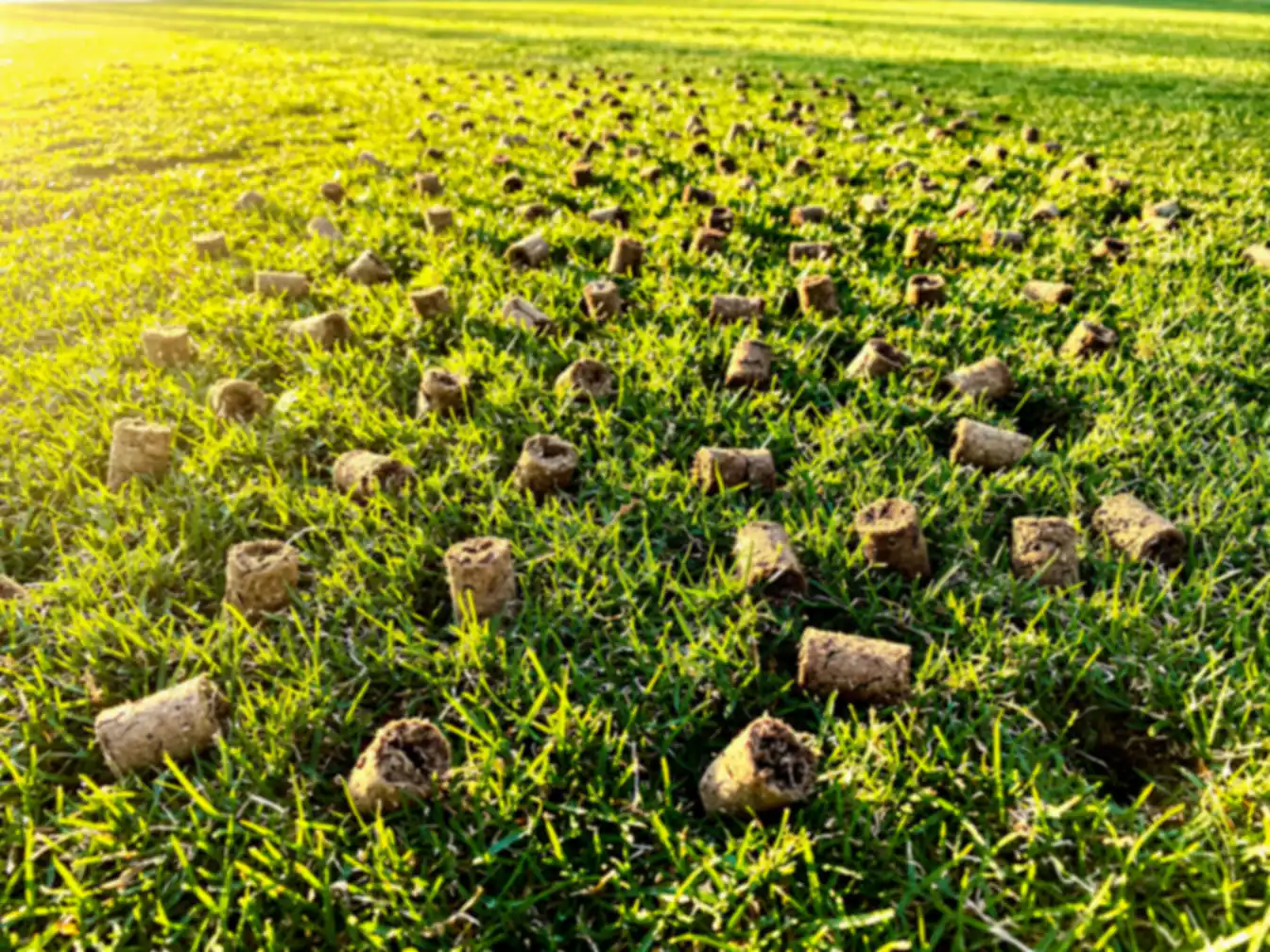
Once the lawn has its first full growing season behind it, the best gift you can give it is core aeration, run in late spring or summer of year two when the bermuda is growing hard enough to heal the holes. The compacted grade under your sod doesn't loosen on its own — packed silt holds a grudge — and pulling cores out of it opens the doors those roots have been knocking on all year. A sodded lawn that gets watered patiently, mowed at the right height, fed on a steady rhythm, and aerated once it's established doesn't just survive its first year. By its second summer, nobody driving past can tell it wasn't always there.