Lawn guide · August 6, 2026
Your First Treatment: What Actually Happens Next
What actually happens after your first Woodlawn treatment — the timeline, the worse-before-better stage, and your part in it.
First, the part nobody tells you
Signing up for lawn treatment comes with a quiet expectation most folks don't say out loud: that the truck shows up, something gets sprayed, and the lawn turns a corner that week. Then reality moves at plant speed instead of internet speed, and the questions start. Is it working? Why does that weed look worse but not dead? Why does the lawn look thinner than before?
All of those have good answers, and every one of them makes sense once you know what's actually happening out there. So here's the honest walkthrough we wish every new customer got: what the first visit looks like, what the weeds will do and when, why the lawn can genuinely look rougher before it looks better, and what your part of the deal is. No mystery, no fine print.
The visit itself
You don't need to be home. That surprises people, but it's how most treatments happen: you'll get a text before we head your way, and as long as the gate's unlocked and pets are inside, the visit runs the same whether your car is in the driveway or not. The technician walks the lawn first, because the lawn is the paperwork. What's growing, where it's thin, what stage the weeds are in. On a first visit that walk matters more than usual: it's where we learn your lawn's particular story, the shady corner, the compacted path, the weed that's been winning. If you are home and want to walk it with us, we're glad to have the company. Questions are free. Then the treatment goes down, matched to what the lawn needs at that point in the season, and you'll find a notice letting you know we were there and what was done.
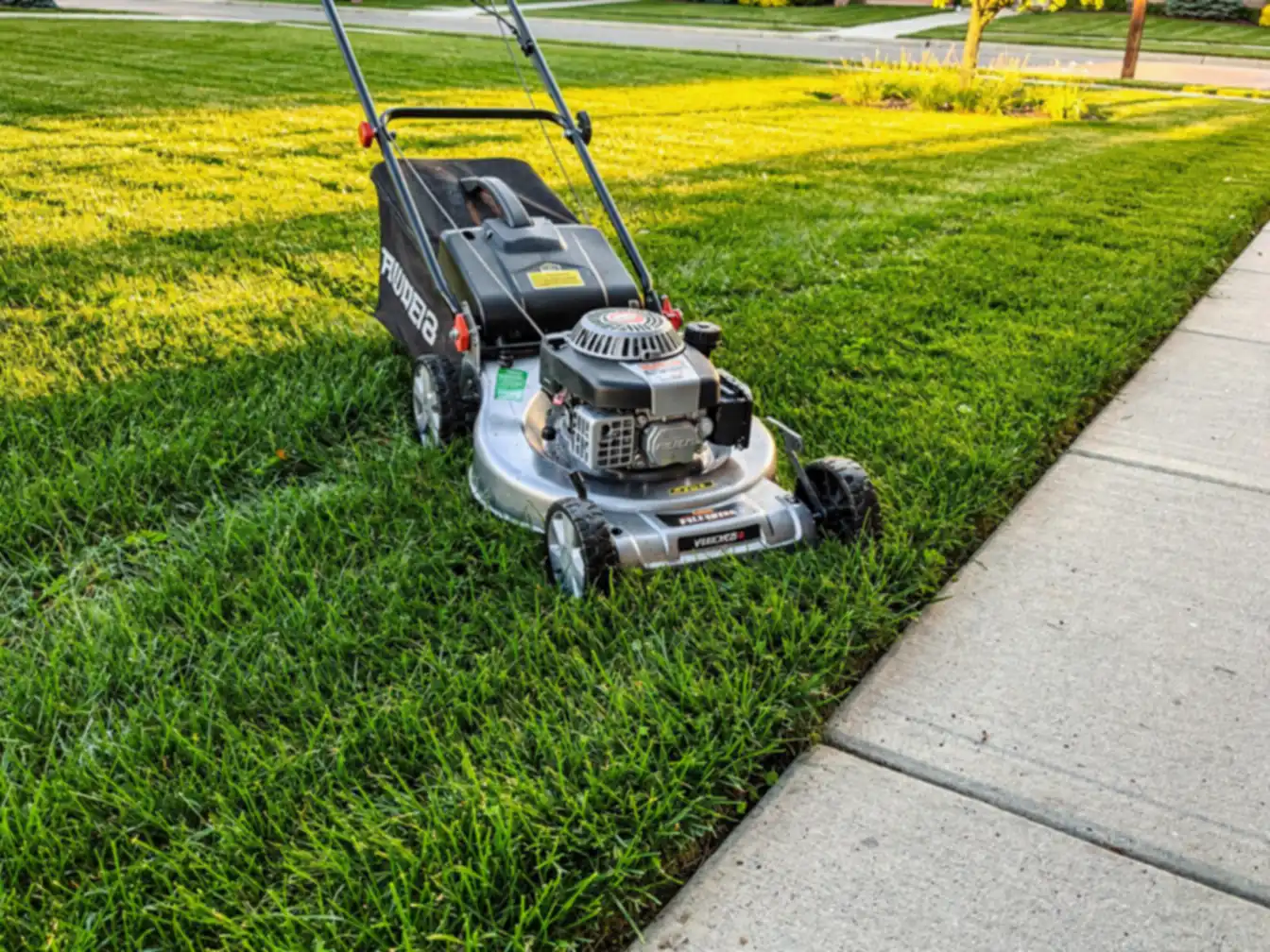
Two simple rules cover the rest of the day. Stay off the lawn, kids and pets included, until it's dry, which usually takes a few hours depending on weather. And hold off on mowing for about 24 hours, so the treatment has time to do its work on the leaf before a mower carries it away. That's it. There's more detail in our guide to mowing a treated lawn, but those two rules are the heart of it.
What the weeds do next
Weed control is not a light switch, and knowing the real timeline saves a lot of window-checking.
The first sign shows up within a few days: treated weeds start to twist, curl, and grow strangely, like they've lost the instructions. That contortion is the treatment moving through the plant, and it's exactly what you want to see. Yellowing comes next, then browning, and full death typically lands one to three weeks after treatment depending on the weed, the weather, and the season. Warm, actively growing weeds die faster. Cool spells slow everything down, plants and treatments alike.
And some weeds are simply harder than others. A young annual weed dies on the early end of that window, and one more tip: leave the dying weeds alone. Pulling a treated weed halfway through the process can interrupt it before the roots are finished. The stubborn perennials, things like wild violets and dallisgrass, hold energy in their roots and can take repeat treatments across more than one visit. When a tough weed looks battered but not beaten after round one, that's not failure. That's round one.
Why it can look worse before it looks better
Here's the conversation we'd rather have now than after your second week. There is a stretch, usually in weeks two and three, where a freshly treated lawn can honestly look worse than it did before we came.
Two things cause it, and both are progress wearing a disguise. First, dying weeds are ugly. A lawn with a lot of weeds in it turns those weeds yellow and brown all at once, and until they shrivel away, you're looking at the evidence. Green weeds photograph better than dying ones. They're still weeds.
Second, and this is the one that catches people: weeds were covering ground. A lawn that was thirty percent weeds looked thirty percent fuller than it really was. When those weeds die, they reveal the thin spots and bare patches they were squatting on, and the lawn shows you its true condition for the first time in years. That reveal can be humbling. It's also the actual starting line. Now the feeding, and where needed the seeding and aeration, can fill that ground with grass instead of letting weeds reclaim it.
Why one treatment isn't a program
If one visit could fix a lawn, we'd sell one visit. Here's why it can't, and it isn't a sales answer, it's a seed answer.
Your soil holds a seed bank: years of accumulated weed seeds, thousands upon thousands of them, dropped by every weed that ever went to seed on that ground. Killing the weeds that are up today does nothing to the seeds waiting underneath, and every season sends its own wave. Crabgrass in late spring, spurge and nutsedge in summer, chickweed and henbit sprouting in fall. Whichever wave is due next is already loaded.
That's what the eight-application program actually is: not the same treatment eight times, but a different job each visit, timed to what West Tennessee lawns face at that point in the year. Pre-emergent barriers before germination windows, post-emergent work on what's up, feeding matched to the grass's season. Your first treatment joins that story wherever the calendar happens to be, so what your first visit includes depends on the month, and the lawn calendar shows how the whole year fits together. The short version: the first treatment starts the fight. The program wins it.
When the green shows up
Fertilization has its own timeline, and it's tied to the season more than the product. During the growing season, a fed bermuda lawn shows deeper color and stronger growth within a week or two. In early spring, feeding shows up as an earlier, stronger green-up. And in the cool months, here's the honest one: a dormant bermuda lawn is tan because it's asleep, and no treatment greens up dormant grass. Winter visits are about weed control and setting up spring, and the payoff arrives when the soil warms. If your first treatment lands in the dormant season, judge it by how clean the lawn stays, not how green it gets.
Your part of the deal
The lawn spends a few minutes a month with us and every day with you, so the homeowner's habits genuinely move the needle:
- Give treatments about 24 hours before mowing, and stay off the lawn until it's dry.
- Mow bermuda at 1 to 2 inches, and mow often. Bermuda is a low, spreading grass that gets thin and puffy when it's cut too tall, and a dense low canopy is what keeps sunlight off weed seed. (Tall fescue in the shade is the exception: 3 to 3.5 inches.)
- Water deep and seldom, about an inch a week in one or two sessions, instead of a little every day.
- Skip the store-bought weed-and-feed. Layering products on top of a program can stress the lawn and muddy the results.
- If we leave any special instructions after a visit, like watering something in, they're worth doing. They're the difference between a treatment working and working well.
If something doesn't look right
Last thing, and it might be the most important paragraph on this page. Sometimes a patch of weeds shakes off the first pass. Sometimes rain moves in behind a treatment, or a strip along a fence needs another look. Lawns are living systems and weather has opinions. None of that is unusual, and none of it is something you should sit on politely for six weeks.
Call us. Tell us what you're seeing. We'll come back and make it right, and we'd genuinely rather hear about a concern in week two than discover it in month three. You can reach us anytime through our contact page. We've been doing this since 1993, and the customers who've stayed with us the longest aren't the ones who never had a question. They're the ones who found out what happens when they asked.