How to spot it
Dallisgrass is the weed even pros respect. It grows in thick, round clumps — coarse gray-green blades fanning out from a dense center, the whole bunch sitting in the lawn like a shaggy dinner plate. The clumps hold the same real estate year after year, usually starting in damp or thin areas.
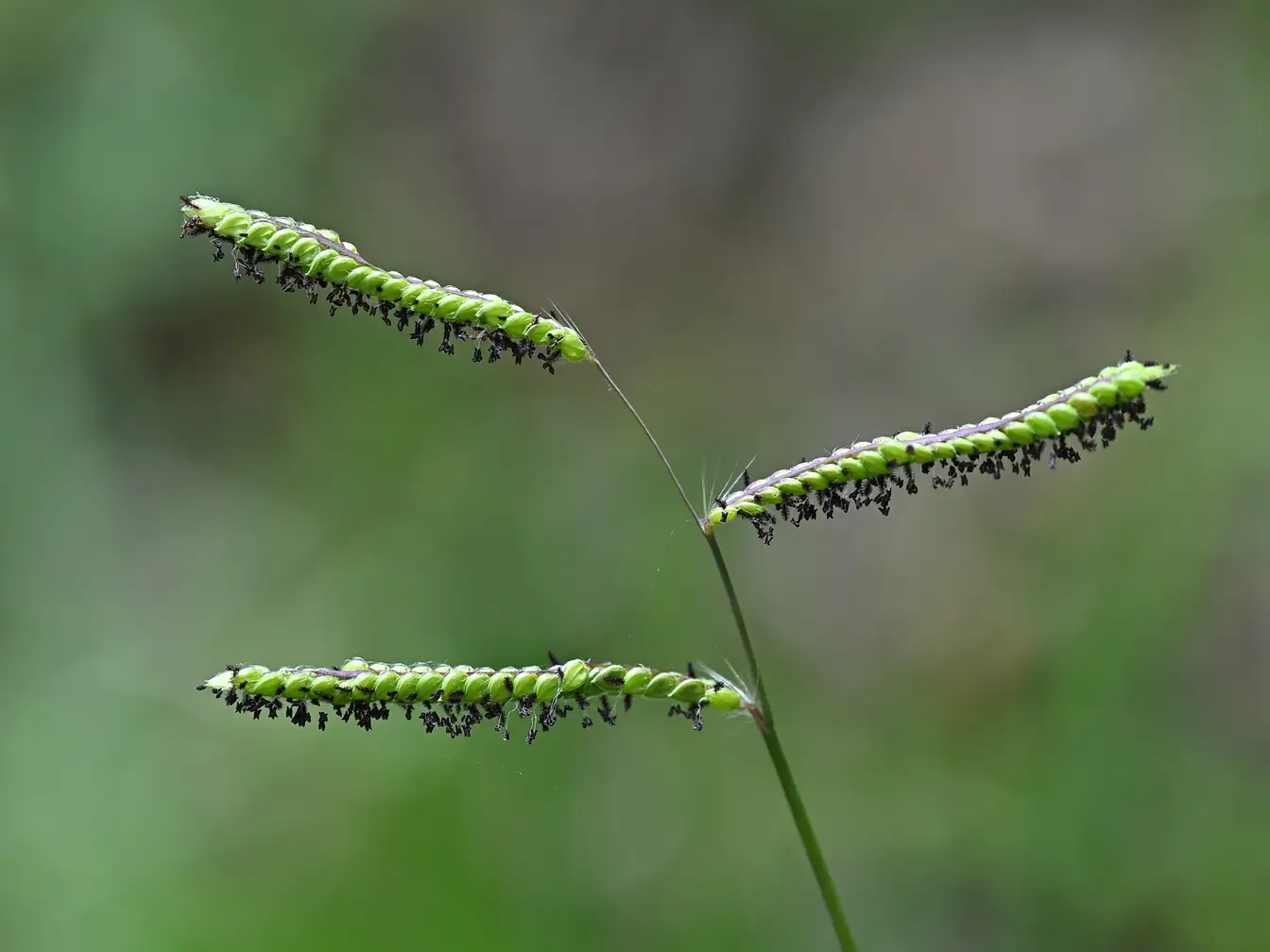
The giveaway is the seed stalks. Within days of mowing, dallisgrass shoots up tall stems with several flat, finger-like seed branches leaning off to the side like antennas. Look close at those branches and you'll see rows of flat seeds with fine black specks. A coarse clump that regrows its antennas within days, in the same spot every summer, is dallisgrass — not crabgrass.
Its life cycle
Here's what separates dallisgrass from crabgrass: it's a perennial. The plant survives winter as a knotty crown of short, thick rhizomes at the soil line. Blades brown off with frost, but the crown is just waiting; it regrows from the same base every spring, which is why the clump in your side yard is the same clump, older and wider, not a new arrival. It also seeds prolifically all summer, planting new crowns nearby. Established crowns are tough, deep-anchored, and thoroughly unimpressed by pulling.
Why it loves West Tennessee
Dallisgrass was brought to the South as a pasture grass, so it's not just tolerating West Tennessee — it was recruited for this climate. It loves our long hot summers and handles our heavy, wet ground better than most turf does, which is why clumps show up first in low spots, drainage paths, and ditch lines. Once a crown establishes in a lawn, our mild winters rarely hit hard enough to kill it.
Keeping it out
Pre-emergent helps less here than you'd hope — it can stop new seedlings, but it does nothing to crowns that already exist, and mature clumps produce seed all summer. Prevention is mostly about denying it a start: thick turf, good drainage, and dealing with the first clump when it's one clump. Catch dallisgrass early and it's a skirmish; give it three summers and it's a campaign.
Getting it gone
We'll be straight with you: this is one of the hardest lawn weeds in the South to remove, because very little kills a mature crown without risking the turf around it. Professional control means persistent, precisely targeted spot treatments to the clump itself, repeated as the crown pushes back — often across more than one season. Digging can work on young clumps if you get the entire crown, but miss a piece and it returns. Ongoing monitoring is half the value of a yearly program here: new seedlings get caught while they're still easy.
Don’t confuse it with
Crabgrass is the constant mix-up, and the difference decides the strategy. Crabgrass sprawls flat, dies at frost, and is stopped cold by spring pre-emergent; dallisgrass grows upright from a perennial crown that shrugs pre-emergent off. Check the seed head — dallisgrass carries its seeds on distinct finger-like side branches with black-specked rows — and check the history: same clump, same spot, every year means dallisgrass.