
How to spot it
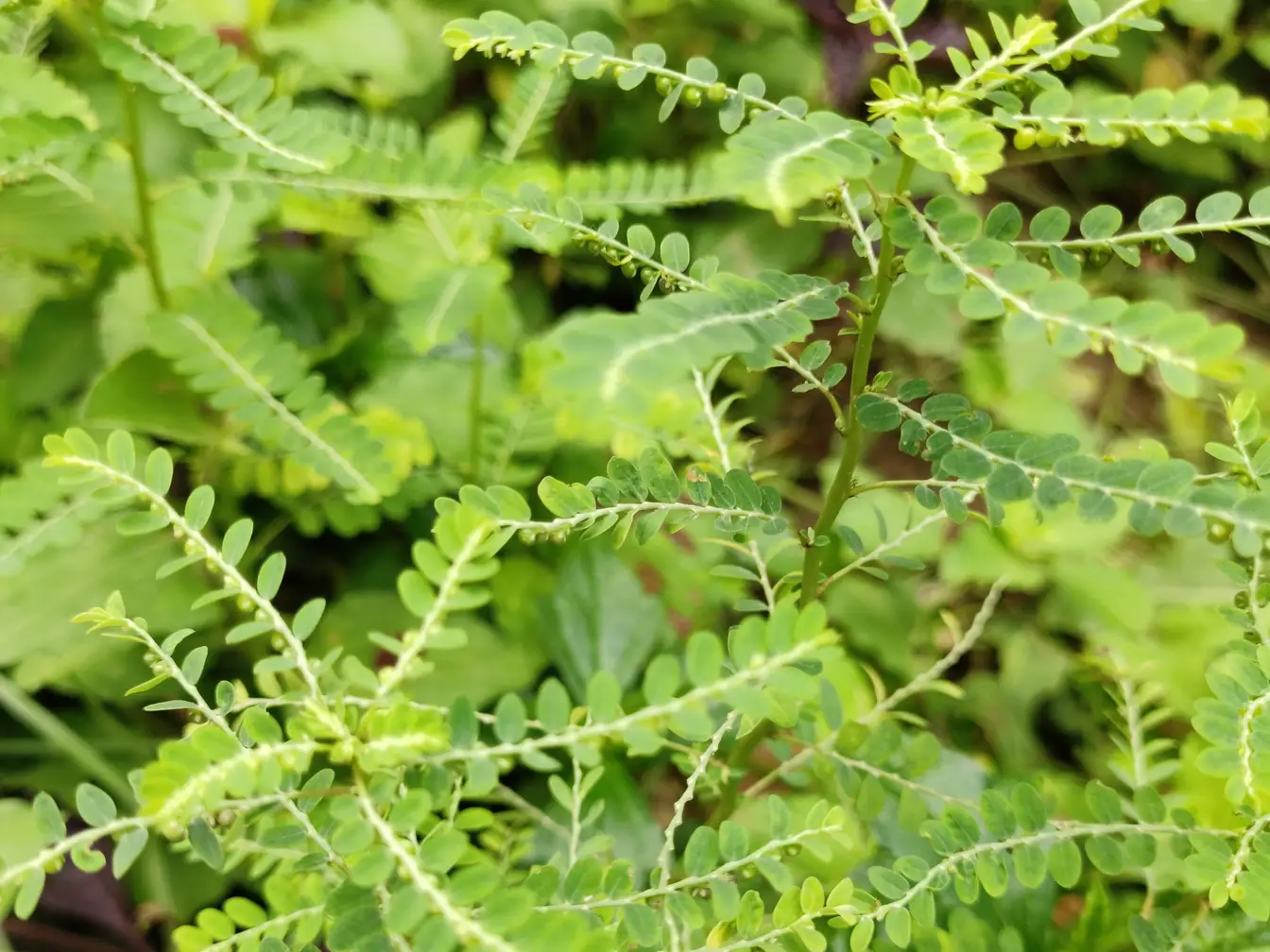
Chamberbitter is the one that looks like a baby mimosa tree. It stands upright — a slim central stem with little branchlets coming off it, each branchlet carrying two neat rows of small oval leaflets, like a tiny fern or a mimosa seedling that wandered into the lawn. It appears out of nowhere in the heat of summer, flower beds first and thin turf second, and it's usually a few inches tall before anybody notices.
The giveaway is underneath. Flip one of those branchlets over and you'll find a row of tiny round seed capsules — little green warts — lined up along the underside. No flower show, no drama, just capsules, already in place on plants barely two inches tall. If it looks like a mimosa seedling and it's wearing a row of BBs under its leaves, that's chamberbitter.
Its life cycle
Chamberbitter is a summer annual that sleeps in late. Most summer weeds germinate in spring; chamberbitter waits until the soil is genuinely warm — well up into the 70s, which around here means June — then makes up for lost time. It grows fast, starts loading seed capsules while it's still small, and here's the mean part: when the capsules dry, they burst and fling seed several feet in every direction. Some of that seed sprouts the same season, so one June plant becomes a colony by August. Frost kills the plants; the flung seed waits for next June.
Why it loves West Tennessee
Our long, hot, humid summers are exactly what chamberbitter is built for — it worked its way up through the South from warmer places and treats a West Tennessee July like home. The late start is its edge here. By the time it germinates in June, the pre-emergent that went down in late winter has been fighting sun, rain, and time for months, and a thinning barrier is precisely what a late germinator slips through. Mulched flower beds make a warm, moist nursery, and from the beds it walks into the lawn.
Keeping it out
Timing is the whole trick. A spring application alone often misses chamberbitter because the barrier is worn thin by June — it's the follow-up application, carrying protection into summer, that actually intercepts it, and that's one of the quiet reasons the annual program runs eight visits instead of two. Thick summer turf helps too, since the seedlings need light at the soil line. And watch the beds: a flower bed full of seeding chamberbitter restocks the lawn every time the capsules pop.
Getting it gone
Catch it young and it's an easy target — a selective post-emergent broadleaf treatment handles small June plants without much fuss. Every week after that, the job gets harder: mature plants toughen up, and by the time one is big enough to annoy you, it's already flinging seed. Hand-pulling works on scattered plants, but do it before the capsules dry — pull a ripe one and you'll sow next year's crop on the walk to the trash can. Because it keeps germinating all summer, no single treatment ends it; the reliable play is catching each new flush while it's small, visit after visit, through the hot months.
Don’t confuse it with
Plenty of folks meet chamberbitter and guess clover — hop clover and black medic show up in the same thin summer turf — but both of those carry three leaflets and little yellow flowers. Chamberbitter has no yellow anything: it's an upright plant with many leaflets in two tidy rows, more fern than clover. The other honest mix-up is an actual mimosa tree seedling, which has the same feathery look. Flip a branchlet — rows of round capsules underneath means chamberbitter, every time.