
How to spot it
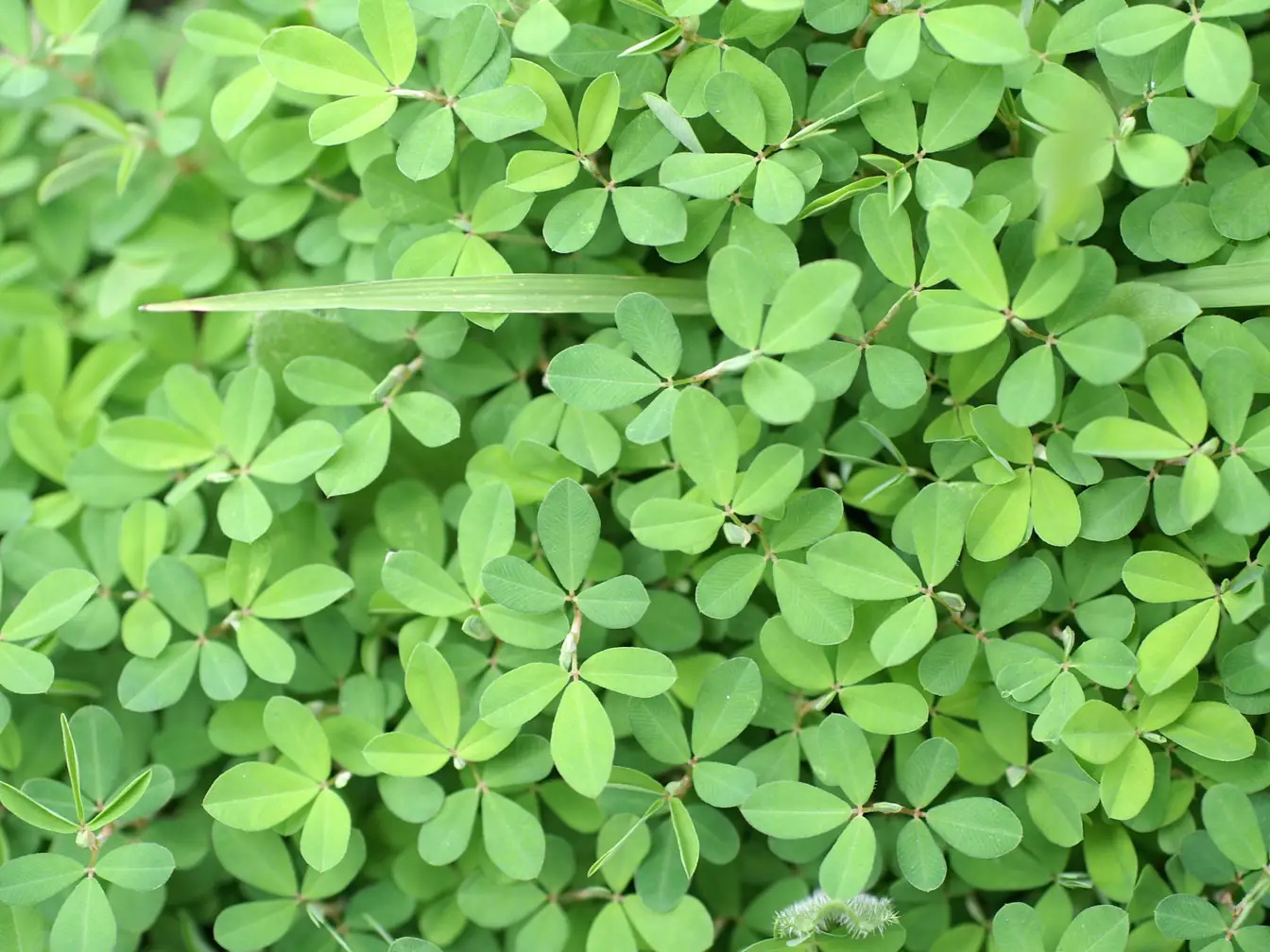
Lespedeza is the wiry mat that sneaks in by August. It weaves itself low through thin turf in the heat of summer — a tough, sprawling tangle of thin, woody stems that hug the ground below mowing height. Grab a handful: where clover is soft, lespedeza is wiry, like thin cable.
The leaves come in threes — small, narrow, oblong leaflets with fine parallel veins running straight out to the smooth edges, darker green than the grass around them. In late summer, tiny pink-to-purple pea-like flowers appear tucked along the stems. Check the struggling parts of the yard first: dry slopes, compacted paths, thin patches. By the time most folks notice, a mat can be a foot across and firmly woven in.
Its life cycle
Common lespedeza is a summer annual. Seeds germinate in spring as soil warms, but seedlings stay small and unremarkable for weeks — the plant does its real spreading in July-August heat, while your grass is just trying to survive. Stems get progressively harder and woodier as the season runs, flowers arrive in late summer, and seed set follows before frost kills the plant. The seed carries over in the soil, waiting on next spring's warmth, and thin turf gives it the same opening every year.
Why it loves West Tennessee
Lespedeza is a legume, like clover — it makes its own nitrogen, so it flourishes exactly where a lawn is running on empty. It also handles drought, heat, and hard ground better than turf does, which makes our dry August stretches and compacted ground a standing invitation. A hungry, thinning bermuda lawn in late summer is precisely the habitat this weed is built to claim.
Keeping it out
Read it as a message: lespedeza in the yard usually means low nitrogen, compacted soil, or both. Spring pre-emergent helps intercept the seed, but the durable fix is turf that's fed and breathing — a proper fertilization schedule so the bermuda stays aggressive through summer, and core aeration to break up the compaction lespedeza tolerates better than grass does. Both of those run on the schedule laid out in our annual program — prevention here is mostly a healthy lawn doing its job.
Getting it gone
Timing decides how hard this fight is. Young lespedeza in early summer responds well to selective broadleaf spot treatment; by late summer the stems have gone woody and the plant shrugs off treatments that would have finished it in June — late-season control often takes a second pass. And like clover, spraying alone is half a fix: clear the mats without feeding the lawn and the same thin, hungry spots reopen next year. Control plus fertility, together, is what closes the door.
Don’t confuse it with
Clover is the usual mix-up — both are legumes with three-part leaves. Feel the stems: clover is soft and fleshy, lespedeza is wiry and tough. Season helps too: clover peaks in spring, lespedeza in August heat. Black medic splits the difference but shows small yellow flower heads. If it's wiry, flat, and thriving in the dog days, bet on lespedeza.