How to spot it
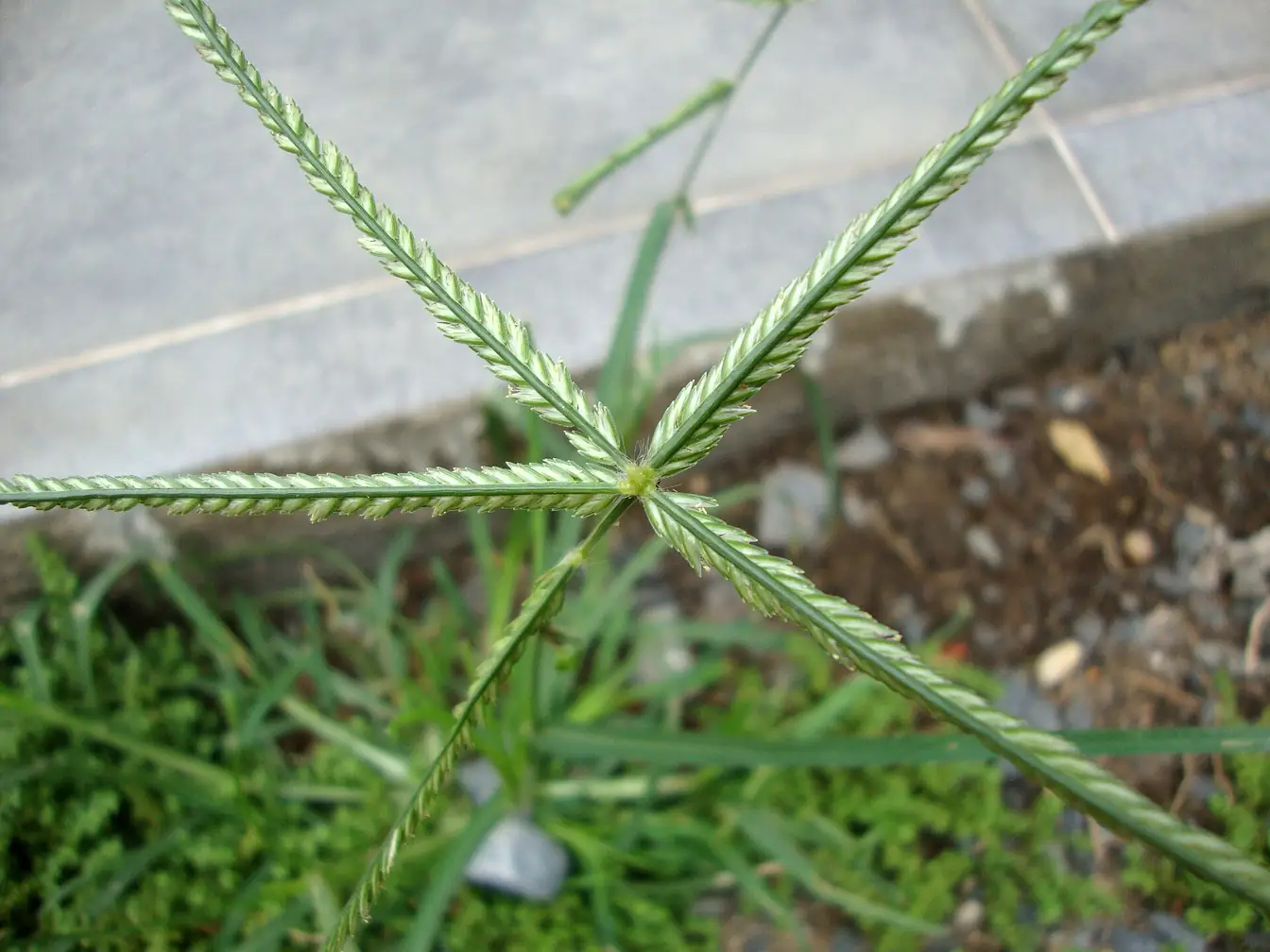
Look at the center of the plant — that's the giveaway. Goosegrass grows as a flattened rosette with stems radiating from a middle that's distinctly silver-white, like the spokes and pale hub of a wagon wheel pressed flat into the turf. The stems are smooth and noticeably flattened rather than round, and the whole plant sits low and tough, like it's been run over and didn't mind.
Where you find it says as much as what it looks like. Goosegrass shows up in the hardest ground on the property: the gate path, the edge of the driveway, the strip where the trash can rolls, the packed spot where the kids set up the goal. In late summer it sends up seed heads with several flattened spikes, each carrying two neat rows of seeds like the teeth of a zipper — different from crabgrass's thin, open fingers.
Its life cycle
Goosegrass is a summer annual that runs a few weeks behind crabgrass on purpose. It waits for warmer soil — germination starts when the ground pushes into the 60s and keeps going through early summer, well after the crabgrass rush. The plant builds its tough, flattened rosette through the heat of the season, then spends late summer loading those zipper seed heads with thousands of seeds. First frost kills the plant; the seed sits in the soil, waiting for compacted ground and warm soil to run it again.
Why it loves West Tennessee
Goosegrass is what compaction looks like when it grows. Our West Tennessee silt loam packs hard under feet, tires, and summer baking, and packed ground is exactly where goosegrass outcompetes turf — it thrives in low-oxygen, hard-surfaced soil where bermuda roots struggle to push. Add long, hot, humid summers and you have its ideal setup. When we see goosegrass, we read it as a soil report: this spot is compacted, and the weed is just the messenger.
Keeping it out
Two-part answer, and the second part is the one people skip. First, a pre-emergent barrier — but because goosegrass germinates weeks later than crabgrass, the barrier has to still be working in late spring, which is a timing-and-persistence question we manage as part of weed control. Second, fix the ground itself: core aeration relieves the compaction goosegrass depends on, and thick turf on open soil takes away its whole advantage. Prevent the seed and evict the habitat, and it stops coming back.
Getting it gone
Honest answer: established goosegrass is one of the tougher grassy weeds to remove from a lawn — it shrugs off some products that handle crabgrass, and a mature flattened rosette is well anchored. Young plants are the productive target, so early-summer spot treatment matters, and stubborn patches may take repeated passes or a season of containment while the real fix — barrier timing plus compaction relief — sets up next year. That patient, two-front approach is how our weed control program handles it.
Don’t confuse it with
Everyone calls it crabgrass, and the two do share the sprawling, spoke-like habit. The tell is the center: goosegrass shows that silver-white flattened hub, while crabgrass stays green to the crown and often tints red at the stem bases. Check the seed heads too — zipper-like double rows on goosegrass, thin open fingers on crabgrass. Dallisgrass gets confused with both, but it grows upright in a bushy clump from the same spot every year, because it’s a perennial. Goosegrass also flags something the others don’t: badly compacted soil underneath it.